
Content creation

Struggling with content creation concept showing confused and confident creators with social media icons and growth elements

Struggling with Content Creation? Here’s What Actually Works

Introduction

Today, content is everywhere. From Instagram reels to YouTube videos and blog posts, people are constantly consuming information. But not all content gets attention. Some posts are ignored, while others go viral and create real impact.

The difference is not luck. It comes down to how well the content is created, structured, and delivered.

Content creation is not just about posting regularly. It is about understanding people, solving their problems, and presenting ideas in a way that is easy to consume and hard to ignore.

What is Content Creation?

Content creation is the process of producing valuable material for a specific audience. This content can educate, entertain, inspire, or persuade people.

It includes formats like:

  • Blog posts
  • Social media posts
  • Videos and reels
  • Podcasts
  • Infographics

At its core, good content always answers one question:

“Why should someone spend time on this?”

If your content does not give value or trigger emotion, people will simply scroll past it.

Why Content Creation is Important

In today’s digital world, attention is one of the most valuable assets. Content helps you capture that attention and turn it into trust.

Strong content can help you:

  • Build personal or brand identity
  • Gain audience trust
  • Increase visibility online
  • Generate leads or sales

For businesses, creators, and even students, content creation has become a powerful growth tool.

Types of Content You Should Focus On

Not all content serves the same purpose. A balanced strategy includes different types of content.

1. Educational Content

This type of content focuses on teaching something useful. It positions you as someone who provides value.

For example, guides, tips, and tutorials fall under this category.

  • Builds trust
  • Increases saves and shares

2. Entertaining Content

Entertaining content is designed to engage and capture attention quickly. It is highly shareable.

This includes:

  • Memes
  • Funny videos
  • Relatable situations
  • Increases reach
  • Attracts new audience

3. Personal Content

This content shows the human side behind the creator or brand. It builds emotional connection.

Examples include:

  • Personal stories
  • Daily routines
  • Behind-the-scenes content
  • Builds connection
  • Makes audience relate to you

4. Promotional Content

This is where you talk about your product or service. It is important but should not be overused.

Examples:

  • Product demos
  • Testimonials
  • Offers
  • Drives conversions
  • Generates revenue

Step-by-Step Content Creation Process

Creating good content consistently requires a system. Without a process, it becomes confusing and inconsistent.

Step 1: Understand Your Audience

Before creating content, you must clearly know who you are creating for.

Ask questions like:

  • What problems do they face?
  • What are they searching for?
  • What kind of content do they consume?

The better you understand your audience, the more relevant your content will be.

Step 2: Plan Your Content Ideas

Many people struggle with ideas, but ideas come from problems.

A simple approach is the following:

Identify a problem → Provide a solution → Convert it into content

For example, if people struggle with low engagement, you can create content around improving reach.

Step 3: Focus on Strong Structure

A well-structured piece of content performs better. Every content should follow a simple flow:

  • Hook (grab attention)
  • Problem (what is the issue)
  • Solution (how to fix it)
  • Call to action (what to do next)

This keeps your content clear and effective.

Step 4: Keep It Simple and Clear

One of the biggest mistakes is overcomplicating content. Using simple language makes your content accessible to a wider audience.

  • Use short sentences
  • Avoid complex words
  • Focus on one main idea

Clarity always wins over complexity.

Step 5: Be Consistent

Consistency is what separates beginners from successful creators.

Instead of posting randomly, follow a schedule:

  • 3 to 4 times per week is enough
  • Maintain similar quality
  • Stay in the same niche

Consistency builds trust with both the audience and the platform.

Step 6: Analyze and Improve

Creating content is not enough. You must also track performance.

Observe:

  • Which content gets more engagement
  • What type of posts are saved or shared
  • What topics perform well

Use this data to improve future content.

Tools That Can Help in Content Creation

Using the right tools can make content creation easier and more efficient.

Some commonly used tools include:

  • Canva for designing posts and visuals
  • CapCut for editing videos
  • Notion for planning content
  • SEMrush for keyword research and blog ideas

These tools help improve both quality and productivity.

Speed Up Your Content creation with AI

1. AI Tool for Script Writing / Idea Generation

Use: Video ideas, captions, scripts, storytelling

  • ChatGPT → video scripts, reels captions, content ideas
  • Jasper AI → blog writing, ad copy
  • Copy.ai → quick social media captions

Example: YouTube video script, Instagram reel dialogue

2. AI Tool for Image Generation / Design

Use: Thumbnails, Instagram posts, posters

  • Midjourney → high-quality creative images
  • DALL·E → create images from prompts
  • Canva → templates and easy design tools

Example: YouTube thumbnails, social media posts

3. AI Tool for Video Creation / Editing

Use: Reels, Shorts, YouTube videos

  • CapCut → simple editing with effects
  • Runway ML → background removal, AI editing
  • Pictory → convert text into video

Example: Turn a script into a video automatically

4. AI Tool for Voice & Dubbing

Use: Voiceovers, narration

  • ElevenLabs → realistic AI voice
  • Descript → edit audio/video and clone voice

Example: Voiceover videos without showing your face

5. AI Tool for Social Media Growth / Automation

Use: Scheduling, analytics, growth

  • Hootsuite → schedule posts
  • Buffer → consistent posting

Example: Automatically post daily content

6. AI Tool for SEO & Trend Research

Use: Trending topics, keywords

  • TubeBuddy → keyword research for YouTube
  • VidIQ → find trending ideas

Example: Discover viral video topics

Common Mistakes to Avoid

Many beginners struggle because of avoidable mistakes.

Some of the most common ones are:

  • Trying to be perfect before starting
  • Copying others without originality
  • Posting without a clear goal
  • Ignoring audience needs
  • Giving up too early

Avoiding these mistakes can speed up your growth.

Conclusion

Content creation is not just a trend. It is a long-term skill that can open many opportunities.

Success in content creation does not come overnight. It comes from:

  • Understanding your audience
  • Creating valuable content
  • Staying consistent
  • Continuously improving

Start small, stay consistent, and focus on giving value. Over time, your content will naturally grow and reach the right audience.

Struggling with Content Creation? Here’s What Actually Works Read More »

Content Writing in 2026 showing SEO, blogs, social media, websites, emails, and brand growth

Content Writing in 2026: Why It Matters More Than Ever

Content Writing In 2026, almost every business is online.
Websites, social media pages, ads, and email campaigns are everywhere.
But only a few brands truly stand out.

The main reason is simple—content writing.

People do not trust a brand just because it looks good.
They trust a brand when the words feel clear, helpful, and real.

What Content Writing Really Means

Content writing is not just typing words on a screen.
It is about explaining things in a way people can easily understand.

It includes:

  • Website pages
  • Blog posts
  • Social media captions
  • Email messages
  • Ad copy
  • Product descriptions

Good content answers questions, removes doubts, and makes people feel confident about a brand.

Why Content Writing Is So Important in 2026

Today’s audience is smarter than ever.
Before buying anything, people search online, read reviews, and check websites.

If the content is confusing or boring, they leave.
If the content is clear and useful, they stay.

In content writing in 2026 , good content helps to:

  • Bring visitors from Google
  • Build trust
  • Keep people on your website
  • Turn readers into customers

This is why businesses invest more in content than ever before.

The Role of Content in Digital Marketing

Every digital marketing activity needs content.

  • SEO needs blog articles.
  • Social media needs captions and posts.
  • Ads need strong, simple messages.
  • Emails need friendly communication.
  • Websites need clear explanations.

Without content, digital marketing has no direction.

How Digital Toppers Uses Content Writing

At Digital Toppers, content is treated as the base of every marketing plan.

Blog articles are created to help people learn and to improve Google ranking.
Social media content is written to connect with the audience in a natural way.
Website content is designed to explain services clearly and build trust.

This steady content approach helps Digital Toppers grow online and reach the right people.

Content Types That Work Well in 2026

Some content formats will perform better in content writing in 2026:

  • Blog posts that solve real problems
  • SEO content that brings organic traffic
  • Website content that explains services simply
  • Social media posts that feel friendly
  • Sales copy that guides people to take action

When these work together, brands grow faster.

How Content Builds a Strong Brand

People remember brands that speak clearly and honestly.

When a business shares helpful blogs, simple service pages, and useful posts, people start to trust it.
Trust leads to engagement.
Engagement leads to sales.

This is how content turns visitors into loyal customers.

Conclusion

Content writing is not about using big words.
It is about making people feel informed and confident.

In content writing in 2026, brands that communicate well will always move ahead.
With the right content, any business can build a strong online presence and grow steadily.

FAQ

What is content writing?
Content writing is creating written material for websites, blogs, social media, and ads to inform and attract people.

Why is content writing important for digital marketing?
Because content brings traffic, builds trust, and helps convert visitors into customers.

How does Digital Toppers use content writing?
Digital Toppers uses blogs, social posts, and website content to reach more people and build a strong online presence.

Which content works best in 2026?
SEO blogs, clear website pages, social media posts, and simple sales copy work best.

Can content writing help grow a business?
Yes. Good content brings visibility, builds trust, and supports long-term business growth

Content Writing in 2026: Why It Matters More Than Ever Read More »

Digital Toppers Publishes a Beginner-Friendly Blog on How to Use Blogger

How to Use Blogger in 2025: Step-by-Step Guide for Beginners

Digital Toppers Publishes a Beginner-Friendly Blog on How to Use Blogger

If you want to start a blog without spending money or learning complicated tools, Blogger is one of the best choices. It is a free blogging platform by Google, known for its simplicity, reliability, and beginner-friendly features.

Whether you want to share personal stories, publish recipes, promote a small business, or even earn money online, Blogger gives you everything you need to get started. In this guide, we’ll cover everything about Blogger – from signing up and creating posts to customizing your blog and earning money – and you’ll also learn how to track your performance using Google Analytics.

1.What is Blogger?

Blogger is a free blogging platform that allows anyone to create a blog or simple website. Since it’s backed by Google, it comes with free hosting, built-in security, and easy integration with Google tools like AdSense, Analytics, and Drive.

Key Features of Blogger:
  • Free hosting & subdomain → Your blog gets a free address like yourblog.blogspot.com
  • Google integration → Works with AdSense, Analytics, Google Drive.
  • Beginner-friendly editor → Write posts easily (no coding required).
  • Customizable templates → Pre-made designs that you can edit.
  • Supports multimedia → Add images, videos, and links.
Who Should Use Blogger?
  • Personal bloggers → Sharing ideas, diaries, or experiences
  • Small businesses → Promoting services and products
  • Teachers/Educators → Publishing lessons, study guides, or tutorials
  • Hobbyists → Showcasing recipes, travel stories, crafts, or photography

2.How to Get Started with Blogger

Creating a blog on Blogger is simple and takes only a few minutes.

Step 1: Sign Up
  • You need a Google account.
  • Visit Blogger.
  • Sign in with your Google account.
Step 2: Create a New Blog
  • Click “Create New Blog.”
  • Fill in details:
    • Blog Title → Simple & memorable.
      • Example: AI Tools Blog
    • Blog Address (URL) → e.g., Aitools.blogspot.com
    • Theme → Choose a template (you can change later).
Step 3: Explore the Dashboard

The Blogger Dashboard is your control center. It includes:

  • Overview → Stats (views, comments, posts)
  • Posts → Create, edit, and manage blog posts
  • Pages → Add About, Contact, or Service pages
  • Comments → Approve or delete reader comments
  • Earnings → Connect to Google AdSense for ads
  • Layout → Arrange widgets like “Popular Posts” or “Follow by Email”
  • Theme → Customize colors, fonts, and design
  • Settings → Privacy, SEO, permissions, and domain options

3.Writing and Publishing Blog Posts

Content is the most important part of your blog.

Step 1: Create a Post
  • Go to Posts → New Post
  • Add a title and start writing your content
  • Choose Compose View (simple editor) or HTML View (if you know coding)
  • Add images, videos, and links to make it engaging
  • Use labels (categories) to organize posts
Step 2: Publish
  • Publish → Makes post live instantly
  • Save → Save as draft
  • Schedule → Set a date/time to auto-publish
  • Permalink → Customize the URL for SEO
  • Labels → Helps readers find similar posts

Pro Tip: If you always publish on Mondays, your readers will know when to expect new content.

4. Customizing Your Blog

Your blog should reflect your style and brand.

Templates & Layout
  • Change colors, fonts, backgrounds
  • Move or rearrange gadgets/widgets
  • Add features like a search bar, popular posts, or social media links
Custom Domain

Instead of yourblog.blogspot.com, you can use a custom domain:

  • Buy a domain from Google Domains or providers like GoDaddy/Namecheap.
  • Connect via Settings → Custom Domain in Blogger.

Example: Instead of digitaltoppers.blogspot.com, use www.digitaltoppers.com for a professional look.

5. SEO and Monetization Tips

SEO Tips for Blogger

To make your blog visible on Google:

  • Add meta descriptions in Settings → Search Preferences
  • Enable robots.txt for crawling control
  • Use labels for post categories
  • Submit sitemap to Google Search Console
Ways to Monetize Your Blog
  • Google AdSense → Display ads automatically
  • Sponsored posts → Partner with brands
  • Affiliate marketing → Promote products and earn a commission

Example: In a blog post about digital marketing, add links to tools, courses, or software that help improve websites and social media.

6. Advanced Features

Blogger also provides advanced features for more customization:

  • HTML/CSS editing → Customize design fully
  • Third-party templates → Free/premium designs for unique styles
  • Google Analytics → Track your visitors
  • Responsive design → Ensure blog looks good on mobile
  • Multiple authors → Invite guest writers

Example: A digital marketing blog can invite experts to contribute tips on SEO, social media, or content marketing.

How to Add Google Analytics Measurement ID to Blogger

Tracking your blog’s performance is important. Google Analytics helps you see who visits your blog, where they come from, and which posts they read the most.

Since Blogger works with Google Analytics 4 (GA4), you’ll need a Measurement ID to connect.

Step 1: Create a Google Analytics Account
  • Go to Google Analytics
  • Sign in with your Google account
  • Click Admin → Create Account
  • Add your blog as a new property
Step 2: Get Your Measurement ID
  • Select Web as the platform
  • Enter your blog URL (e.g., digitaltopperstry.blogspot.com)
  • Copy the generated Measurement ID (format: G-XXXXXXX)
Step 3: Add Measurement ID to Blogger
  • Go to Blogger Dashboard → Settings → Google Analytics Property ID
  • Paste your Measurement ID
  • Click Save

Step 4: Verify Tracking

  • Open Google Analytics
  • Check Realtime Report to confirm visits are being tracked

Once set up, you’ll see visitor stats such as page views, traffic sources, countries, and user behavior.

Example: If you post How to Start Blogging – A Beginner’s Guide 2025”, Analytics will show how many people read it, which country they’re from, and how long they stayed.

Pros and Cons of Blogger

Pros
  • 100% free to use
  • Beginner-friendly interface
  • Secure (Google-backed)
  • Easy AdSense integration
  • Quick setup

Cons

  • Limited customization (compared to WordPress)
  • Not ideal for very large or professional websites
  • Fewer plugins and features

Tips to Master Blogger

  • Keep your blog design clean and simple
  • Focus on quality content
  • Learn some basic HTML/CSS for custom edits
  • Apply SEO strategies for better visibility
  • Share your blog on social media
  • Respond to reader comments
  • Backup your blog regularly

Final Thoughts

Blogger is one of the best free and beginner-friendly blogging platforms. In just a few steps, you can create your blog, customize it, publish content, track performance with Google Analytics, and even earn money online.

Whether you want to:

  • Share personal ideas and hobbies
  • Educate others
  • Promote a small business
  • Or monetize your writing

Blogger gives you all the tools to succeed without worrying about hosting costs or technical headaches.

How to Use Blogger in 2025: Step-by-Step Guide for Beginners Read More »

Jobs Opening for Content Executive in Swiggy, Bangalore, India

Content Executive Jobs Opening in Swiggy, Bangalore, Karnataka, India

Job Overview:

Company : Swiggy

Job Role: Content Executive

Location: Bangalore, Karnataka, India

Experience: Fresher

Qualification: Bachelor Degree

Employment Type: Full – Time

Job Description:

What will you work on?

  • Stay attuned to Bangalore’s ever-evolving food scene, from street food stalls to upscale restaurants, and translate these experiences into engaging written content.
  • Collaborate with the team to develop content strategies that drive engagement and follower growth.
  • Create and deliver compelling, scripted content that aligns with the page’s theme and resonates with the target audience.
  • Attend food events, tastings, and restaurant openings to gather first-hand information for posts.
  • Write scripts for engaging reels to captivate our audience on social media.
  • Conduct research to stay updated on the latest trends and developments in Bangalore’s F&B, lifestyle, cultural, and entertainment scene.
  • Edit and proofread content to ensure accuracy, consistency, and adherence to instagram page style and guidelines.
  • Monitor and analyse the performance of content initiatives, providing insights and recommendations for optimization.
  • Assist in managing the content calendar to ensure timely delivery of content.

Who are we looking for:

  • Proven content writing experience, preferably in lifestyle or hospitality industries.
  • Comfortable being on camera and/or has proven experience as an Anchor, Host, or Presenter, preferably in the F&B or lifestyle domain.
  • Excellent writing skills, with keen attention to detail and grammar.
  • Passion for exploring and discovering Bangalore’s F&B, lifestyle, cultural, and entertainment experiences. Proficiency in content management and social media platforms.
  • Familiarity with SEO principles and keyword research tools.

Apply Now: https://simplifiedjobs.com/job/content-executive/

To Discover more digital marketing opportunities:  Digital Marketing Jobs 

Jobs Opening for Content Executive in Swiggy, Bangalore, India Read More »

Jobs Opening for Content Writer and Strategist at VDart, Trichy, India

Content Writer and Strategist Jobs Opening at VDart, Trichy, Tamil Nadu

Company : VDart

Experience : 2+ years

Job Location: Trichy

Employee Type : Full-Time

Job Description for Content Writer and Strategist :

Key Responsibilities:

Content Creation :

  • Write high-quality, engaging, and brand-aligned content for mass mailers, blogs, email templates, captions, and newsletters.
  • Adapt tone and messaging to suit different platforms and audience segments.
  • Craft content that reflects industry trends, research, and thought leadership.

Content Distribution :

  •  Schedule and distribute content across appropriate channels, including email marketing platforms and social media.
  • Ensure consistent delivery of content to the right audience at the right time.

Research & Insight :

  •  Conduct thorough research on industry trends and competitors to inform content strategies.
  • Stay updated on the latest content writing and marketing techniques.

Data Gathering & Reporting:

  • Track and analyze content performance metrics, such as open rates, engagement, and conversions.
  • Create detailed reports to showcase content effectiveness and suggest areas for improvement.

Content Strategy Support :

  • Collaborate with marketing teams to align content with overall business goals.
  • Develop creative ideas for campaigns that resonate with target audiences.

Qualifications :

  • Experience: 2+ years of professional writing experience, preferably in content marketing or digital marketing roles.
  • Language Skills: Exceptional written and verbal English proficiency.
  • Research Skills: Ability to conduct in-depth research and synthesize complex information into engaging content.
  • Technical Skills: Familiarity with content management systems (e.g., WordPress) and email marketing tools (e.g., Mailchimp, HubSpot).
  •  Proficiency in Google Analytics, social media analytics, and basic reporting tools.
  • Adaptability: Ability to write for diverse formats and audiences, from formal business emails to creative social media captions.

Preferred Skills:

  • Knowledge of SEO best practices for content writing.
  • Experience using AI tools like ChatGPT for brainstorming or content optimization.
  • Understanding of A/B testing for email campaigns.
  • Graphic design basics for creating visually appealing newsletters or blog images.

Apply Now : https://www.linkedin.com/jobs/view/4097296352/

To Discover more digital marketing opportunities : Digital Marketing Jobs

Jobs Opening for Content Writer and Strategist at VDart, Trichy, India Read More »

Case Study: Nike’s Digital Marketing Success

Case Study - Nike's Digital Marketing Success by Digital Toppers Academy

Nike, founded in 1964 as Blue Ribbon Sports,And they became a global leader in sportswear, known for their innovation and iconic slogan “Just Do It”. The brand’s strong emotional connection with customers has driven its success, especially in the digital era.

A Shift in Strategy

In the mid-2010s, Nike shifted their strategy from traditional advertising to digital Marketing. The release of the Nike+ app in 2006 was a significant moment, which enables their users to track their fitness goals and interact directly with the brand.

Key Elements of Nike’s Success

  • Emotional Campaigns: Campaigns like “Dream Crazy” with  athletes like Colin Kaepernick inspired the audiences by celebrating the courage and standing up for beliefs.
  •  Personalized Experiences: Nike used their app and website data to offer personalized recommendations and fitness plans. This creates a personal connection with the customers.
  • Community Building: Through hashtags like #JustDoIt, Nike encouraged customers to share their stories, promoting a sense of belonging.
  • Athlete Collaborations: Partnerships with icons like Michael Jordan and Serena Williams highlighted hard work and success, building credibility and trust.
  • Compelling Storytelling: Nike’s marketing celebrated breaking barriers and overcoming challenges, resonating deeply with its audience.

Nike’s Innovative and Creative Ad Campaigns

  • “Winning Isn’t For Everyone” (2024)

This campaign for the Paris 2024 Olympics focuses on personal growth and perseverance in an athlete’s journey.This was narrated by Willem Dafoe, it features legends like Kobe Bryant, Cristiano Ronaldo, Serena Williams, and LeBron James, along with the rising stars such as Sha’Carri Richardson and Kylian Mbappé. This campaign celebrates the dedication and hard work behind athletic success.

  • “You Can’t Stop Us” (2020):


During the COVID-19 pandemic, Nike’s split-screen campaign celebrated perseverance and unity, inspiring viewers to stay strong despite challenges.

  • “Dream Crazier” (2019):


This inspiring ad highlights female athletes like Serena Williams, who are breaking barriers and championing gender equality in sports.

  • “Just Do It” Anniversary (2018):


Commemorating 30 years of the slogan, Nike featured Colin Kaepernick, sparking global conversations on social justice and courage.

Digital Platforms in Action

Nike uses platforms like Instagram, YouTube, and Twitter to tell stories, showcase products, and to connect with followers. The Nike app and website enhance the shopping experience by offering exclusive content, workout tips, and interactive features that let customers easily explore and preview products.

Audience Reach Strategy

Nike targets athletes, fitness enthusiasts, and active young individuals. Campaigns like “You Can’t Stop Us” promote equality and address social issues, strengthening their bond with socially aware customers.

Revenue Performance (FY 2017–2024): Key Trends and Insights

  • Pre-Pandemic Growth (2017–2019): Nike saw steady growth due to strong global demand, product innovation, and effective marketing. Expansion into emerging markets also boosted revenue.
  • Pandemic Impact (2020): The pandemic led to a decline in revenue as global supply chains and retail operations were affected. However, Nike successfully shifted to digital sales, offsetting the losses.
  • Recovery and Growth (2021–2023): Nike bounced back, driven by e-commerce expansion, growing demand for activewear, and investment in sustainability and innovation.
  • Future Outlook (2024): Revenue is projected to exceed $54 billion, reflecting Nike’s adaptability to changing consumer preferences and market conditions.
Nike Worldwide Revenue Growth by Digital Toppers Academy, Trichy

Strategy Tips for Other Brands

  • Connect on an emotional level. This helps inspire customers and reflect their values
  •  Build communities that make customers feel valued.
  •  Share stories that motivate and resonate personally. 
  • Use digital tools to create unique and engaging customer experiences.

Conclusion

Nike uses a combination of emotional storytelling and innovative technology, positioning it as a leader in digital marketing. By inspiring customers and building personal connections, Nike has created a loyal global following. The brand’s journey demonstrates the power of merging impactful stories with digital strategies. “Just Do It” is more than just a slogan—it’s a promise that continues to inspire.

Also read: Threads – November 2024 Updates: Features and Insights

Case Study: Nike’s Digital Marketing Success Read More »

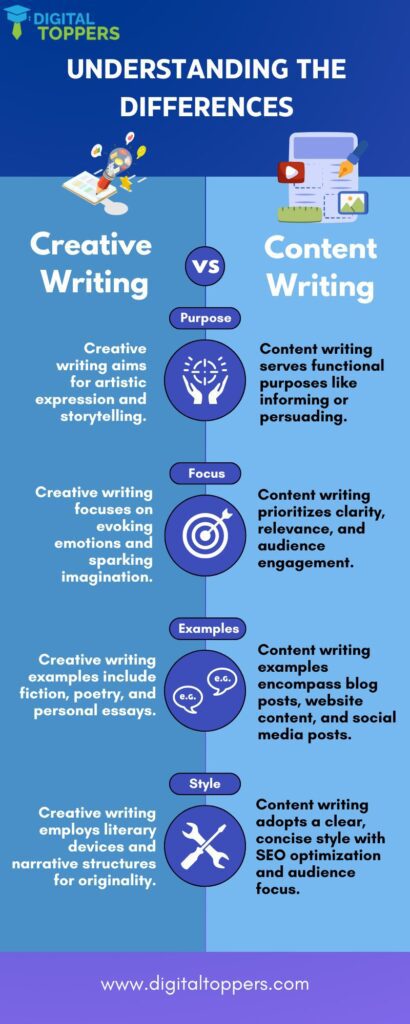
Creative Writing vs. Content Writing: Understanding the Differences

Digital topper blogs Content writing 1 900x313 1

Creative writing and content writing are two different forms of writing used for different purposes and in different ways. Creative writing deals with the free expression of creativity and imagination. It commonly consists of literary works, literary pieces, and fictional narratives. It is the art of creating TV shows, films, novels, movies, or dramas that conceptualize and narrate fiction to amuse, stimulate emotions, and make people think. While creative writing is more abstract and experience-oriented, content writing is a practical tool utilized in blogs, websites, and social media platforms. Content writing is intended for its target audience within a given field or for a specific aim, such as informing, educating, or persuading. It sometimes also includes SEO analysis for better target public intervention. Understanding these differences can be valuable for both the strategic and tactical creation of documents and information addressing different audiences and goals.

Creative Writing and Content Writing 1 410x1024 1

Creative Writing vs. Content Writing: Understanding the Differences Read More »

Will AI Replace Content Writers?

In today’s digital age, the role of artificial intelligence (AI) in manufacturing is expanding rapidly. With the ability to analyze data, extract context, and create optimized content for blog posts and social media updates, AI-powered content generation offers numerous benefits, including increased productivity and the ability to produce content quickly.

The Rise of AI Content Creation:

Over the past decade, artificial intelligence (AI) has made significant advancements across industries, and manufacturing is no exception. As artificial intelligence (AI) continues to advance, companies are increasingly using tools and algorithms to automate tasks and streamline operations, especially in the manufacturing sector.

Thanks to AI’s capacity to analyze data and extract relevant information, businesses can now optimize product listings, mass-produce faster, reduce costs, and maximize manufacturing efforts.

AI-powered content generation:

With the rise of artificial intelligence (AI), infrastructure has undergone a significant transformation. AI-powered content generation uses algorithms and machine learning to create well-structured and relevant content. This system can analyze data and extract information to create articles, blog posts, and social media updates.

While AI-powered products may not possess the creativity and emotional intelligence of human writers, they are valuable tools for creating stories. AI can provide a well-structured framework for human writers to build upon, allowing them to focus on creativity and flexibility.

Benefits of AI-generated content:

Utilizing AI-generated features offers advantages that can improve productivity. One of the main advantages is speed. With AI’s ability to work much faster, it can free up time for human writers to concentrate on creative and challenging tasks.  

“Overall, AI-enabled products empower companies to produce high-quality products more efficiently, thereby increasing manufacturing efficiency and saving money.”

Limitations of AI-generated content:

AI-generated content has become increasingly common in the digital landscape, providing several benefits to businesses seeking to streamline content production. However, it is important to recognize the limitations of this technology.

The Role of Content Writers in the AI Era:

Human writers bring valuable creativity, knowledge, and a deep understanding of the target audience to the content. They can produce engaging and customized content that resonates with readers on a personal level. While their products may be effective, they often lack emotional intelligence and creativity.

Human writers, on the other hand, have the ability to craft authentic stories by conveying complex emotions, developing compelling narratives, and adapting to the changing landscape.

Collaborating with AI Tools:

Content creators can enjoy numerous benefits from integrating AI tools. By using these tools, content writers can enhance their productivity and efficiency, ultimately delivering high-quality content to their audiences.

AI tools can assist content writers in generating ideas for content, offering optimization recommendations for search engines, and even conducting research. This tool can save content writers a significant amount of time and energy, enabling them to concentrate on more creative tasks, such as crafting attention-grabbing headlines and producing compelling content. Furthermore, AI tools can offer valuable insights into audience behavior and preferences.

The Future of Content Writing:

The future of content writing could involve a hybrid approach that combines the capabilities of artificial intelligence and human writers. This collaboration can streamline the efforts in creating content. AI can automate routine tasks, enabling creators to concentrate on strategy and creativity.

However, human touch is still crucial for creating content. By maintaining a personal touch, individual writers can spark emotions, stimulate conversations, and build trust with readers, setting their stories apart from the impersonal and machine-generated content produced by artificial intelligence (AI).

The Importance of a Human Touch:

In today’s digital environment, it is more important than ever to incorporate a human touch into content. While AI technology can offer significant benefits, it cannot replicate the unique abilities of human writers.

Human writers possess the emotional intelligence required to understand complex emotions, add storytelling techniques, and adapt content to the specific needs of their audience. Unlike stories created by machines, human-crafted stories have a personal touch that touches and sets readers apart.

Furthermore, the personal touch is crucial for establishing trust and connecting with the audience. By engaging with readers on a personal level, human authors can initiate conversations and address emotions, making the content more memorable.

In conclusion, the emergence of AI technology has undoubtedly transformed manufacturing, bringing forth new opportunities and challenges. While AI-generated content offers numerous benefits, such as enhanced productivity and flexibility, it still has limitations in terms of creativity and emotional intelligence. Human writers still need to craft engaging and personalized content that connects with readers, and AI should be seen as a tool rather than a replacement. With the assistance of Digital Toppers Academy, you can acquire content writing skills.

Frequently Asked Questions :

Will AI Replace Content Writers? Read More »

How SEO Works – Content Creation, User Experience and Analytics

SEO training - digital toppers

So, let us proceed with the second part of the SEO Beginner’s Guide without additional words. Well, it is the time to explore Content Creation and let yourself go through User Experience and Analytics. Not advanced concepts at all but simply best and easy steps to improve the field of SEO.

The primary areas that need attention are Content Creation and Optimization:

There are many factors that herald the importance of creating and providing effective and engaging content for both the end-users and the search engines. First, it simply keeps people on your website for longer and as long as the actual content of the article is useful and provides insightful answers to the users’ questions, there is a high chance it will be shared, thus increasing organic traffic. Relaunching a particular piece of content multiple times and revising it periodically can both increase the SEO of a website.

User Experience and RankBrain:

Importantly, Google’s RankBrain factors such as the bounce rate, the time spent by the user on the page, or click through rate. This is not a direct way through which your website will be able to achieve improved search engine rankings, but the overall usability of your website is equally important as it offers an enjoyable interface that is easy to navigate, fast loading, and compatible with mobile devices.

Analytics and Monitoring:

Using analytics like Google analytics and Google Search Console enables you to track your website traffic, track Organic traffic, uncover new potential keywords, and determine your SEO return of investment. Semantically, it is possible to regularly analyze these metrics and with their help to build an SEO strategy that will enable its constant improvement.

Staying Updated:

The world of SEO is dynamic and constantly evolving. Search engine algorithms change, new technologies emerge, and user behaviors shift. To stay ahead, follow reputable SEO blogs, attend webinars, and engage with the SEO community to keep yourself updated on the latest trends and best practices.

You can significantly improve the visibility and organic traffic to your website by understanding the fundamentals of search engine optimization, which may initially seem complex. You can improve your search engine rankings and accomplish your online objectives by putting the tactics covered in this beginner’s guide into practice. Remember, SEO is a journey, not a destination, so stay patient and persistent in your efforts.


“Boost Your Online Presence with Digitz India‘s Professional SEO Services – Reach the Top of Search Rankings Now!”

How SEO Works – Content Creation, User Experience and Analytics Read More »

Content Creation

How to Become a Content creator

Do you want to learn how to be a content creator? One who is not only compensated but also well paid?

So, excellent news, my friend: you\’ve come to the correct location! Content creators are in great demand, whether freelancing or in-house. And there\’s no indication of it slowing down. In this piece, we\’ll go over what it means to be a content producer and how you may apply that label to yourself. In addition, we\’ll walk you through the steps of becoming a content producer.

1)Analyze your industry\’s target audience-

But, your audience is ultimately responsible for paying your costs. And if you analyse your audience thoroughly enough, you\’ll discover hobbies and creative opportunities you wouldn\’t have discovered otherwise.

The third characteristic shared by all great content creators is that they are intimately familiar with their target audience. Analyze your own readers and viewers: what do they want that you aren\’t currently providing? What difficulties do they have that you can help them with? Here are some other qualities of your target audience that you might determine for yourself or your company.

  • Age\\sGender\\sLocation
  • The size of a family
  • Job description Salary

2)Discover Your Personality and Style-

There are hundreds of other content makers out there, but you are unique! There are several ways to stand out in a crowd, so figuring out what makes you distinctive in your sector or interest area will help you establish an engaged following on the channel of your choice. It also assists brands in determining whether you are the suitable artist for them to collaborate with. They must ensure that your aesthetic, values, objective, and target audience align with theirs and the product or service they wish to market.

3)Pick a good Platform-

The advantage of using social media sites is that they already have a large user base. Consider Facebook, which has over 2 billion active members. The scenario is similar for YouTube (2.6 billion users), WhatsApp (more than 2 billion), and Instagram (with an estimate of 2 billion users). Hence, because you already have a captive audience, social media is a wonderful place to start. It\’s OK to be on all platforms (and it\’s definitely helpful for additional brand exposure), but focusing on one or two platforms will allow you to focus your efforts and resources on making that a very profitable source.

After all, if your target audience is B2B company owners, there\’s little purpose in using Snapchat or TikTok.Furthermore, not all social networks are made equal. Not only do they appeal to diverse audiences, but certain platforms have been designed specifically for a particular sort of material. WordPress has become associated with blogging. YouTube is the video platform. You get the picture.

4)Choose a talent in content development that you want to improve-

Following that, you must select a content format and then acquire abilities in that area. Content creation abilities include:

  • Copywriting/writing
  • Photography and graphic design
  • Podcasting, video creation, and other services are available.

For example, if you specialise in taekwondo, you might want to explore learning video production. Yet, playing to your strengths is more crucial. Developing content is a time-consuming process. And generating the sort of material you enjoy on a topic about which you are enthusiastic will help you go a long way.

5)Make use of every chance to network-

Successful content producers understand that their success is due not just to their passion, but also to those who have taught, inspired, and pushed them to think in new ways. This is one technique for content providers to become successful. They\’ve recognised that there\’s more to learn than what they currently know, and they\’re willing to try new things. Networking compels you to do so. It\’s time to listen to other people\’s opinions and examine them alongside your own.Make networking a habit by taking advantage of the numerous chances available to you. Not for nothing are they known as social networks!

Spend some time on Twitter, Facebook, and LinkedIn researching and following thought leaders in your sector. After that, you may gradually transition into in-person networking. If you\’re not a natural extrovert, networking may make you shudder. Make it simple on yourself by starting small with coworkers. You already share something, so starting a discussion in the kitchen or at your desks shouldn\’t be too difficult.

There\’s a lot of demand on content writers – and, for that matter, any inbound marketer – to produce exceptional content as part of their marketing plan. Just remember that becoming a good content producer begins with the habits you develop, as they will set you up to create some pretty excellent material for your target audience.

How to Become a Content creator Read More »

Scroll to Top