Have you ever noticed something like this?
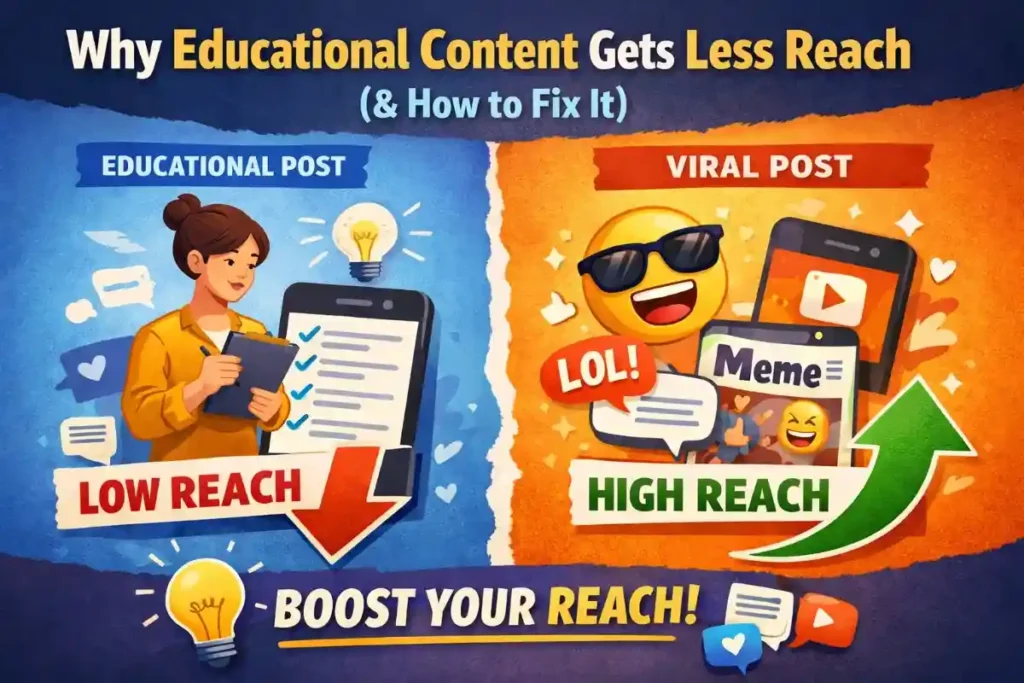
You spend time creating a post that actually teaches something useful. Maybe a tip, a guide, or something that can help people learn. But after posting it, the reach is very low.
At the same time, a simple meme or trending reel gets thousands of views.
This happens to many creators and business owners. It can feel confusing because educational content is supposed to be valuable.
So why does it get less reach on social media?
The truth is, it has less to do with the value of the content and more to do with how people use social media today.
Let’s look at a few simple reasons.
People Open Social Media to Relax
Most people don’t open Instagram or other platforms to study.
They open it when they are bored, taking a break, or simply relaxing. Naturally, they are more likely to stop for something entertaining.
A funny video, a relatable reel, or a trending post is easier to consume.
Educational posts usually need a little more attention. Because of that, many people scroll past them quickly, even if the information is useful.
Sometimes Educational Posts Feel too Heavy
Another reason is how the content is presented.
Many educational posts include long captions or too much information in a single post. When someone is quickly scrolling, a long block of text can feel overwhelming.
It doesn’t mean the content is not good. It just means the format might not match how people consume content on social media.
Keeping the message simple and easy to scan can make a big difference.
The First Few Seconds Matter a Lot
On social media, attention is very short.
If a post does not catch someone’s interest quickly, they will move on to the next thing.
This is especially important for educational content. The beginning of the post needs to make people curious.
For example, instead of starting with an explanation, you could begin with a relatable question.
Something like:
“Posting every day but still not getting reach?”
When people feel connected to the problem, they are more likely to continue reading.
Information Alone Is Not Always Enough
Facts and tips are useful, but people often connect more with stories and real examples.
When educational content includes a small story, a real-life example, or a relatable situation, it becomes more interesting.
Instead of just explaining a concept, showing how it works in real life can make the message stronger and easier to remember.
How You Can Improve the Reach of Educational Content
The good news is educational content can still perform really well. It just needs a small shift in how it is presented.
Here are a few simple things that can help.
Start with a strong opening.
A question, a common mistake, or a surprising statement can make people stop scrolling.
Break information into small points.
Simple and clear points are easier to read than long paragraphs.
Use visual formats.
Carousels, short videos, or simple graphics make learning feel lighter and more engaging.
Make it relatable.
Using everyday examples helps people understand the idea quickly.
Invite people to interact.
Asking a question or encouraging people to save the post can increase engagement.
Final Thoughts
Educational content may not always go viral quickly, but it plays a very important role.
It builds trust. It shows your expertise. And over time, it helps people see you as someone who shares real value.
Instead of changing the purpose of your content, try adjusting the way you present it.
When useful information is combined with a simple format and relatable examples, educational content can reach many more people than you expect.