
digital marketing career

Build a digital-marketing-portfolio

How to Build a Digital Marketing Portfolio: Even With Zero Job Experience

How to Build a Digital Marketing Portfolio: Even With Zero Job Experience

One of the biggest myths in job hunting is that you need years of work experience to have a portfolio. That’s simply not true  especially in digital marketing.

A portfolio isn’t a list of past jobs. It’s proof that you understand how to think like a marketer  that you can analyze, create, strategize, and execute. Whether you’ve run a personal Instagram page, helped a friend’s business grow, or just practiced on your own projects, that’s portfolio material.

Recruiters today care less about your job title and more about what you can actually do. A strong portfolio can outweigh a thin resume and for freshers, it’s often the deciding factor between getting shortlisted or ignored

Why You Need a Portfolio (Even As a Fresher)

  • Resumes tell, portfolios show — Anyone can write “skilled in social media marketing.” A portfolio proves it.
  • It builds instant credibility — Real work samples speak louder than buzzwords.
  • It differentiates you — Most freshers apply with just a resume. A portfolio puts you ahead instantly.
  • It works for interviews too — Instead of explaining your skills, you can show them live.

Step 1: Decide What Type of Portfolio You Need

Not all marketing portfolios look the same. Pick a format based on your strengths and the roles you’re targeting.

Portfolio TypeBest For
Website PortfolioLong-term branding, SEO roles, freelancers
PDF PortfolioQuick to email, good for job applications
Instagram/ LinkedIn portfolioSocial media & content roles
Notion portfolioEasy to build, flexible, great for beginners
Behave/ Canva portfolioVisual/ design-heavy marketing roles

Step 2: Gather Your Raw Material

Before designing anything, list out everything you’ve ever done that’s even slightly marketing-related.

Ask yourself:

  • Have I run social media for a personal page, business, or college event?
  • Have I written any captions, blogs, or ad copy?
  • Have I designed any posters, posts, or visuals?
  • Have I helped any small business, friend, or family member market something?
  • Have I done any college projects related to marketing research or branding?
  • Have I run any paid or organic campaigns, even small ones?

Step 3: Pick 4–6 Strong Projects (Quality Over Quantity)

You don’t need 20 projects. You need 4 to 6 solid ones that show range.

A good mix includes:

  • 1 project showing strategy (a plan, a campaign idea, a content calendar)
  • 1 project showing content creation (posts, captions, videos, designs)
  • 1 project showing results/data (growth numbers, engagement, reach)
  • 1 project showing research or analysis (market research, competitor analysis)
  • 1–2 projects showing versatility (different platforms, formats, or industries)

Step 4: Structure Each Project Like a Case Study

This is what separates an amateur portfolio from a professional one. Don’t just show the output — show your thinking.

Use this simple structure for every project:

      1. The Goal — What were you trying to achieve?

      2. The Strategy — What did you do and why?

      3. The Execution — Show the actual work (screenshots, posts, content, designs)

      4. The Result — What happened? Use numbers wherever possible.

      5. The Learning — What did you learn or would do differently?

Step 5: Design It Simply and Cleanly

Your portfolio doesn’t need to look fancy — it needs to look clear and professional.

Design tips:

  • Use a clean, readable font (avoid more than 2 fonts)
  • Stick to 2–3 brand colors throughout
  • Use plenty of white space — don’t overcrowd
  • Add your photo and a short intro at the top
  • Include a clear “Contact Me” section at the end

Free tools to build it:

  • Notion — Easiest, free, and looks clean instantly
  • Canva — Great for visual/PDF portfolios
  • Carrd — Simple one-page websites, free tier available
  • Google Sites — Free and beginner-friendly

Step 6: Add a Strong Introduction Section

Before recruiters see your projects, they’ll read your intro. Make it count.

Include:

  • Who you are (1 line)
  • What you specialize in (1–2 lines)
  • A standout achievement or unique angle (1 line)

Example:

“I’m a digital marketer who turned a small gifts business into a 200+ order success story using organic social media and local SEO — with zero ad spend. I help brands grow visibility without burning their budget.”

This single paragraph does more than a generic “Hi, I’m a marketing enthusiast looking for opportunities.”

Step 7: Include Skills — But Show, Don’t Just List

Instead of just listing “SEO, Content Writing, Social Media Marketing,” tag each skill to a project where you used it.

Example:

Skills Demonstrated:

  • Local SEO → (Gifts Business Case Study)
  • Content Calendar Planning → (College Event Promotion Project)
  • Copywriting → (Instagram Caption Samples)
  • Basic Video Editing → (Reels Project)

Step 8: Make It Easy to Access and Share

Your portfolio is only useful if people can actually see it.

  • Keep the link short and clean (use Carrd or Notion’s custom URL feature)
  • Add the link to your resume, LinkedIn, and email signature
  • If sending as PDF, name the file properly: `YourName_DigitalMarketing_Portfolio.pdf`
  • Keep file size small so it opens quickly on mobile

Common Portfolio Mistakes to Avoid

  • Including too many projects with no real depth
  • Showing only the output without explaining your strategy
  • Using generic stock descriptions instead of personal insights
  • Forgetting to add results or numbers wherever possible
  • No clear contact information or call-to-action at the end

Bonus: What If You Have Zero Real Projects Yet?

If you’re starting from scratch, here’s how to create portfolio material fast:

  • Pick a small local business (even a friend’s) and create a sample 1-week content calendar for them
  • Recreate an ad campaign for a brand you like and explain what you’d improve
  • Run a personal Instagram page for 30 days with a content strategy and document the results
  • Do a mock SEO audit of a website and list your recommendations
  • Design 5 sample social media posts for a fictional or real brand

Final Thoughts

Your portfolio is your proof of capability, not your job history. Recruiters don’t just want to know what you’ve learned — they want to see how you think, solve problems, and execute ideas.

Start small. Pick your best 4–5 pieces of work, structure them as case studies, and keep refining as you grow. A simple, honest portfolio with real thinking behind it will always beat a flashy one with no substance.

Your portfolio doesn’t need to be perfect — it just needs to start.

Also Read:

Digital Marketing vs Traditional Marketing: Why the Shift is Permanent

How to Build a Digital Marketing Portfolio: Even With Zero Job Experience Read More »

Why Digital Marketing is the Best Course After College in 2026 | Digital Toppers

Why Digital Marketing is the Best Course After College in 2026

Choosing the right career after college is one of the biggest decisions for any student. Traditional degrees alone are no longer enough to secure high-paying jobs. Today, companies are actively looking for practical skills — and that’s where digital marketing stands out as the best course after college.

The Growing Demand for Digital Marketing Skills

Every business today is moving online. From small startups to large companies, everyone needs digital marketing to grow. This has created massive demand for skilled professionals.

Digital marketing includes skills like SEO, social media marketing, Google Ads, content marketing, and analytics — all of which are essential for business growth. Companies are investing heavily in digital channels, making this field highly in demand.

Why Your Degree Alone is Not Enough

A college degree gives you theoretical knowledge, but employers want practical skills. Many graduates struggle to find jobs because they lack hands-on experience.

Digital marketing courses bridge this gap by focusing on real-world applications, live projects, and industry tools.

Learn Practical Skills That Companies Actually Need

Unlike traditional courses, digital marketing is highly practical. A good institute trains you to:

  • Run real ad campaigns
  • Optimize websites for search engines
  • Generate leads and sales
  • Analyze data and improve performance

Institutes like Digital Toppers focus on execution-based learning, where students work on real projects instead of just theory.

Career Growth in Digital Marketing for Fresh Graduates

Digital marketing allows fresh graduates to start earning quickly compared to traditional career paths.

  • Freshers can begin with entry-level roles
  • Within 1–2 years, you can move into specialist positions
  • Freelancing and remote jobs open global income opportunities

Beginners can earn ₹10,000–₹20,000 per month, while experienced professionals can earn ₹50,000 or more.

Multiple Career Opportunities in Digital Marketing

One of the biggest advantages of digital marketing is career flexibility. After completing a course, you can choose roles like:

  • SEO Specialist
  • Social Media Manager
  • Google Ads Expert
  • Content Marketer
  • Freelancer or Consultant

This means you are not limited to one role — you have multiple career paths.

Work From Home Opportunities

Digital marketing offers complete location flexibility. You can:

  • Work from home
  • Freelance for international clients
  • Start your own business

This makes it one of the most attractive career options for today’s graduates.

Why Digital Toppers is the Best Digital Marketing Institute

If you’re serious about building a career, choosing the right institute matters.

Digital Toppers stands out by offering practical, industry-focused training designed for fresh graduates. Students gain hands-on experience through real-time projects, live campaigns, and expert guidance, making them industry-ready from day one.

The institute provides flexible online and offline training options, allowing students to learn at their convenience.

Key Features of Digital Toppers

  • Google-certified trainers with industry experience
  • AI-integrated digital marketing modules
  • Hands-on training with real-time tools
  • Internship opportunities for practical exposure
  • Placement support after course completion

Students also appreciate the structured training approach, which helps them build confidence and develop in-demand digital marketing skills. With a strong focus on real-world learning, Digital Toppers enables students to start their careers faster and grow in the competitive digital space.

Why Digital Marketing is a Future-Proof Career

With the rise of AI, automation, and the rapid growth of online businesses, digital marketing continues to evolve. Rather than replacing jobs, technology is creating more opportunities for skilled professionals.

By learning digital marketing today, you can stay competitive, relevant, and in demand in the job market for years to come.

Final Thoughts

If you’ve just completed college and are unsure about your next step, digital marketing is one of the smartest career choices you can make.

It is skill-based, high in demand, flexible, and offers unlimited earning potential. More importantly, it helps you build a career based on real-world skills — not just theory.

1. Is digital marketing a good course after graduation?

Yes. It offers high demand, multiple job roles, and faster career growth compared to traditional courses.

2. Do I need technical knowledge to learn digital marketing?

No. Beginners from any background can learn it easily with proper training.

3. How long does it take to complete a digital marketing course?

Most courses take 2–3 months, depending on the program and training level.

4. Can I get a job after completing the course?

Yes. Institutes like Digital Toppers provide internship and placement support to help students start their careers. 

5. Can I earn money as a freelancer after learning digital marketing?

Yes. You can work with clients globally and earn through freelancing, even from home.

Why Digital Marketing is the Best Course After College in 2026 Read More »

Digital Marketing Course After 12th – Start Your Career with Digital Toppers

Digital Marketing Course After 12th in 2026 – Learn Skills That Get You Hired

Just finished your 12th? Feeling confused about what to do next? Want to learn a skill that helps you earn online while continuing your UG studies?

Learning digital marketing in 2026 is one of the best choices for beginners. But the most important thing is choosing the right place to learn—and Digital Toppers makes it easy for you to get started.

What is Digital Marketing?

Digital marketing is the process of promoting products or services using the internet. It includes platforms like Google, social media, websites, emails, and online ads.

In simple words, instead of marketing through newspapers or TV, businesses now use online methods to reach more people and grow faster.

For example:

  • Ads you see on Instagram or YouTube
  • Websites that appear on Google search
  • Promotional emails from brands

All of these are part of digital marketing.

Why 12th Completed Students Should Learn Digital Marketing

Digital marketing is one of the fastest-growing career options today. Every business needs an online presence, which means skilled digital marketers are always in demand.

Here’s why it’s perfect for you:

  • Start Your Career Early: Learn job-ready skills right after 12th
  • High Demand: Companies and startups need digital marketers
  • Creative + Practical: Work on real campaigns and ideas
  • Flexible Work: Do jobs, freelancing, or even start your own business

Why Digital Toppers is a Good Choice to Learn Digital Marketing

Digital Toppers offers a learning environment that is suitable for beginners who want to understand digital marketing step by step. The course is designed to focus on both basic concepts and practical skills.

  • Focus on Practical Learning: Includes real-time projects for better understanding
  • Experienced Trainers: Sessions handled by professionals with industry knowledge
  • Beginner-Friendly: Simple explanations, easy to follow
  • Flexible Options: Online and offline classes available
  • Career Support: Guidance for internships and entry-level opportunities

What You Will Learn in This Course

Digital Toppers offers a personalized Digital Marketing course for beginners, so you don’t need any prior experience. You’ll gain practical skills that you can start using to build your online career while studying.

  • Social Media Marketing: Grow and manage Instagram, Facebook, and other platforms to reach real audiences
  • SEO (Search Engine Optimization): Make websites rank higher on Google search results
  • Google Ads & Meta Ads: Run paid campaigns to get faster results
  • Email Marketing: Connect with customers directly through effective emails
  • Content Creation: Create engaging posts, videos, and graphics that attract attention
  • Website Designing: Learn to create and manage websites using WordPress

Career Opportunities After This Course

After completing this course, you can:

  • Apply for entry-level jobs and internships
  • Work as an SEO Executive, Social Media Manager, or Ads Specialist
  • Start freelancing and earn online
  • Even build your own online business

Digital marketing skills open many doors for your future.

Conclusion

Learning digital marketing after 12th is not just a course—it’s a smart career move. You gain skills that are in demand and can start earning early.

Don’t wait. Start your digital career today with Digital Toppers and build a successful future in 2026.

How to Start Your Digital Marketing Journey with Digital Toppers

Starting is simple and easy:

  1. Visit the website
  2. Find the Digital Marketing Course After 12th in 2026
  3. Enroll and begin learning right away

Have questions or want to get started immediately? Call or WhatsApp Us: +91 90426 45706

With Digital Toppers, you can start building practical digital marketing skills and take your first step toward an online career while continuing your studies.

1. Is digital marketing a good career after 12th?

Yes, digital marketing is a high-demand career after 12th, offering many job opportunities and the chance to start earning online.

2. Do I need prior knowledge to join a digital marketing course?

No, this course is beginner-friendly. You don’t need any prior experience to get started.

3. What jobs can I get after completing this digital marketing course?

You can work in SEO, social media management, Google and Meta Ads, content creation, or freelancing. Entry-level jobs and internships are also available.

Digital Marketing Course After 12th in 2026 – Learn Skills That Get You Hired Read More »

Person posting content on LinkedIn daily with engagement icons, networking symbols, and professional growth illustration.

What Really Happens When You Post on LinkedIn Every Day

Many people use LinkedIn only as an online version of their resume.

They create a profile, add their education and experience, and then leave it untouched for months. Some open it only when they are searching for a job. Others scroll occasionally, like a social media feed, without actively participating.

But something interesting happens when you change one simple habit.

You start posting every day.

Not promotional content. Not complicated industry reports. Just simple thoughts, lessons, insights, and experiences related to your field.

So what actually happens when someone posts on LinkedIn every day?

Let’s break it down.

The First Few Days: Almost No One Notices

In the beginning, it can feel a little awkward.

You write a post, click “publish,” and wait. After a few hours, you may see only a handful of views. Maybe one or two likes from friends or colleagues.

Many people stop here because they assume their content is not interesting.

But the truth is simple.

LinkedIn’s algorithm is still learning about your content and your audience. At this stage, consistency matters more than perfection. The platform needs time to understand what you talk about and who should see it.

Think of the first week as planting seeds.

During the first few days, you may notice:

  • Very few likes or comments
  • Limited reach
  • Mostly interactions from people you already know

And that’s completely normal.

Week Two: Engagement Slowly Starts Growing

After a week or two of posting regularly, something small begins to change.

Your posts start reaching slightly more people. A few unfamiliar names appear in the likes or comments. Sometimes someone sends a connection request after reading your post.

This happens because LinkedIn starts recognizing your activity.

When you post consistently:

  • The algorithm understands your content topics
  • Your posts appear more often in your network’s feed
  • Your content slowly reaches people outside your network

It is not viral growth.

It is steady visibility.

Week Three: People Start Recognizing Your Name

One of the most surprising things about posting daily is name recognition.

When someone repeatedly sees your posts in their feed, they begin to remember you. Even if they don’t interact immediately, your name slowly becomes familiar.

For students, this can be powerful.

Imagine a recruiter scrolling through LinkedIn and seeing your insights about marketing, technology, or career learning several times.

Even short posts can create the impression that you are:

  • Curious about your field
  • Actively learning
  • Sharing useful ideas
  • Engaging with industry conversations

This is how personal branding quietly begins.

Week Four: Opportunities Start Appearing

By the time you reach a month of consistent posting, a few interesting things can happen.

You might start noticing:

  • Someone commenting with questions
  • A professional sending a message appreciating your post
  • Recruiters viewing your profile
  • New connection requests from industry people
  • Collaboration or networking opportunities

None of these appear overnight.

They grow slowly as more people discover your voice and ideas.

The key point is simple:

Visibility creates opportunities.

If people never see your thoughts, they never get a chance to connect with you.

You Also Become a Better Thinker

Posting every day does something else that many people do not expect.

It improves your thinking.

When you write consistently, you begin observing your industry more closely. You start noticing trends, ideas, and lessons in your daily work or learning.

Instead of passively consuming information, you start processing it.

Over time, this helps you:

  • Think more clearly
  • Structure your ideas better
  • Share knowledge confidently
  • Develop a unique perspective

Consistency builds clarity.

Consistency Matters More Than Perfection

Many people delay posting because they want their content to be perfect.

But LinkedIn rewards consistency, not perfection.

A simple post sharing what you learned today can sometimes perform better than a long, complicated article.

Authentic thoughts often resonate more than polished corporate language.

The real goal of posting regularly is simple:

  • Show up consistently
  • Share useful insights
  • Document what you are learning
  • Start meaningful conversations

You don’t need to impress everyone.

You only need to start sharing.

The Real Result of Posting Every Day

Posting daily on LinkedIn will not magically make you famous in a week.

But something much more valuable happens over time.

You begin to

  • Become visible in your industry
  • Build credibility through your ideas
  • Attract the right professional connections
  • Develop a strong personal brand

And this visibility compounds.

  • One post leads to a conversation
  • One conversation leads to a connection
  • One connection leads to an opportunity

Slowly, the platform that once looked like just a resume page becomes a powerful place for learning, networking, and growth.

All because you decided to share your thoughts consistently.

Sometimes, small habits create the biggest impact.

What Really Happens When You Post on LinkedIn Every Day Read More »

ChatGPT used in digital marketing workflows, showing content creation and strategy planning

How ChatGPT Is Really Used in Digital Marketing (Not What You Think)

When ChatGPT became popular, many people thought digital marketing jobs were over.

“AI will write everything.”
“Content creators are finished.”
“Copywriters are replaced.”

But in reality?

That’s not what’s happening.

No serious marketer is just copying and pasting from ChatGPT and earning money. That’s not how it works.

Let me tell you how it’s actually being used in real digital marketing work.

1. When Ideas Don’t Come

Some days your brain simply doesn’t cooperate.

You want to post.
You need to post.
But nothing clicks.

Instead of wasting 40 minutes staring at a blank screen, marketers open ChatGPT and ask the following:

  • Give 10 content ideas for this niche
  • What are common mistakes in this industry?
  • What questions do beginners ask?

It gives raw material.

Not final content.
Just direction.

From there, the marketer shapes it with their own experience.

2. First Draft = Fast Draft

Writing from scratch takes time.

Especially blogs, landing pages, long captions.

Now what happens?

Marketers use ChatGPT to generate a rough draft.
Then they

  • Change the tone
  • Add real examples
  • Insert personal insights
  • Improve clarity

So instead of 5 hours, it takes maybe 2.

The thinking is still human.
The speed is AI-assisted.

3. Ad Copy Testing

In ads, variations matter.

You don’t run one headline.
You test 5–10.

Instead of struggling to think of multiple angles, marketers use ChatGPT to generate:

  • Different emotional hooks
  • Problem-focused headlines
  • Curiosity-based openings
  • Short vs long copy

Then they test it on platforms like Meta Ads or Google Ads.

AI helps with quantity.
Data decides quality.

4. Turning One Content Into Many

This is where it’s powerful.

One blog post can become the following:

  • Instagram carousel
  • LinkedIn post
  • Email newsletter
  • Reel script

Instead of rewriting everything manually, marketers ask ChatGPT to repurpose it into different formats.

It saves serious time.

Consistency becomes easier.

5. Understanding Audience Better

Good marketing is not about posting daily.
It’s about saying the right thing.

Marketers use ChatGPT to:

  • List possible pain points
  • Identify objections
  • Suggest buying triggers
  • Structure customer personas

It gives perspective. But final messaging is always refined by the marketer.

6. Script Writing for Reels

Short-form content needs structure.

  • Hook.
  • Relatable problem.
  • Clear solution.
  • Strong ending.

Marketers use ChatGPT to outline this structure.
Then they rewrite it in their own voice before recording.

Because audiences connect with personality.
Not robotic perfection.

7. Learning Faster

Digital marketing changes fast.

Instead of watching a 45-minute video, marketers ask ChatGPT to:

  • Explain new updates simply
  • Break down complex terms
  • Give examples

It becomes like a quick study partner.

Important Truth

ChatGPT is not replacing digital marketers.

It’s replacing slow workflows.

If someone depends 100% on AI without understanding marketing basics, results won’t come.

But if someone understands:

  • Audience
  • Strategy
  • Positioning
  • Data

Then ChatGPT becomes a powerful assistant.

Conclusion

The question is not
“Will AI take my job?”

The better question is
“Am I learning how to use AI better than others?”

That’s the real advantage.

How ChatGPT Is Really Used in Digital Marketing (Not What You Think) Read More »

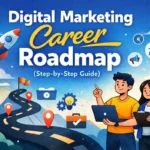
Illustration of a digital marketing career roadmap featuring two young professionals working on a laptop and clipboard, with a rocket launch, winding road path with milestones, marketing icons, growth chart, and currency symbol in a bright blue sky background.

Digital Marketing Career Roadmap (Step-by-Step Guide)

Introduction

Digital marketing is no longer just a trend. It’s one of the most practical and opportunity-filled career paths today.

Businesses need visibility. Brands need attention. Creators need growth.
And behind all of that? Digital marketers.

If you’re wondering how to actually start—not just learn randomly—this roadmap will give you clarity.

Let’s break it down step by step.

Step 1: Understand the Basics First

Before choosing a specialization, understand what digital marketing really includes.

Core areas:

You don’t need to master everything immediately. Just get basic knowledge of how each area works.

This foundation gives you confidence.

Step 2: Choose One Core Skill

Many beginners make one common mistake—trying to learn everything at once.

Instead, pick one primary skill.

For example:

  • If you enjoy writing, go for Content Marketing or SEO
  • If you love creativity → Social Media Marketing
  • If you like numbers, performance marketing & Analytics

Clarity reduces confusion.

Step 3: Learn the Right Tools

Tools make you efficient.

Some important platforms to understand:

  • Google Analytics
  • Google Ads
  • Meta Ads Manager
  • Canva
  • ChatGPT

You don’t need expert-level knowledge on day one.
Start with understanding what each tool does and practice regularly.

Skill + tools = employability.

Step 4: Start Practicing Immediately

Learning without implementation slows growth.

You can:

  • Start a blog
  • Create an Instagram theme page
  • Optimize a friend’s small business page
  • Run a small ad campaign with a limited budget

Practical experience builds real confidence.

Even small experiments matter.

Step 5: Build a Portfolio

This is where many people delay—but this step changes everything.

Your portfolio can include:

  • Sample social media posts
  • Blog articles
  • Ad campaign screenshots
  • Analytics reports
  • Case study breakdowns

No one hires based on certificates alone.
They hire based on proof.

Step 6: Build Your Personal Brand

Your online presence is your digital resume.

Start posting:

  • What you learn
  • Insights from campaigns
  • Mistakes and lessons
  • Small wins

Platforms like LinkedIn and Instagram help you attract opportunities instead of chasing them.

Consistency builds visibility.

Step 7: Get Your First Client or Job

You can start with:

  • Freelancing platforms
  • Cold outreach to small businesses
  • Internships
  • Agency jobs

Don’t wait until you feel “fully ready.”
Growth happens during action.

Your first opportunity might not be perfect—but it will teach you more than months of theory.

Step 8: Keep Upgrading Your Skills

Digital marketing evolves constantly.

Trends change. Algorithms change. Tools improve.

The marketers who grow long-term are the ones who:

  • Stay curious
  • Keep testing
  • Keep learning

Learning is not a one-time event. It’s a habit.

Conclusion

Digital marketing is not about being lucky.
It’s about being consistent.

Start small.
Focus on one skill.
Practice daily.
Build proof.
Show your journey.

If you follow this roadmap step by step, you won’t just “enter” digital marketing—you’ll build a strong career in it.

And remember—everyone starts as a beginner. What matters is that you start.

FAQs

1. I’m completely new. Where do I actually begin?

If you’re starting from zero, don’t worry. Begin with the basics—understand what SEO, social media marketing, content marketing, and paid ads really mean. You don’t have to learn everything together. Pick one area that interests you and focus on it. Start practicing alongside learning. That’s where real clarity comes.

2. Is digital marketing difficult to learn?

It’s not difficult, but it does require consistency. In the beginning, new terms and tools might feel confusing. That’s normal. Once you start applying what you learn, things slowly start making sense. The more you practice, the more confident you become.

3. Do I need coding knowledge?

Not really. You don’t need to be a coder to become a digital marketer. Basic understanding of websites can help, but most tools today are simple and beginner-friendly. What matters more is strategy and creativity.

4. What salary can a fresher expect in India?

As a beginner, you can expect around ₹15,000 to ₹25,000 per month. It may vary based on your skills and the company. The stronger your portfolio, the better your starting point.

5. How much can someone earn after a few years of experience? With 2–5 years of solid experience, many digital marketers earn between ₹4 LPA to ₹10 LPA or even more. Your income grows when you can show real impact on business results.

Digital Marketing Career Roadmap (Step-by-Step Guide) Read More »

Illustration showing top digital marketing trends with AI robot, content creator filming, social media engagement icons, SEO symbols, online shopping cart, and people interacting on social platforms.

Top Digital Marketing Trends Businesses Should Follow in 2026

Introduction

Digital marketing is growing very rapidly. How people search online, buy products, and connect with brands is changing every year. Tools are becoming smarter, platforms are improving, and content is becoming even more interesting.

Businesses that follow the latest trends in 2026:

These trends help brands stay strong in the market.

1. AI Marketing Takes the Lead

Artificial Intelligence (AI) now plays a crucial role in marketing.

Businesses use AI to:

  • Create content quickly
  • Design ads & images
  • Provide customer support with chatbots
  • Understand customer behavior
  • Offer personalized offers

AI helps reach the right person with the right message at the right time. Why is it important? Marketing is now smarter and more personalized.

2. Short Video Content Attracts More Attention

People prefer content that can be watched quickly.

Popular platforms:

Short videos help to:

  • Grab attention instantly
  • Explain products easily
  • Provide entertainment and information.

Help the brand grow quickly

Why is it important? Video content is powerful for social media growth.

3. Social Media = Shopping Place

Social media is no longer just a place for scrolling. People are buying products without leaving the app.

Trends:

  • Instagram Shops
  • Influencer promotions
  • Live selling
  • In-app purchases

Customers get an easy and smooth shopping experience.

Why is it important? It becomes easier to convert followers into customers.

4. SEO is Now Evolving with AI & Voice Search

The way people search is becoming more natural.

Now people are:

  • Asking full questions
  • Using voice search
  • Expecting quick answers

Therefore, SEO content should:

  • Be question-based
  • Use simple language
  • Provide clear answers

Be optimized for voice search

Why is this important? Brands that provide clear answers get more visibility.

5. Influencer Marketing is getting even stronger

People trust real people more than ads.

Brands are:

  • Working with micro-influencers
  • Creating content with creators
  • Doing natural promotion

This feels friendly to the audience.

Why is this important? When trust is built, engagement and loyalty increase.

6. Community Marketing is the future

Businesses are not just selling products but building communities.

Examples:

  • WhatsApp groups
  • Telegram channels
  • Private social groups
  • Brand communities

Communities help to:

  • Connect regularly
  • Share value

Build long-term relationships

Why is this important? Loyal customers will help the brand grow faster.

Conclusion

Reasons for digital marketing success in 2026:

  • AI
  • Short videos
  • Social media shopping
  • New SEO style
  • Influencer marketing
  • Community building

Businesses that follow these trends will build a strong online presence, maintain good relationships with customers, and achieve steady growth.

Future marketing is smart, engaging, and people-focused—this is the perfect time to level up!

Top Digital Marketing Trends Businesses Should Follow in 2026 Read More »

What a Cricket Match Scorecard Can Teach Us About Digital Marketing

What a Cricket Match Scorecard Can Teach Us About Digital Marketing

(Sri Lanka vs Pakistan Match Example)

Introduction

Many people love watching cricket
When we see a match scorecard, we understand the full story of the game.
It shows who played well, what strategy worked, and how the team performed.

In the same way, digital marketing also depends on numbers and performance
A cricket scorecard and a digital marketing report are more similar than we think.

Let’s see how a Sri Lanka vs Pakistan match scorecard connects with digital marketing in a simple way. Runs = Website Traffic and Reach

Runs = Website Traffic and Reach

In cricket,

  • Total runs show how strongly the team played.

In digital marketing,

  • Website traffic
  • Social media reach

These numbers show how many people saw your brand.

If a team scores 300 runs, it means strong performance.
If your campaign reaches thousands of people, it means good visibility.

 More runs = more reach
 More reach = more growth opportunities

Batsman Performance = Content Performance

In a match,

  • One batsman may score a century.
  • Some may score less.

In marketing,

  • One blog or reel may perform very well.
  • Some posts may perform normally.

This is natural
Good marketers study top-performing content and create similar content again. The best content shows the right direction.

Strike Rate = Engagement Rate

In cricket,

  • A high strike rate means fast scoring.

In digital marketing,

  • Likes
  • Comments
  • Shares
  • Saves

High engagement means people enjoy your content and interact with it.

When engagement is high, platforms show your content to more people.

Boundaries (4s & 6s) = Conversions

In cricket,

  • Boundaries change the match quickly.

In marketing,

  • Leads
  • Sales
  • Sign-ups

These are called conversions.

Reach is important, but conversions bring real results
Just like sixes bring excitement in a match.

Wickets = Learning Points

In cricket,

  • When a wicket falls, the team adjusts the plan.

In marketing,

  • Campaign data helps you understand what can improve.

Examples:

  • Better targeting
  • Clear message
  • Strong call to action

 Learning from data helps the next campaign perform even better.

Bowlers = Digital Marketing Tools

In cricket,

  • Bowlers control the game.

In marketing,

  • SEO
  • Paid ads
  • Email marketing
  • AI tools

Using the right tools at the right time helps brands stand out clearly.

Partnerships = Strategy and Consistency

In cricket,

  • A strong partnership builds the match.

In marketing,

  • Strategy + consistency
  • Content + promotion

When these work together, long-term growth becomes steady and strong

Conclusion

A cricket scorecard is not just numbers.
It tells a story of planning, performance, and teamwork.

Digital marketing works the same way.

  • Track your data
  •  Improve what works well
  •  Stay consistent

Just like cricket teams win with smart play,
brands grow with smart digital marketing

What a Cricket Match Scorecard Can Teach Us About Digital Marketing Read More »

Beginner Course Blog

Digital Marketing Course for Beginners at Rs12,000

Digital Marketing Course for Beginners

If you are new to digital marketing and want to learn from basics, choosing the right course is important. Digital Toppers offers a beginner-friendly digital marketing course that helps you understand concepts easily and apply them in real life.

This course is suitable for students, job seekers, business owners, and anyone who wants to change their career. You can learn practical digital marketing skills in just 1 month.

Course Details

Here is a quick overview of the course:

  • Course Name: Digital Marketing Course for Beginners
  • Duration: 1 Month
  • Mode: Online and Offline classes available
  • Internship: Separate (Optional)
  • Original Fee: ₹15,000
  • Offer Price: ₹12,000 (Limited-Time Offer)

This course focuses on practical skills that help you get a job, start freelancing, or grow your own business.

What You Will Learn

The course is divided into 5 easy modules. Each module is designed for beginners, so learning becomes simple and stress-free.

1. Content Creation

Content is the base of digital marketing. In this module, you will learn:

  • Canva Basics: How to create posters, social media posts, and short videos
  • Blogging: How to write simple blogs for websites
  • AI Tools: Learn basic AI tools that help you work faster and save time

Social Media Marketing (SMM)

Social media helps businesses reach more people. Local SEO helps businesses appear in nearby searches.

In this module, you will learn:

  • How to manage Facebook and Instagram business pages
  • How to increase likes, comments, and shares
  • How to run Meta Ads using Meta ( Ad Centre )

You will learn both free promotion methods and paid advertising techniques.

Local SEO

Google My Business (GMB) Importance – Why GMB is crucial for local visibility

Local Business Setup – How to set up your business on Google My Business

Google Maps Pointing – Ensuring your business appears accurately on Google Maps

NAP Citation – Managing Name, Address, and Phone consistency across platforms

Google Ads – Smart Campaigns

Google Ads helps businesses advertise online. You will learn:

  • Basics of Google Ads
  • What are Smart Campaigns
  • How Google ads work
  • Simple ad setup knowledge

Website Building

You will learn how to create a website without coding:

  • Build professional websites using CMS Platform
  • Fully practical and easy for beginners

Search Engine Optimization (SEO)

SEO helps websites rank higher on Google. In this module, you will learn:

  • SEO Basics: How Google and search engines work
  • Website Audit: How to check and improve a website
  • On-Page & Technical SEO: Make websites fast and mobile-friendly
  • Link Building: Improve website trust and ranking

Web Analytics

This module helps you understand website performance:

  • Google Analytics: Track visitors and website traffic
  • Google Search Console: Check how your site appears on Google

Conclusion

Digital marketing is growing every day, and skilled professionals are in high demand. Learning digital marketing now can help you build a strong career, earn as a freelancer, or promote your business online.

At Digital Toppers, you will not only learn tools but also learn how to use them in real situations and get results.

Digital Marketing Course for Beginners at Rs12,000 Read More »

How to choose Digital Marketing Course 2026

How to Choose the Right Digital Marketing Course in 2026: 7 Factors That Truly Matter (With Real Training Insights)

Digital marketing has become one of the most essential skills for students, business owners, and freelancers today. With hundreds of institutes offering different types of courses, choosing the right training program is often confusing.

Most people end up selecting a course based only on fees and duration — but that’s where the biggest mistakes happen.

To help you make the right decision, here are 7 important factors you must check before joining any digital marketing course, along with how we follow the same standards at Digital Toppers.

1. Check the Trainer’s Real Industry Experience

The biggest difference between average and high-quality training is the trainer’s real-world exposure.

A trainer who has worked with actual brands can:

  • Share practical strategies
  • Guide you with real case studies
  • Teach you how industry campaigns are executed

At Digital Toppers:

Our trainers come with 17+ years of industry experience, having worked with several big brands across India. This ensures our students learn what truly works in the real world — not just theory.

2. Make Sure the Trainers Are Certified

Digital marketing evolves every single day. So learning from certified professionals is crucial.

At Digital Toppers:

All our trainers are Google-certified, ensuring you receive up-to-date, authentic, and credible training.

3. Choose a Course That Matches Your Goals

Every learner is different — and so their training needs should also be different.

Most institutes teach a common syllabus for everyone.
But the right course should be customized based on who you are and what you want to achieve.

At Digital Toppers, we follow a fully customized training model for:

Students
  • Interview-focused preparation
  • Real project execution
  • Portfolio building
  • Mock interviews & resume guidance
Business Owners
  • Content marketing strategy
  • Lead generation techniques
  • Google Ads & Meta Ads setup
  • Budget planning & tracking
Freelancers
  • How to approach clients
  • Pricing & negotiation
  • Project execution
  • Reporting & client retention

This ensures every learner gets exactly the training they need to reach their goals.

4. Look for Execution-Based Learning (Not Only Theory)

Digital marketing is 80% practical.

A good institute must allow you to:

  • Work on real accounts
  • Create own website
  • Create strategies
  • Build reports
  • Analyse data

At Digital Toppers:

Every module includes hands-on project execution, so you learn by doing, not by watching.Every module includes hands-on project execution, so you learn by doing, not by watching.

5. Check Whether They Teach Latest Industry Tools

The most important part of digital marketing is using the right tools.

So ask:
👉 Will I get practical exposure to tools like Google Ads, Meta Ads, Google Analytics, SEO tools, content tools, AI tools, etc.?

At Digital Toppers, every student practices on real-time tools used in agencies and companies.

6. Look for Classes That Offer Mentorship & Support

Learning digital marketing is not a one-day process.

You need:

  • Doubt clearing
  • Assignment support
  • Project guidance
  • Career help

At Digital Toppers:
Every learner receives continuous mentorship, along with post-training support.

7. Check Placement or Freelance Support

If you are a student, placement matters.
If you are a freelancer, client-acquisition matters.
If you are a business owner, campaign performance matters.

Digital Toppers ensures:

  • Placement-focused training for students
  • Sales & client pitching support for freelancers
  • Marketing & lead-gen support ideas for business owners

Final Thoughts

Choosing a digital marketing course is a big decision. Instead of selecting an institute based only on price or duration, focus on:

  • Experience
  • Practical learning
  • Customised training
  • Tools
  • Real industry exposure
  • Student/business/freelancer outcomes

Digital Toppers follows all the above mentioned standards to ensure every learner gets the right skills, confidence, and practical knowledge to grow along with this blooming digital world.

How to Choose the Right Digital Marketing Course in 2026: 7 Factors That Truly Matter (With Real Training Insights) Read More »

Scroll to Top