Social Media Marketing

Struggling with content creation concept showing confused and confident creators with social media icons and growth elements

Struggling with Content Creation? Here’s What Actually Works

Introduction

Today, content is everywhere. From Instagram reels to YouTube videos and blog posts, people are constantly consuming information. But not all content gets attention. Some posts are ignored, while others go viral and create real impact.

The difference is not luck. It comes down to how well the content is created, structured, and delivered.

Content creation is not just about posting regularly. It is about understanding people, solving their problems, and presenting ideas in a way that is easy to consume and hard to ignore.

What is Content Creation?

Content creation is the process of producing valuable material for a specific audience. This content can educate, entertain, inspire, or persuade people.

It includes formats like:

  • Blog posts
  • Social media posts
  • Videos and reels
  • Podcasts
  • Infographics

At its core, good content always answers one question:

“Why should someone spend time on this?”

If your content does not give value or trigger emotion, people will simply scroll past it.

Why Content Creation is Important

In today’s digital world, attention is one of the most valuable assets. Content helps you capture that attention and turn it into trust.

Strong content can help you:

  • Build personal or brand identity
  • Gain audience trust
  • Increase visibility online
  • Generate leads or sales

For businesses, creators, and even students, content creation has become a powerful growth tool.

Types of Content You Should Focus On

Not all content serves the same purpose. A balanced strategy includes different types of content.

1. Educational Content

This type of content focuses on teaching something useful. It positions you as someone who provides value.

For example, guides, tips, and tutorials fall under this category.

  • Builds trust
  • Increases saves and shares

2. Entertaining Content

Entertaining content is designed to engage and capture attention quickly. It is highly shareable.

This includes:

  • Memes
  • Funny videos
  • Relatable situations
  • Increases reach
  • Attracts new audience

3. Personal Content

This content shows the human side behind the creator or brand. It builds emotional connection.

Examples include:

  • Personal stories
  • Daily routines
  • Behind-the-scenes content
  • Builds connection
  • Makes audience relate to you

4. Promotional Content

This is where you talk about your product or service. It is important but should not be overused.

Examples:

  • Product demos
  • Testimonials
  • Offers
  • Drives conversions
  • Generates revenue

Step-by-Step Content Creation Process

Creating good content consistently requires a system. Without a process, it becomes confusing and inconsistent.

Step 1: Understand Your Audience

Before creating content, you must clearly know who you are creating for.

Ask questions like:

  • What problems do they face?
  • What are they searching for?
  • What kind of content do they consume?

The better you understand your audience, the more relevant your content will be.

Step 2: Plan Your Content Ideas

Many people struggle with ideas, but ideas come from problems.

A simple approach is the following:

Identify a problem → Provide a solution → Convert it into content

For example, if people struggle with low engagement, you can create content around improving reach.

Step 3: Focus on Strong Structure

A well-structured piece of content performs better. Every content should follow a simple flow:

  • Hook (grab attention)
  • Problem (what is the issue)
  • Solution (how to fix it)
  • Call to action (what to do next)

This keeps your content clear and effective.

Step 4: Keep It Simple and Clear

One of the biggest mistakes is overcomplicating content. Using simple language makes your content accessible to a wider audience.

  • Use short sentences
  • Avoid complex words
  • Focus on one main idea

Clarity always wins over complexity.

Step 5: Be Consistent

Consistency is what separates beginners from successful creators.

Instead of posting randomly, follow a schedule:

  • 3 to 4 times per week is enough
  • Maintain similar quality
  • Stay in the same niche

Consistency builds trust with both the audience and the platform.

Step 6: Analyze and Improve

Creating content is not enough. You must also track performance.

Observe:

  • Which content gets more engagement
  • What type of posts are saved or shared
  • What topics perform well

Use this data to improve future content.

Tools That Can Help in Content Creation

Using the right tools can make content creation easier and more efficient.

Some commonly used tools include:

  • Canva for designing posts and visuals
  • CapCut for editing videos
  • Notion for planning content
  • SEMrush for keyword research and blog ideas

These tools help improve both quality and productivity.

Speed Up Your Content creation with AI

1. AI Tool for Script Writing / Idea Generation

Use: Video ideas, captions, scripts, storytelling

  • ChatGPT → video scripts, reels captions, content ideas
  • Jasper AI → blog writing, ad copy
  • Copy.ai → quick social media captions

Example: YouTube video script, Instagram reel dialogue

2. AI Tool for Image Generation / Design

Use: Thumbnails, Instagram posts, posters

  • Midjourney → high-quality creative images
  • DALL·E → create images from prompts
  • Canva → templates and easy design tools

Example: YouTube thumbnails, social media posts

3. AI Tool for Video Creation / Editing

Use: Reels, Shorts, YouTube videos

  • CapCut → simple editing with effects
  • Runway ML → background removal, AI editing
  • Pictory → convert text into video

Example: Turn a script into a video automatically

4. AI Tool for Voice & Dubbing

Use: Voiceovers, narration

  • ElevenLabs → realistic AI voice
  • Descript → edit audio/video and clone voice

Example: Voiceover videos without showing your face

5. AI Tool for Social Media Growth / Automation

Use: Scheduling, analytics, growth

  • Hootsuite → schedule posts
  • Buffer → consistent posting

Example: Automatically post daily content

6. AI Tool for SEO & Trend Research

Use: Trending topics, keywords

  • TubeBuddy → keyword research for YouTube
  • VidIQ → find trending ideas

Example: Discover viral video topics

Common Mistakes to Avoid

Many beginners struggle because of avoidable mistakes.

Some of the most common ones are:

  • Trying to be perfect before starting
  • Copying others without originality
  • Posting without a clear goal
  • Ignoring audience needs
  • Giving up too early

Avoiding these mistakes can speed up your growth.

Conclusion

Content creation is not just a trend. It is a long-term skill that can open many opportunities.

Success in content creation does not come overnight. It comes from:

  • Understanding your audience
  • Creating valuable content
  • Staying consistent
  • Continuously improving

Start small, stay consistent, and focus on giving value. Over time, your content will naturally grow and reach the right audience.

Struggling with Content Creation? Here’s What Actually Works Read More »

Professionals discussing and creating content on LinkedIn in a modern office workspace in 2026

Why Everyone Is Suddenly Posting on LinkedIn in 2026

If you open LinkedIn today, you will notice something interesting.

Almost everyone is posting.

Your college friend is sharing career lessons. A founder is posting daily insights about business. Designers are talking about their creative process. Students are sharing internship experiences and project learnings.

Just a few years ago, LinkedIn looked very different.

Most people created a profile, added their education and job details, and left it there. They logged in only when they were searching for a job or updating their resume.

But in 2026, LinkedIn feels more like a content platform than a job portal.

So what exactly changed?

LinkedIn Is No Longer Just a Resume

Earlier, LinkedIn was mainly about profiles.

Now it is about presence.

Having a well-written profile is still important, but people have realized that visibility comes from sharing ideas and experiences. When someone posts regularly, their network begins to recognize them.

Instead of waiting for opportunities, professionals are showing their knowledge through content.

This shift has made LinkedIn much more active and engaging.

Personal Branding Became a Priority

One major reason people started posting more is the rise of personal branding.

Professionals today understand that being good at their work is important, but being visible also makes a difference. LinkedIn helps people build that visibility.

Through posts, professionals can:

  • Share lessons from their work
  • Talk about industry trends
  • Show their problem-solving approach
  • Share personal career experiences
  • Teach something useful to their network

Over time, these small posts build credibility.

People begin to associate your name with a particular skill or expertise.

Opportunities Are Coming Directly From LinkedIn

Another big reason for the sudden increase in posts is simple: it works.

Many professionals have seen real results from being active on LinkedIn. Posting regularly can lead to opportunities like:

  • Job offers from recruiters
  • Freelance or consulting clients
  • Collaboration with other professionals
  • Speaking or webinar invitations
  • Partnerships for projects or startups

A single thoughtful post can sometimes reach thousands of people. When the right person sees it, new opportunities can open unexpectedly.

This is why many professionals now see LinkedIn content as a long-term investment.

The Algorithm Encourages Consistency

LinkedIn’s algorithm also plays a role.

The platform rewards creators who post consistently and share valuable insights. When a post receives engagement, LinkedIn shows it to more people in the network.

Because of this, many professionals now treat LinkedIn like a regular content platform.

Common types of posts you often see include:

  • Career lessons from real experiences
  • Short industry insights
  • Personal growth stories
  • Behind-the-scenes work moments
  • Quick tips related to their field

These simple posts are easy to read and often create meaningful conversations.

Sharing the Learning Journey

Another interesting change in 2026 is that people are more comfortable sharing their learning journey.

Earlier, many professionals felt they should post only when they became experts. Now the mindset has changed.

People are posting while they are learning.

For example:

  • A student sharing a new marketing concept they understood
  • A developer explaining a tool they recently learned
  • A designer sharing the process behind a project

This approach makes LinkedIn feel more authentic and relatable.

Readers connect more with real experiences than with perfectly polished announcements.

Students Are Becoming More Active

Students are also contributing to this trend.

Instead of waiting until graduation, many students start building their professional presence early. They share projects, internships, competitions, and lessons from their learning journey.

This helps them:

  • Build a professional network early
  • Gain visibility among recruiters
  • Improve their communication skills
  • Document their career journey

For many students, LinkedIn has become a part of career preparation.

Content Is Becoming the New Resume

In many ways, LinkedIn posts are becoming a new type of resume.

A traditional resume tells someone where you worked. But your content shows how you think.

When professionals regularly share insights, ideas, and lessons from their field, people begin to understand their expertise and perspective.

That creates a much stronger impression than a static profile.

The Real Reason Everyone Is Posting

At its core, the reason everyone is posting on LinkedIn in 2026 is simple.

People want their ideas and experiences to reach the right audience.

LinkedIn has become one of the few platforms where thoughtful professional content can still travel far and create meaningful connections.

And once people realize that one post can open unexpected doors, they begin to understand something powerful.

Posting is not just about sharing content.

It is about building visibility, credibility, and opportunities over time.

Why Everyone Is Suddenly Posting on LinkedIn in 2026 Read More »

Instagram algorithm in 2026 concept showing watch time, saves, shares, and engagement around a smartphone displaying an Instagram reel.

Instagram Algorithm 2026: What Actually Matters for Reach and Engagement

If you have ever posted something on Instagram and wondered why one post gets good reach while another barely gets noticed, you are not alone.

Many creators and businesses try to understand how the Instagram algorithm works. Some people believe posting at the right time is the secret. Others think using more hashtags will solve everything.

But in 2026, the algorithm focuses on something much simpler — how people interact with your content.

Instagram wants users to spend more time on the platform. So naturally, it pushes posts that keep people watching, reading, and engaging.

Watch Time Is More Important Than Likes

A few years ago, likes were considered the main indicator of a successful post. Today, they are only a small part of the picture.

Instagram now focuses more on watch time, especially for reels.

For example, when someone watches your reel completely, the platform understands that the content is interesting. Because of that, the algorithm may show the reel to more people.

This is why short and engaging reels often perform better.

Things that improve watch time include:

  • A strong hook in the first few seconds
  • Short and engaging videos
  • Content that encourages people to watch till the end
  • Videos that people rewatch

When people spend more time on your content, Instagram sees it as valuable.

Saves and Shares Are Strong Signals

Another important factor is how often people save or share your posts.

Think about your own behavior. People usually save posts that are helpful or informative. They also share posts that they feel others should see.

Content that often gets saved or shared includes:

  • Educational posts
  • Tips and quick guides
  • Carousel posts with useful information
  • Content that solves a small problem

When Instagram notices these actions, it increases the chances of showing your content to a wider audience.

Instagram Prioritizes Relationships

Instagram also looks at the relationship between users.

If someone regularly interacts with your content, the platform assumes they are interested in your posts. Because of this, your content appears more often in their feed.

These interactions include:

  • Likes
  • Comments
  • Story replies
  • Direct messages
  • Profile visits

Engaging with your audience can slowly improve your visibility on the platform.

Different Parts of Instagram Work Differently

Many people think Instagram has only one algorithm, but that is not true.

Different sections of the platform work differently. These include:

  • Feed
  • Reels
  • Stories
  • Explore page

For example, reels are designed to help creators reach new audiences, while stories are usually shown to people who already follow and interact with you.

Understanding this difference can help you choose the right type of content.

Keywords Are Becoming Important.

Another recent change is how Instagram handles search.

More users now search for topics directly inside Instagram. Because of this, captions with clear keywords can improve visibility.

Instead of using only hashtags, creators are now including relevant keywords in their captions.

For example, captions may include phrases like the following:

This helps the platform understand what the content is about.

The Real Secret to Instagram Growth

At the end of the day, the Instagram algorithm simply wants to show people content they enjoy.

Instead of trying to outsmart the algorithm, the better strategy is to focus on creating content that people genuinely find interesting or useful.

A simple approach that works well includes:

  • Creating engaging reels
  • Sharing useful information
  • Posting consistently
  • Interacting with your audience

When people watch, save, or share your content, the algorithm naturally pushes it to more users.

Understanding how the algorithm works can definitely help creators and businesses grow. But the real key is always the same—creating content that connects with people

Instagram Algorithm 2026: What Actually Matters for Reach and Engagement Read More »

Person posting content on LinkedIn daily with engagement icons, networking symbols, and professional growth illustration.

What Really Happens When You Post on LinkedIn Every Day

Many people use LinkedIn only as an online version of their resume.

They create a profile, add their education and experience, and then leave it untouched for months. Some open it only when they are searching for a job. Others scroll occasionally, like a social media feed, without actively participating.

But something interesting happens when you change one simple habit.

You start posting every day.

Not promotional content. Not complicated industry reports. Just simple thoughts, lessons, insights, and experiences related to your field.

So what actually happens when someone posts on LinkedIn every day?

Let’s break it down.

The First Few Days: Almost No One Notices

In the beginning, it can feel a little awkward.

You write a post, click “publish,” and wait. After a few hours, you may see only a handful of views. Maybe one or two likes from friends or colleagues.

Many people stop here because they assume their content is not interesting.

But the truth is simple.

LinkedIn’s algorithm is still learning about your content and your audience. At this stage, consistency matters more than perfection. The platform needs time to understand what you talk about and who should see it.

Think of the first week as planting seeds.

During the first few days, you may notice:

  • Very few likes or comments
  • Limited reach
  • Mostly interactions from people you already know

And that’s completely normal.

Week Two: Engagement Slowly Starts Growing

After a week or two of posting regularly, something small begins to change.

Your posts start reaching slightly more people. A few unfamiliar names appear in the likes or comments. Sometimes someone sends a connection request after reading your post.

This happens because LinkedIn starts recognizing your activity.

When you post consistently:

  • The algorithm understands your content topics
  • Your posts appear more often in your network’s feed
  • Your content slowly reaches people outside your network

It is not viral growth.

It is steady visibility.

Week Three: People Start Recognizing Your Name

One of the most surprising things about posting daily is name recognition.

When someone repeatedly sees your posts in their feed, they begin to remember you. Even if they don’t interact immediately, your name slowly becomes familiar.

For students, this can be powerful.

Imagine a recruiter scrolling through LinkedIn and seeing your insights about marketing, technology, or career learning several times.

Even short posts can create the impression that you are:

  • Curious about your field
  • Actively learning
  • Sharing useful ideas
  • Engaging with industry conversations

This is how personal branding quietly begins.

Week Four: Opportunities Start Appearing

By the time you reach a month of consistent posting, a few interesting things can happen.

You might start noticing:

  • Someone commenting with questions
  • A professional sending a message appreciating your post
  • Recruiters viewing your profile
  • New connection requests from industry people
  • Collaboration or networking opportunities

None of these appear overnight.

They grow slowly as more people discover your voice and ideas.

The key point is simple:

Visibility creates opportunities.

If people never see your thoughts, they never get a chance to connect with you.

You Also Become a Better Thinker

Posting every day does something else that many people do not expect.

It improves your thinking.

When you write consistently, you begin observing your industry more closely. You start noticing trends, ideas, and lessons in your daily work or learning.

Instead of passively consuming information, you start processing it.

Over time, this helps you:

  • Think more clearly
  • Structure your ideas better
  • Share knowledge confidently
  • Develop a unique perspective

Consistency builds clarity.

Consistency Matters More Than Perfection

Many people delay posting because they want their content to be perfect.

But LinkedIn rewards consistency, not perfection.

A simple post sharing what you learned today can sometimes perform better than a long, complicated article.

Authentic thoughts often resonate more than polished corporate language.

The real goal of posting regularly is simple:

  • Show up consistently
  • Share useful insights
  • Document what you are learning
  • Start meaningful conversations

You don’t need to impress everyone.

You only need to start sharing.

The Real Result of Posting Every Day

Posting daily on LinkedIn will not magically make you famous in a week.

But something much more valuable happens over time.

You begin to

  • Become visible in your industry
  • Build credibility through your ideas
  • Attract the right professional connections
  • Develop a strong personal brand

And this visibility compounds.

  • One post leads to a conversation
  • One conversation leads to a connection
  • One connection leads to an opportunity

Slowly, the platform that once looked like just a resume page becomes a powerful place for learning, networking, and growth.

All because you decided to share your thoughts consistently.

Sometimes, small habits create the biggest impact.

What Really Happens When You Post on LinkedIn Every Day Read More »

Illustration showing professionals collaborating with AI robots and digital dashboards, highlighting future jobs created by AI not replaced by AI.

Future Jobs Created by AI (Not Replaced by AI)

For the past few years, one sentence has been everywhere—”AI will take away jobs.

Students started worrying. Professionals began questioning their career choices. Many even felt technology might replace human talent completely.

But here’s the truth most people miss.

AI is not just replacing jobs.
AI is also creating entirely new career opportunities—roles that never existed before.

In fact, the future belongs to people who know how to work with AI, not compete against it.

Let’s explore some exciting jobs that AI is creating in 2026 and beyond.

1. AI Content Strategist

AI tools can generate content quickly. But strategy? Creativity? Audience understanding?

That still needs humans.

Companies now need professionals who can:

  • Plan content ideas
  • Guide AI tools properly
  • Maintain brand voice
  • Create meaningful storytelling

AI writes faster, but humans decide what should be written and why.

This role is becoming highly valuable in digital marketing agencies and startups.

2. Prompt Engineer

A few years ago, nobody even heard this job title.

Today, businesses are hiring people who know how to communicate with AI tools effectively.

Prompt Engineers:

  • Give smart instructions to AI
  • Improve output quality
  • Save company time
  • Optimize automation workflows

Knowing how to ask the right question is becoming a professional skill.

3. AI Marketing Specialist

Marketing is changing rapidly because of AI.

Brands now use AI for:

  • Customer behavior prediction
  • Ad performance analysis
  • Personalized campaigns
  • Automated email marketing

Companies need marketers who understand both marketing psychology + AI tools.

This makes AI marketing one of the safest future careers.

4. AI Trainer & Data Specialist

AI doesn’t learn automatically.

Humans train AI systems by

  • Organizing data
  • Correcting responses
  • Improving accuracy
  • Teaching contextual understanding

These professionals help AI become smarter and more reliable.

Without human training, AI cannot improve.

AI doesn’t learn automatically.

Humans train AI systems by

  • Organizing data
  • Correcting responses
  • Improving accuracy
  • Teaching contextual understanding

These professionals help AI become smarter and more reliable.

Without human training, AI cannot improve.

AI doesn’t learn automatically.

Humans train AI systems by

  • Organizing data
  • Correcting responses
  • Improving accuracy
  • Teaching contextual understanding

These professionals help AI become smarter and more reliable.

Without human training, AI cannot improve.

AI doesn’t learn automatically.

Humans train AI systems by

  • Organizing data
  • Correcting responses
  • Improving accuracy
  • Teaching contextual understanding

These professionals help AI become smarter and more reliable.

Without human training, AI cannot improve.

5. Automation Consultant

Businesses want to save time.

Automation consultants help companies:

  • Automate repetitive tasks
  • Integrate AI tools
  • Improve workflow efficiency
  • Reduce manual work

Even small businesses are now looking for automation experts.

This field is growing faster than many traditional IT roles.

6. AI Ethics & Quality Manager

As AI becomes powerful, companies must ensure responsible usage.

Organizations now hire professionals to:

  • Monitor AI decisions
  • Prevent bias
  • Protect user data
  • Maintain ethical standards

Technology growth always creates responsibility-based careers.

7. Human + AI Creative Roles

Designers, video creators, writers, and strategists are not disappearing.

Instead, they are evolving.

Future creators will:

  • Use AI for speed
  • Use human creativity for originality
  • Deliver results faster than ever before

The winning formula is simple:

Human creativity + AI efficiency = Future success

What Students Should Understand Today

The biggest mistake students make is fearing technology.

Every technological revolution in history created more opportunities than it removed.

AI is doing the same.

Instead of asking,
Will AI replace me?

Start asking,
How can AI make me more powerful in my career?

Students who learn:

  • Digital skills
  • Critical thinking
  • Creativity
  • AI tools usage

will have massive advantages in the coming years.

Conclusion

AI is not the end of careers.
It is the beginning of smarter careers.

The future job market will not belong to people who avoid AI —
It will belong to those who understand it, guide it, and creatively use it.

So don’t see AI as competition.

See it as your career partner.

Because the future isn’t Human vs AI.

It’s human with AI.

FAQS

1. Will AI replace all jobs in the future?

No. AI mainly automates repetitive tasks, but it also creates new job roles that require creativity, decision-making, and human understanding. Many future careers will involve working alongside AI rather than being replaced by it.

2. What skills should students learn to work with AI?

Students should focus on skills like digital marketing, data understanding, creativity, communication, problem-solving, and learning how to use AI tools effectively.

3. Is coding necessary to build a career in AI-related jobs?

Not always. Many AI-related careers, such as AI marketing specialist, content strategist, automation consultant, and prompt engineer, do not require advanced coding knowledge.

4. Which industries will create more AI-based jobs?

Industries like digital marketing, healthcare, education, finance, e-commerce, customer service, and content creation are rapidly creating new AI-driven job opportunities.

5. What is the best way for beginners to start learning AI?

Beginners can start by exploring AI tools used in daily work, such as content creation tools, analytics platforms, automation software, and marketing AI applications.

Also Read: Time Management Tips for Student Creators

Future Jobs Created by AI (Not Replaced by AI) Read More »

Illustration comparing personal and business Instagram accounts, showing a casual selfie and fun photos on one side, and analytics, ads, and growth charts on the other, with a city background.

What Is the Difference Between Personal and Business Instagram Accounts?

Introduction

In today’s world, Instagram is not just an app for sharing photos. It’s a powerful platform for staying connected with friends, showcasing talents, and growing a business. When creating an Instagram account, two main types are available:

  • Personal Account
  • Business Account

Both are excellent. But your purpose for using Instagram will determine the right choice.

1. Purpose of the Account

A personal Instagram account is ideal for sharing moments from your personal life. It’s the perfect place to share photos and videos of friends, family, travel, memories, and hobbies.

A business Instagram account helps businesses, brands, shops, service providers, and freelancers. The main objectives here are

2. Instagram Insights

This is the biggest advantage of a business account.

Using a business account gives you access to “Instagram Insights.” With this, you can find out:

  • How many people viewed your posts
  • How many people visited your profile
  • How many people clicked on your website link

Followers’ age, gender, and location

  • The times when your followers are most active online
  • This information helps in improving your content.

This feature is not available in a personal account.

3. Contact Button

In a business account, you can add:

  • Phone number
  • Email
  • Address

Buttons for Call, Email, and Directions will be displayed directly on your profile. This is very convenient for customers.

In a personal account, Direct Message (DM) is the primary mode of contact.

4. Advertising Features

Through a business Instagram account:

  • You can run paid ads
  • You can boost posts
  • You can promote offers
  • You can target specific audiences

This helps in increasing followers and boosting sales. 5. Professional Appearance

In a business profile:

  • Category label (such as Digital Marketing, Boutique, Freelancer)
  • Call-to-action buttons

These provide a credible, professional appearance to the profile.

A personal account gives a casual, friendly feel.

5. Privacy Settings

A personal account can be kept private. Only those you approve can see your posts.

A business account is generally public. This allows new people to easily discover your brand.

Which account should you choose?

Choose a Personal Account if you:

  • Want to share with friends and family
  • Use it for recreational purposes

Choose a business account if you:

  • Own a business or brand
  • Want growth and reach
  • Plan to sell products or services
  • Want a professional appearance

Conclusion

Both personal and business accounts on Instagram are useful. A personal account is best for close connections. A business account is very helpful for growth, marketing, and creating opportunities.

If your goal is growth and brand building, a business Instagram account is an excellent choice. You can also change your account type in Settings if needed.

What Is the Difference Between Personal and Business Instagram Accounts? Read More »

Illustration of two content creators using a phone and laptop with social media icons around them, representing building a personal brand on social media.

How to Build a Personal Brand on Social Media

What happens when we open social media?

Scroll… like… share… next… next… next…

But some posts make us stop.
We look at it and feel,
“This is so real…”
“This feels relatable…”
“I like the way this person talks…”

That moment right there—that’s where personal branding begins.

Personal branding isn’t about becoming famous.
It’s simple.

When people see your face, your style, your way of sharing things—and think,
“Yeah, their content is always good.”
That’s personal branding working. It’s the start of trust.
It’s the start of connection.
And that’s what truly builds a strong personal brand.

Start with yourself

You do not need a big plan on day one.
Start with one simple question:

“What do I genuinely care about?”

It can be anything you are learning, doing, or experiencing.
When you speak from real life, people can sense it.

Do not choose a topic just because it is trending.
Choose something you can talk about even on a slow day.

Choose one place and stay there

Many people try to post everywhere.
That usually leads to tiredness.

Pick one platform where you feel comfortable spending time.
That comfort shows in your content. When you stay in one place, your message becomes clearer.
People start recognizing you slowly.

Share simple thoughts, not perfect content

You do not need viral ideas every day.
Small thoughts matter.

You can share:

  • A lesson you learned today
  • Something that did not work for you
  • A mistake you understood later
  • A simple tip that helped you

These small posts feel honest.
Honesty builds connection.

Show up even when it feels quiet

Some days your post will get attention.
Some days it will not.

That is normal.

Posting regularly helps people remember you.
You do not need to post daily.
Just post in a rhythm you can maintain.

Consistency feels natural when you stop chasing perfection.

Speak like a real person

Write the way you talk.
Do not force big words.

Short sentences feel warm.
Clear thoughts feel welcoming.

People follow people, not polished posters.

Respond and connect

When someone comments, reply.
When someone messages, respond kindly.

These small actions matter.
They turn viewers into familiar faces.

Connection grows when communication goes both ways.

Learn as you go

Notice what people react to.
Not for numbers, but for understanding.

Over time, you will know:

  • What to share more
  • What to explain better
  • What feels right for you

Growth comes from awareness, not pressure.

Be patient with yourself

Personal branding does not happen fast.
It builds quietly.

Each post adds one small layer.
Each interaction adds trust.

If you stay true and consistent, your presence becomes strong.

Conclusion

A personal brand is built when people feel your honesty. Not your perfection.

  • Be present.
  • Be clear.
  • Be yourself.

That is enough to start.

How to Build a Personal Brand on Social Media Read More »

Digital marketing illustration showing a local shop transforming into a global business through online marketing, social media, e-commerce, and worldwide connectivity.

From Local to Global: How Digital Marketing for Business Growth Changes Everything

Introduction

Every big brand you see today started small at one point.

A local shop, a home-based business, or a small service—the common thread among them all is the desire to grow.

Now, the key factor that accelerates this growth is

Digital Marketing for Business Growth

The internet connects people all over the world. This allows even a small business to reach a global audience.

Opportunities that were previously available only to large companies are now open to everyone.

Why Are Small Businesses Growing Online?

Previously, business growth depended on:

  • Shop location
  • Word of mouth
  • Physical presence

Now, through digital marketing for business growth, businesses are discovered when customers search online.

When people look for a product or service:

  • Search engine
  • Social media

If the business is visible there, attention, trust, and opportunities will all increase.

Creating Visibility Through Search

Search engines connect customers with solutions.

If a business uses SEO, it can be easily found online.

Example:

A local bakery:

  • Not only in its own area
  • But can also appear in search results in nearby cities

This results in:

  • Increased inquiries
  • More orders
  • Enhanced brand recognition

Social Media Increases Reach

Social media removes the location barrier.

A brand can share its:

  • Stories
  • Products
  • Updates

with the whole world.

Engaging posts, short videos, customer reviews:

  • Turn followers into customers
  • Turn customers into brand promoters

Content That Builds Trust

People choose brands they connect with.

Helpful blogs, informative posts, meaningful visuals —

These are all crucial in digital marketing.

Content:

  • Clears doubts
  • Explains benefits
  • Builds confidence

A small business that shares useful information appears reliable and professional.

Ads That Reach the Right Audience

Digital ads are not about wide promotion but smart targeting.

Targeting based on:

  • Interests
  • Location
  • Behavior

Therefore:

  • Better results
  • Strong engagement
  • Smart spending

Website = 24/7 Sales Team

A website is not just a simple page.

It’s a full-time representative for your business.

Through your website:

  • Showcase services
  • Highlight strengths
  • Guide visitors to take action

With a professional website, even a small business can create a strong impression at a global level.

Smart Growth through Data

The biggest advantage of digital marketing is data

Businesses can understand:

  • What people want
  • Where they come from
  • What strategies are working

Therefore:

  • Strategies can be improved
  • Content can be refined
  • Steady growth can be achieved

Real Impact for Small Businesses

Businesses that adopt digital marketing often notice:

  • Increased inquiries
  • Wider audience reach
  • Strong brand presence
  • Better customer relationships
  • Consistent growth opportunities
  • Growth becomes structured and scalable.

Conclusion

Growing from local to global is now possible.

Digital Marketing for Business Growth is like a bridge —

connecting your brand with endless opportunities.

  • Start with visibility
  • Grow with engagement
  • Succeed with trust

FAQs

1. What is Digital Marketing for Business Growth?

Increasing business reach and customers through online platforms such as search engines, social media, content, and ads.

2. Can small businesses reach global customers?

Yes. Digital platforms help connect with audiences without location limitations.

3. How long does growth take?

It builds step by step. Consistency is key to success.

4. Is social media alone sufficient?

Social media is important. Combining it with SEO, content, and a strong website will yield the best results.

From Local to Global: How Digital Marketing for Business Growth Changes Everything Read More »

How to increase Instagram reach for business using reels, content strategy and Instagram marketing tips

How to Increase Reach on Instagram for Business in 2026

Introduction

One of the most effective platforms available to businesses today is Instagram. Instagram is used by a lot of small and medium-sized companies to advertise their goods and services. However, frequent posting is insufficient. Your growth will be extremely slow if no one is seeing your posts. Instagram reach becomes crucial at this point.

The quantity of unique individuals who view your content is known as Instagram reach. Increased reach translates into increased visibility, engagement, and potential clients for businesses. We’ll go over simple and practical strategies for expanding your business’s Instagram following in this blog.

What is Instagram Reach?

When someone visits your page, they initially see your profile. People are more likely to trust you and follow you if your profile is optimised.

Here are a few basic pointers:

  • Use a business account instead.
  • Make use of a clear profile picture (a brand image or logo).
  • Compose an easy-to-read bio
  • Mention what your business offers
  • Add a call to action like “DM us” or “Visit our website”.
  • Use highlights to show products, reviews, or services

Create Content That People Want to See

The most crucial element in expanding reach is content. Instagram promotes entertaining, educational, and helpful content.

Posting only promotional content is not a good idea for businesses. Try a variety of content instead, like

  • Posts that are instructive about your field
  • Content from behind the scenes
  • Testimonials and reviews from customers
  • Advice and instructional videos
  • Content that is popular in your niche

Additionally, consistency is crucial. Try to publish three to five times every week.

Use Instagram Reels to Increase Reach

Reaching new audiences is made easier with Instagram Reels. Instagram prioritises reels over regular posts.

Advice for enhancing reel reach:

  • Reels should be short (7–15 seconds).
  • Play popular music
  • In the first three seconds, add a powerful hook.
  • Put plain text on the screen.
  • Add pertinent captions

Reels facilitate the discovery of businesses by non-followers.

Use Hashtags and Captions Smartly

Instagram uses hashtags to better understand your content and display it to the appropriate users.

Hashtag advice:

  • Combine popular and specialised hashtags.
  • Include location-specific hashtags for nearby companies.
  • Don’t use a lot of irrelevant hashtags.

Captions ought to be clear and interesting. Put a call to action at the end of your caption, like

Your content is more likely to be seen if you post at the right time.

To find out when your followers are most engaged, use Instagram Insights. Posting in the morning or evening is usually effective, though this can change depending on your audience.

Try to post every week at roughly the same times.

Engage With Your Audience

A major factor in expanding reach is engagement. Content that receives more likes, comments, shares, and saves is promoted by Instagram.

Strategies to raise engagement:

  • Respond to comments promptly
  • Respond to and like DMs
  • Interact with other accounts prior to publishing
  • Utilize surveys, inquiries, and tests in narratives
  • Work together with brands or other creators

Use Instagram Analytics

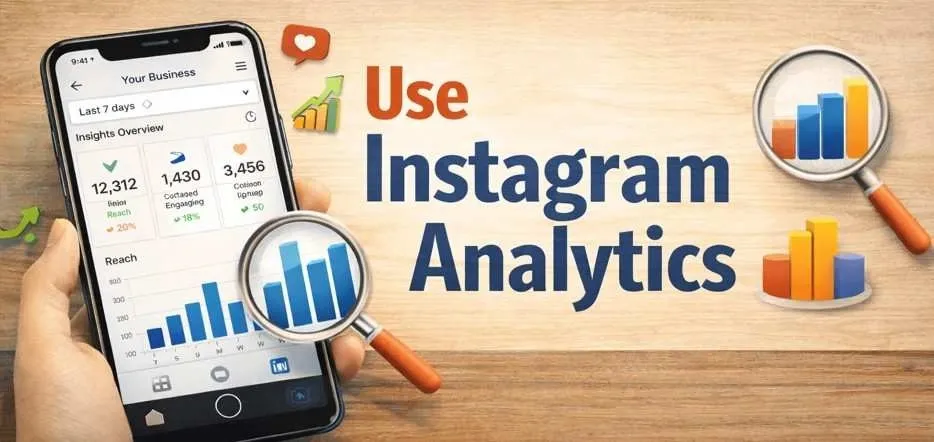
Insta image analytic

Instagram offers business account analytics. You can learn what content is most effective by using these insights.

Keep tabs on metrics like:

  • Strike
  • Involvement
  • Shares and stores
  • Visits to a profile

You can refine your content strategy and concentrate on what your audience enjoys by looking at analytics.

Common Mistakes Businesses Should Avoid

Many companies make mistakes that limit their market reach.

Steer clear of these common mistakes:

  • Only publishing content for sales
  • Reels are ignored
  • Obtaining followers
  • Ignoring your followers
  • Posting unplanned

Although organic growth is slower, the long-term outcomes are better.

Conclusion

If you use the appropriate approach, expanding your business’s Instagram following is not hard. Concentrate on producing informative content, utilising reels, interacting with your audience, and maintaining consistency.

Don’t pursue numbers. Instead, develop a close relationship with your audience. Your Instagram reach and company growth will increase with perseverance and consistent work. Your Attractive Heading

How to Increase Reach on Instagram for Business in 2026 Read More »

Person using a smartphone with floating social media app icons, showing social media engagement, mobile marketing, and digital communication.

Social Media Influence: Transforming Marketing, Youth, and Modern Life

Social media platforms are connecting people globally. It influences daily life, communication, politics, and commerce by shaping opinions, behaviors, and trends but also issues like misinformation, anxiety, and echo chambers, acting as a powerful tool for learning, marketing, and community building when used mindfully.

Influenced by Function of Marketing

It has strongly influenced the function of marketing by changing how brands communicate, promote, and build relationships with customers.

Social media allows direct interaction between brands and customers through comments. 

It is user data to show highly targeted ads based on age, location, interests, and behavior.

  • Two-way communication
  • Better Targeting & Personalization
  • Cost-Effective Promotion
  • Brand Awareness & Visibility
  • Influencer & Community Marketing
  • Real-Time Feedback & Analytics

Influence in Consumer behavior

Consumers learn about new brands and products through ads, reels, stories, and influencer posts, often before traditional media.

Consumer behavior affects how people discover, evaluate, and purchase products.

Likes, comments, shares, ratings, and user-generated content act as social proof, increasing trust and reducing purchase risk.

Influenced in Our Daily life

Social media marketing helps us stay connected with friends, family, and colleagues instantly, no matter the distance.

Our daily life is shaped by how we communicate, learn, shop, and think.

Social media spreads awareness about social issues, education, health, and global issues.

Many people learn skill marketing tips, languages, and career guidance through free educational content, webinars, and online communities.

Influence to make Money

People earn money through brand collaborations, sponsored posts, affiliate links, and paid promotions on platforms like Instagram, YouTube, and TikTok.

How people and businesses make money by creating new income sources, marketing opportunities, and digital careers.

Small businesses and startups use social media to promote products, generate leads, and sell directly through ads, reels, and social commerce features.

Influence in Youth

Youth can connect with friends, communities, and global networks instantly, improving social interaction and cultural awareness.

Platforms like YouTube, Instagram, and LinkedIn offer free learning, career guidance, digital skills, and motivational content.

It affects their communication, learning behavior, and mental well-being.

Youth may encounter misinformation, violence, or harmful trends without proper guidance.

Final thoughts

Social media influence is a good platform where the people are connecting; they can easily share their information.

They have knowledge about how people may see their platforms, like Instagram, Chrome, Facebook, TikTok, Snapchat, and YouTube, as reviews about the products and things to work with, just like influencers (reviewers and users).

So which platform do people know? In that platform’s search, social media platforms are good for people to know about some benefits, knowledge, or content.

Social Media Influence: Transforming Marketing, Youth, and Modern Life Read More »

Scroll to Top