Many people love watching cricket When we see a match scorecard, we understand the full story of the game. It shows who played well, what strategy worked, and how the team performed.
In the same way, digital marketing also depends on numbers and performance A cricket scorecard and a digital marketing report are more similar than we think.
Let’s see how a Sri Lanka vs Pakistan match scorecard connects with digital marketing in a simple way. Runs = Website Traffic and Reach
Runs = Website Traffic and Reach
In cricket,
Total runs show how strongly the team played.
In digital marketing,
Website traffic
Social media reach
These numbers show how many people saw your brand.
If a team scores 300 runs, it means strong performance. If your campaign reaches thousands of people, it means good visibility.
More runs = more reach More reach = more growth opportunities
Choosing a digital marketing agency can feel confusing, especially when everyone claims to be the best. Some promise fast growth, others talk about secret strategies. In reality, good results come from clear planning, honest work, and time.
If you are planning to hire an agency, here are a few practical things that actually help you decide.
Start by Looking at Their Past Work
Before listening to sales pitches, look at what the agency has already done. A serious agency will be open about its past projects. This could be websites they have worked on, social media pages they manage, or growth stories from real clients.
You don’t need fancy charts. Even simple improvements in traffic, leads, or engagement show experience.
See If They Understand Your Business
Every business is different. A company selling products online needs a different approach than a local service provider. An agency that has worked in your field will already know what usually works and what doesn’t.
Ask simple questions. If their answers feel practical and clear, that’s a good sign.
Ask How They Plan to Work With You
Some agencies focus only on tools and software. Tools are useful, but results come from planning and consistency.
A good agency will explain, in plain language:
What they will work on first
Why those steps matter
How progress will be checked
If everything sounds too technical or rushed, be careful.
Be Careful With Big Promises
Promises like “guaranteed rankings” or “instant sales” sound attractive, but digital marketing rarely works that fast. Honest agencies talk about realistic timelines and steady improvement.
Slow growth with clarity is better than quick results that disappear later.
Communication Makes a Big Difference
You should know what is happening with your marketing work. Regular updates, clear reports, and open communication help build trust.
If an agency avoids questions or gives vague answers, that usually leads to problems later.
Check What Other Clients Say
Reviews may not tell the full story, but they help. Look for comments about long-term results, support, and professionalism. One or two negative reviews are normal, but repeated complaints are not.
FAQs
How can I be sure a digital marketing agency is reliable?
Look at their previous work, client feedback, and how clearly they explain their process.
Is it okay to choose a new agency with fewer clients?
Yes, as long as they show genuine knowledge, clear planning, and honest communication.
How long does digital marketing take to show results?
Some activities take weeks, others take months. Consistency matters more than speed.
If you have ever handled more than one social media page, you already know how messy it can get. One day you are planning posts, the next day you are replying to messages, and suddenly a whole week is gone. This is where social media tools quietly make life easier.
Instead of doing everything manually, many marketers now rely on a few trusted tools to stay on track.
Why Social Media Tools Matter Today
Posting at the right time, replying quickly, and checking what actually works takes effort. Doing all of this without support often leads to missed posts and slow responses.
The right tools don’t replace creativity. They simply help you stay organised and consistent, which is half the battle in social media marketing.
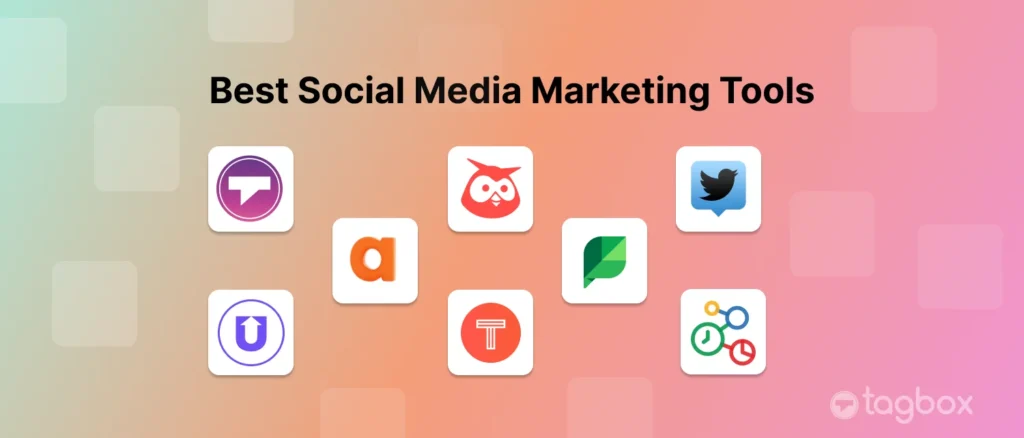
Tools Marketers Actually Use
Hootsuite
Hootsuite is helpful when you manage several platforms together. You can schedule posts, read comments, and track mentions from one screen. For agencies and growing brands, this saves a lot of switching between apps.
Buffer
Buffer is popular because it feels simple. You write a post, choose the date, and you’re done. Many freelancers and small businesses prefer it because there’s very little learning curve.
Sprout Social
Sprout Social is often used by teams that want deeper insights. It shows what content people respond to and when they are most active. It also helps handle customer messages in one place.
Canva
Not everyone is a designer, and that’s okay. Canva helps create clean visuals in minutes. From Instagram posts to story templates, it’s one of the most commonly used tools for social media content.
Meta Business Suite
For Facebook and Instagram users, this tool is usually enough. You can post, reply to messages, and check basic performance data without paying anything.
Choosing the Right Tool Depends on Your Work
There is no single “best” tool. Someone managing one page needs something different from an agency handling ten clients. The key is to pick tools that match your workload and budget.
FAQs
Do I need paid tools for social media marketing?
Not always. Free tools like Meta Business Suite and Canva are enough for basic work.
Which tool is best for small businesses?
Buffer is often a good choice because it is easy and affordable.
Can one tool handle all social media platforms?
Some tools can manage many platforms, but most businesses use two or three tools together.
One of the most effective platforms available to businesses today is Instagram. Instagram is used by a lot of small and medium-sized companies to advertise their goods and services. However, frequent posting is insufficient. Your growth will be extremely slow if no one is seeing your posts. Instagram reach becomes crucial at this point.
The quantity of unique individuals who view your content is known as Instagram reach. Increased reach translates into increased visibility, engagement, and potential clients for businesses. We’ll go over simple and practical strategies for expanding your business’s Instagram following in this blog.
What is Instagram Reach?
When someone visits your page, they initially see your profile. People are more likely to trust you and follow you if your profile is optimised.
Here are a few basic pointers:
Use a business account instead.
Make use of a clear profile picture (a brand image or logo).
Compose an easy-to-read bio
Mention what your business offers
Add a call to action like “DM us” or “Visit our website”.
Use highlights to show products, reviews, or services
Create Content That People Want to See
The most crucial element in expanding reach is content. Instagram promotes entertaining, educational, and helpful content.
Posting only promotional content is not a good idea for businesses. Try a variety of content instead, like
Posts that are instructive about your field
Content from behind the scenes
Testimonials and reviews from customers
Advice and instructional videos
Content that is popular in your niche
Additionally, consistency is crucial. Try to publish three to five times every week.
Use Instagram Reels to Increase Reach
Reaching new audiences is made easier with Instagram Reels. Instagram prioritises reels over regular posts.
Your content is more likely to be seen if you post at the right time.
To find out when your followers are most engaged, use Instagram Insights. Posting in the morning or evening is usually effective, though this can change depending on your audience.
Try to post every week at roughly the same times.
Engage With Your Audience
A major factor in expanding reach is engagement. Content that receives more likes, comments, shares, and saves is promoted by Instagram.
Strategies to raise engagement:
Respond to comments promptly
Respond to and like DMs
Interact with other accounts prior to publishing
Utilize surveys, inquiries, and tests in narratives
Work together with brands or other creators
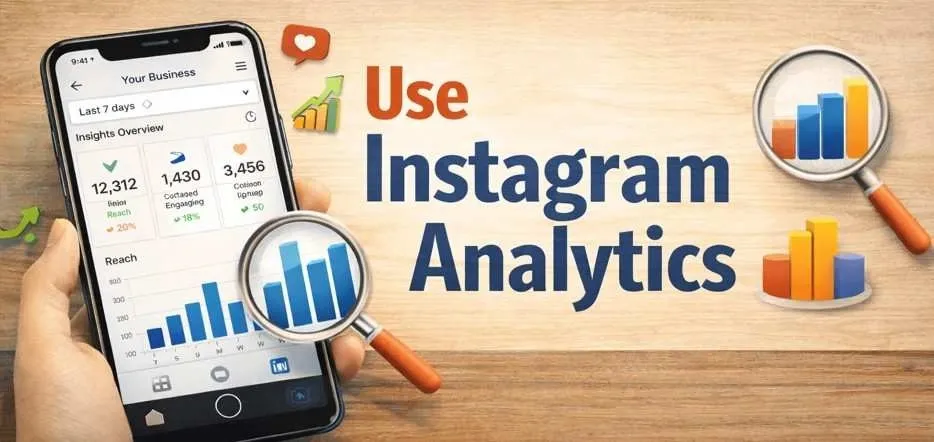
Use Instagram Analytics
Instagram offers business account analytics. You can learn what content is most effective by using these insights.
Keep tabs on metrics like:
Strike
Involvement
Shares and stores
Visits to a profile
You can refine your content strategy and concentrate on what your audience enjoys by looking at analytics.
Common Mistakes Businesses Should Avoid
Many companies make mistakes that limit their market reach.
Although organic growth is slower, the long-term outcomes are better.
Conclusion
If you use the appropriate approach, expanding your business’s Instagram following is not hard. Concentrate on producing informative content, utilising reels, interacting with your audience, and maintaining consistency.
Don’t pursue numbers. Instead, develop a close relationship with your audience. Your Instagram reach and company growth will increase with perseverance and consistent work. Your Attractive Heading
Social media platforms are connecting people globally. It influences daily life, communication, politics, and commerce by shaping opinions, behaviors, and trends but also issues like misinformation, anxiety, and echo chambers, acting as a powerful tool for learning, marketing, and community building when used mindfully.
Influenced by Function of Marketing
It has strongly influenced the function of marketing by changing how brands communicate, promote, and build relationships with customers.
Social media allows direct interaction between brands and customers through comments.
It is user data to show highly targeted ads based on age, location, interests, and behavior.
Two-way communication
Better Targeting & Personalization
Cost-Effective Promotion
Brand Awareness & Visibility
Influencer & Community Marketing
Real-Time Feedback & Analytics
Influence in Consumer behavior
Consumers learn about new brands and products through ads, reels, stories, and influencer posts, often before traditional media.
Consumer behavior affects how people discover, evaluate, and purchase products.
Likes, comments, shares, ratings, and user-generated content act as social proof, increasing trust and reducing purchase risk.
Influenced in Our Daily life
Social media marketing helps us stay connected with friends, family, and colleagues instantly, no matter the distance.
Our daily life is shaped by how we communicate, learn, shop, and think.
Social media spreads awareness about social issues, education, health, and global issues.
Many people learn skill marketing tips, languages, and career guidance through free educational content, webinars, and online communities.
Influence to make Money
People earn money through brand collaborations, sponsored posts, affiliate links, and paid promotions on platforms like Instagram, YouTube, and TikTok.
How peopleand businesses make money by creating new income sources, marketing opportunities, and digital careers.
Youth can connect with friends, communities, and global networks instantly, improving social interaction and cultural awareness.
Platforms like YouTube, Instagram, and LinkedIn offer free learning, career guidance, digital skills, and motivational content.
It affects their communication, learning behavior, and mental well-being.
Youth may encounter misinformation, violence, or harmful trends without proper guidance.
Final thoughts
Social media influence is a good platform where the people are connecting; they can easily share their information.
They have knowledge about how people may see their platforms, like Instagram, Chrome, Facebook, TikTok, Snapchat, and YouTube, as reviews about the products and things to work with, just like influencers (reviewers and users).
So which platform do people know? In that platform’s search, social media platforms are good for people to know about some benefits, knowledge, or content.
How Social Media Influenced in Communication
It will make it instant, global, visual, and interactive, connecting people across distances but also fostering briefly (emojis acronyms) and superficiality while democratizing content creation but introducing challenges like misinformation and impacting face to face skills.
What are the top social media tools used by major brands?
Major brands use a mix of all-in-one platforms (Hootsuite, Sprout Social, sprinkler) Creative tools(canva), analytics(google Analytics, Brandwatch), and specialized managers (Meta Ads Manager, LinkedIn Campaign Manager) for publishing, engagement, monitoring, and performance measurement across platforms.
What impact does social media have on brand reputation management?
Social media significantly impacts brand reputation by acting as a real-time, two-way street for customer feedback, allowing for instant engagement, amplifying both positive word of mouth and negative crises, and shaping public perception through reviews, direct interaction, and viral content, making proactive monitoring and swift.
Digital marketing in 2026 feels very different from what it was even two or three years ago. Earlier, posting regularly and adding keywords was enough. Now, that approach rarely works. Users are smarter, platforms are stricter, and search engines expect content to solve real problems, not just fill space.
Let’s talk about what is really changing this year.
AI Is Everywhere, But It Can’t Replace Real Thinking
Almost every marketer today uses AI in some form. It helps with ideas, planning, and data analysis. That said, campaigns that depend fully on AI feel robotic—and users notice it quickly.
In 2026, brands that add personal insight, local examples, and honest opinions perform better. AI can assist, but human judgment still decides what connects with people.
SEO Depends More on How People Use Your Website
SEO is no longer just a technical task. Search engines now look closely at how visitors behave on a website. Do they stay? Do they read? Do they find answers?
If users leave quickly, rankings drop. Simple layouts, clear writing, and useful information matter more than keyword stuffing.
Voice Search Is Slowly Becoming a Habit
Many people now speak their searches instead of typing. This is especially common for local services, quick answers, and mobile users.
Because of this, content in 2026 sounds more like everyday speech. Pages written in a question-and-answer format perform better than formal, textbook-style content.
Social Media Growth Is About Conversation
Having a big follower count looks good, but it doesn’t always bring results. In 2026, platforms reward interaction, not just numbers.
Brands that reply to comments, post relatable content, and share behind-the-scenes moments build stronger connections. People follow brands that feel approachable.
Data Collection Needs Honesty
With tighter privacy rules, users are careful about sharing information. Random pop-ups asking for data often fail.
Businesses now focus on earning trust—through newsletters, useful downloads, and honest communication. First-party data has become one of the most valuable digital assets.
Content Works Best When It Feels Lived-In
Perfectly written content doesn’t always work anymore. In fact, slightly imperfect content that shares real experience performs better.
Blogs, videos, and posts that explain things in a simple, direct way feel more believable. That’s what search engines and users prefer in 2026.
FAQs
Is digital marketing harder in 2026?
It’s different, not harder. Marketers now need to focus more on quality, clarity, and user trust.
Does AI-generated content rank well in 2026?
Only when it is edited and improved by humans. Pure AI content often struggles to perform.
What should beginners focus on in digital marketing now?
Understanding users, writing helpful content, learning SEO basics, and building genuine engagement on social platforms.
Google rolled out its final major algorithm change of the year—the December 2025 Core Update—and completed the rollout toward the end of December. As we move into 2026, this update has already reshaped how many websites appear in Google search results.
If you noticed a sudden increase or drop in your website traffic during mid or late December, there is no reason to panic. This update was not a penalty. Instead, Google refined how it evaluates content to better identify pages that genuinely help users.
While traffic drops after a core update can feel alarming, the message behind the December 2025 update is actually clear and encouraging: Google is rewarding real, human-focused content and reducing visibility for low-quality pages.
To understand what changed—and how to respond—it helps to look at how this update works.
What Is the Google December 2025 Core Update?
A Google core update is a broad improvement to Google’s ranking systems. It does not target a specific issue, industry, or type of website. Instead, it updates how Google evaluates content quality across the entire web.
The December 2025 Core Update primarily focused on:
Real human experience
Helpful and original content
Trustworthy websites
Strong user satisfaction
In simple terms, Google is continuing its shift away from shortcuts and toward content that genuinely helps people.
When Did the Google December 2025 Core Update Roll Out?
Google confirmed this was the third and final core update of 2025, following:
March 2025 Core Update
June 2025 Core Update
When viewed together, all three updates show a clear pattern: throughout 2025, Google consistently improved how it identifies and rewards human-first, experience-driven content.
Why Did Website Rankings Change After the December 2025 Update?
The December update caused noticeable ranking changes because Google adjusted how it measures content quality and usefulness.
There were two major movement periods:
Around December 13
A larger wave around December 20
1.Websites That Lost Visibility
Sites that relied heavily on:
Copied or rewritten content
Thin pages with little depth
Bulk AI-generated articles created only for keywords
often saw traffic declines.
2. Websites That Gained or Stabilized
Websites that shared:
Real experience
Practical advice
Original insights and depth
generally gained visibility or recovered faster.
After reviewing multiple sites affected by this update, pages with clear first-hand insights and strong topic depth showed quicker stabilization. Google was not punishing sites—it was simply selecting better answers.
Key Focus Areas of the Google December 2025 Core Update
1. Google Wants Proof of Real Experience
Google now strongly favors content written by people who have actually done what they are writing about.
Content performed better when it included:
First-hand experience
Personal examples
Original photos or screenshots
Honest lessons learned
Content performed poorly when it was:
Generic or vague
Written only to target keywords
Copied or lightly rewritten
Pure AI output with no human input
If an article feels like it could exist on any website, Google is less likely to rank it.
2. Low-Quality AI Content Lost Visibility
Google did not ban AI-generated content. However, it clearly reduced visibility for content created in bulk without real value.
Websites that published hundreds of similar articles just to rank for keywords were affected the most.
The rule is simple: AI can assist—but human experience, judgment, and editing are essential.
User Satisfaction Signals Matter More Than Ever
Google is paying closer attention to what users do after clicking a page.
Negative signals include:
Users leaving quickly
Users returning to search results immediately
Pages that delay the main answer
To perform better:
Answer the main question early
Avoid long, unnecessary introductions
Make content easy to read and navigate
When users feel satisfied, Google notices.
Faster Recovery After Core Updates: What Changed in 2025?
One important shift in 2025 that many site owners missed is how recovery now works.
In the past, websites that lost rankings during a core update often had to wait several months—or until the next major update—to see improvement. That is no longer the case.
Google has confirmed that its ranking systems now run continuous refinements, meaning websites can recover faster once meaningful improvements are made.
After reviewing multiple websites impacted by the December 2025 Core Update, pages that were updated with:
Clearer structure
Real-world insights
Stronger user focus
began stabilizing within weeks, not months.
This change especially benefits small businesses, publishers, and content creators who prioritize quality over volume.
How to Recover from the Google December 2025 Core Update in 2026
If your traffic dropped after the December update, the correct response is focused improvement—not panic. The steps below align closely with what Google is rewarding in 2026.
Step 1: Analyze Performance Drops Using Google Search Console
Open the Performance report in Google Search Console and review:
Pages that lost impressions
Pages that still rank but receive fewer clicks
In many cases, rankings did not disappear completely—other pages are simply being seen as more helpful.
Pages that retained impressions but lost clicks often recovered by improving clarity, depth, and user satisfaction, rather than changing keywords.
Step 2: Rewrite Content for Real Human Experience
Before updating any page, ask one question:
“Does this content sound like it was written by someone who has actually done this?”
Content improves significantly when it includes:
First-hand observations
Practical examples from real scenarios
Clear explanations based on experience
Strengthen your content by:
Adding insights such as “After testing this approach…”
Removing filler paragraphs
Rewriting vague sections with concrete explanations
Clarity and authenticity consistently outperform length.
Step 3: Merge Thin Content into One Strong Resource
If your site contains multiple short articles covering similar topics, consolidate them into one comprehensive guide.
For example:
Several short “SEO tips” posts → One in-depth SEO resource
Pages that merged overlapping content into a single authoritative piece showed stronger recovery and better long-term stability.
Google now favors depth, completeness, and usefulness over publishing frequency.
Step 4: Improve Trust Signals (E-E-A-T) on Your Website
Google wants to clearly understand who is behind the content.
Make sure your website includes:
A clear About page
A real Contact page
Author bios showing relevant experience
Links to professional profiles or portfolios
These trust signals reinforce Experience, Expertise, Authority, and Trust, which played a major role in how sites were evaluated during the December update.
Is the December 2025 Core Update a Penalty?
No. Google does not penalize websites during core updates.
A ranking drop simply means other pages are currently viewed as more helpful. The solution is to improve—not to fix imaginary mistakes.
Final Thoughts
The December 2025 Core Update confirmed one thing: Google is no longer rewarding content that only sounds correct. It now rewards content that proves usefulness through real experience.
By improving clarity, demonstrating real-world understanding, and focusing on user satisfaction, websites in 2026 can recover faster and build more stable long-term rankings.
Dollar Shave Club is a U.S based Club Founded in 2011. They Provide Subscription Models Razors & Grooming to the customers. Their Main Idea giving in Cheap & Best Price. There’s main objective is to introduce the brand to a large audience, clearly communicate the value proposition(cheap, convenient to customer), attract customers by advertising without spending a heavy budget.
DSC(Dollar Shave Club) Viral launch Video
The Content Title(Our Blades are Fucking Great) DSC release a 90 sec video. The Club founder Michael Dubin while walking near a warehouse and speaking directly to the camera explaining why DSC was a better alternative to traditional razor brands.
Key points of this video
Humarize words
Simple Language
Founder act as brand Spokesperson
Relatable points over priced razors, unnecessary features.
Major Challenges faced by DSC
Budget amount is less
Low Brand Awareness
Strong Competition and established brands
Successful Marketing Strategies for popular Subscription brand
This Video Uploaded on Youtube(Viral Video Marketing), Made to be very shareable to draw attention to aggressive words and comedy.Personality of the brand honest, humorous and a little rebellious, DSC was positioned as a Competitor. An unambiguous call to action. A quick Explanation of the basic subscription model, Viewers were urged to register right away. According to the report the video cost about $4500 with a low-cost Manufacturing content-focused rather than production-quality.
Execution
Through Social media shared the video online.
Viewers are sharing the video.
No heavy paid advertising was needed initially
Lesson learn from an DSC
Dollar Shave Club launched a simple, low-budget video with no big expectations.
Within 48 hours, more than 12,000 customers placed orders, flooding the website and causing it to crash briefly.
Millions watched and shared the video, turning a small startup into a recognizable D2C brand overnight.
The founder’s humor, honesty, and clear message connected instantly with real customer frustrations about expensive razors.
This viral moment proved that storytelling beats high production, and strong calls to action convert attention into sales—leading to a $1 billion Unilever acquisition in 2016.
The Final Note
The viral video marketing campaign for Dollar Shave Club demonstrates that originality, sincerity, and compelling narrative can surpass substantial advertising expenditures. The brand gained enormous visibility and quick client acquisition at a very cheap cost by using comedy to solve a real customer problem and a compelling value proposition. A modest startup becomes a significant D2C brand thanks to founder-led branding, an effective call to action, and astute use of digital platforms. This case study demonstrates that connection and clarity—rather than excessive production or expenditure—are key components of successful viral marketing.
FAQ
Who Produces viral video ads for subscription razor company
Viral video ads for subscription razor companies are usually created by a mix of in-house brand teams, creative advertising agencies, and production studios. A famous example is Dollar Shave Club, whose first viral ad was created by its founder Michael Dubin along with a creative director, using humor and simple production. Later campaigns were handled by professional creative agencies and video production companies that specialize in storytelling, comedy, and digital-first ads designed for YouTube and social media.
what services help create viral video for subscription-based grooming brands
Creative planning, storytelling, video production, and digital distribution services are all used to create viral videos for subscription-based grooming firms. In order to maximize reach, engagement, and conversions, they include brand positioning, scriptwriting, humor-driven themes, influencer or founder-led content, social media marketing, high-quality but relatable video production, paid ad amplification, and performance analytics.
How did a subscription razor company create viral video marketing
A subscription razor firm used humor-driven storytelling, a straightforward and relevant message, and a direct-to-consumer strategy to create viral video marketing. The company released a low-budget, founder-led video, talked in an informal and straightforward manner, and outlined the value proposition in detail. The video was then shared on YouTube and social media, where it instantly attracted a lot of attention.
When you run a digital campaign, numbers start coming in from everywhere. Clicks, views, impressions, likes—it can get confusing very fast. Many marketers look at data daily but still feel unsure about what it actually means. That’s where the right analytics tools make a difference. They don’t just show reports; they help you understand what people are doing and why.
Over time, a few tools have proven useful for most digital campaigns, especially when used with clear goals in mind.
Google Analytics and Everyday Campaign Tracking
For many marketers, Google Analytics becomes a habit. You open it to see how many people visited your site, where they came from, and which pages they looked at. If a campaign is meant to drive traffic or leads, this tool quietly tells the full story.
You can see whether visitors leave immediately or spend time exploring. Those small details often reveal whether a campaign is attracting the right audience or just empty clicks.
Search Console and Organic Growth
Google Search Console is less about visitors and more about visibility. It shows how your site appears in search results and which search terms bring attention. For SEO-based campaigns, this data is extremely useful.
Sometimes a page ranks but doesn’t get clicks. Sometimes it gets impressions but needs better content. These insights help marketers fine-tune campaigns without guessing.
Social Media Analytics and User Reactions
Social media campaigns behave differently from website campaigns. Here, engagement matters more than time spent. Tools like Meta Ads Manager show how people react to ads—whether they stop, click, or scroll past.
This kind of data helps marketers understand emotions, not just actions. It’s useful when testing visuals, captions, and audience targeting.
Paid Advertising Platforms and Budget Control
For paid campaigns, analytics inside platforms like Google Ads are essential. They show how money is being spent and what returns you’re getting. Over time, this data helps improve ad copy, keywords, and bidding strategies.
Even small adjustments based on these insights can improve results without increasing budgets.
Heatmaps and Real User Behavior
Sometimes numbers don’t explain everything. Heatmap tools like Hotjar or Microsoft Clarity visually show how users behave on a page. You can see where they stop scrolling or where they click the most.
These tools are especially helpful for landing pages used in digital campaigns.
No Single Tool Is Enough
Every analytics tool answers a different question. Website tools explain behavior, search tools explain visibility, and social tools explain engagement. The best insights usually come from combining two or three tools, not relying on just one.
FAQs
Which analytics tool should beginners use first?
Most beginners start with Google Analytics because it covers basic campaign performance and is easy to access.
Are social media insights enough for campaign analysis?
No. They show engagement on platforms, but website analytics are needed to understand conversions and user actions.
How often should analytics be reviewed?
For active campaigns, checking data once a week is usually enough to spot trends and make improvements.
Final Thought
Analytics tools don’t replace experience—they support it. When marketers focus less on dashboards and more on understanding patterns, digital campaigns become easier to manage and improve.
These days, scrolling through social media means watching videos—lots of them. Some make us stop, smile, or even click, while others disappear in seconds. The difference usually comes down to how the video ad is planned and presented. Creating a good social media video ad isn’t about being perfect; it’s about being clear, relatable, and timely.
Here’s a practical way to approach it.
Start With Who You’re Talking To
Before opening your camera, think about the people who will see your video. A college student on Instagram doesn’t react the same way as a business owner on LinkedIn. When you understand what your audience likes, what they struggle with, and how they use social media, your video naturally feels more relevant. That connection matters more than fancy visuals.
Decide What You Want From the Video
Every video ad needs a purpose. Maybe you want people to visit your website, recognize your brand, or try a new product. When the goal is clear in your mind, the video feels focused instead of confusing. Viewers should quickly understand why the video exists and what they gain from watching it.
Say Less, Show More
Social media users don’t have the patience for long explanations. If your message takes too long to get to the point, it’s already lost. Keep things short. Show the product, highlight the benefit, and move on. A simple idea delivered well often performs better than a detailed story told slowly.
Make It Look Real, Not Perfect
You don’t need studio lighting or expensive equipment. Many high-performing social media video ads are shot on phones. What really matters is that the video feels genuine. Natural lighting, clear visuals, and readable text are enough. Adding captions also helps because many people watch videos without turning on the sound.
Tell People What to Do Next
After watching your video, viewers should know what action to take. Whether it’s “check the link,” “follow the page,” or “learn more,” a clear direction makes a big difference. Without this step, even a good video can fail to bring results.
Learn From What You Post
Not every video will perform well—and that’s okay. Posting different versions and checking how people respond helps you improve over time. Pay attention to views, comments, and clicks. Slowly, you’ll notice patterns that guide your future video ads.
FAQs
Are short videos really better for social media ads?
Yes. Short videos usually fit better into people’s scrolling habits and hold attention longer than lengthy ones.
Can I create video ads without professional editing skills?
Definitely. Basic editing apps and a smartphone are more than enough to create effective and engaging video ads.
Which social media platform is best for video ads?
There’s no single answer. Instagram, Facebook, YouTube, and LinkedIn all work well—it depends on where your audience spends time.
Final Note
Creating effective video ads for social media is more about understanding people than mastering technology. When your videos feel honest and focused, they naturally stand out in crowded feeds.