Social media platforms are connecting people globally. It influences daily life, communication, politics, and commerce by shaping opinions, behaviors, and trends but also issues like misinformation, anxiety, and echo chambers, acting as a powerful tool for learning, marketing, and community building when used mindfully.
Influenced by Function of Marketing
It has strongly influenced the function of marketing by changing how brands communicate, promote, and build relationships with customers.
Social media allows direct interaction between brands and customers through comments.
It is user data to show highly targeted ads based on age, location, interests, and behavior.
Two-way communication
Better Targeting & Personalization
Cost-Effective Promotion
Brand Awareness & Visibility
Influencer & Community Marketing
Real-Time Feedback & Analytics
Influence in Consumer behavior
Consumers learn about new brands and products through ads, reels, stories, and influencer posts, often before traditional media.
Consumer behavior affects how people discover, evaluate, and purchase products.
Likes, comments, shares, ratings, and user-generated content act as social proof, increasing trust and reducing purchase risk.
Influenced in Our Daily life
Social media marketing helps us stay connected with friends, family, and colleagues instantly, no matter the distance.
Our daily life is shaped by how we communicate, learn, shop, and think.
Social media spreads awareness about social issues, education, health, and global issues.
Many people learn skill marketing tips, languages, and career guidance through free educational content, webinars, and online communities.
Influence to make Money
People earn money through brand collaborations, sponsored posts, affiliate links, and paid promotions on platforms like Instagram, YouTube, and TikTok.
How peopleand businesses make money by creating new income sources, marketing opportunities, and digital careers.
Youth can connect with friends, communities, and global networks instantly, improving social interaction and cultural awareness.
Platforms like YouTube, Instagram, and LinkedIn offer free learning, career guidance, digital skills, and motivational content.
It affects their communication, learning behavior, and mental well-being.
Youth may encounter misinformation, violence, or harmful trends without proper guidance.
Final thoughts
Social media influence is a good platform where the people are connecting; they can easily share their information.
They have knowledge about how people may see their platforms, like Instagram, Chrome, Facebook, TikTok, Snapchat, and YouTube, as reviews about the products and things to work with, just like influencers (reviewers and users).
So which platform do people know? In that platform’s search, social media platforms are good for people to know about some benefits, knowledge, or content.
How Social Media Influenced in Communication
It will make it instant, global, visual, and interactive, connecting people across distances but also fostering briefly (emojis acronyms) and superficiality while democratizing content creation but introducing challenges like misinformation and impacting face to face skills.
What are the top social media tools used by major brands?
Major brands use a mix of all-in-one platforms (Hootsuite, Sprout Social, sprinkler) Creative tools(canva), analytics(google Analytics, Brandwatch), and specialized managers (Meta Ads Manager, LinkedIn Campaign Manager) for publishing, engagement, monitoring, and performance measurement across platforms.
What impact does social media have on brand reputation management?
Social media significantly impacts brand reputation by acting as a real-time, two-way street for customer feedback, allowing for instant engagement, amplifying both positive word of mouth and negative crises, and shaping public perception through reviews, direct interaction, and viral content, making proactive monitoring and swift.
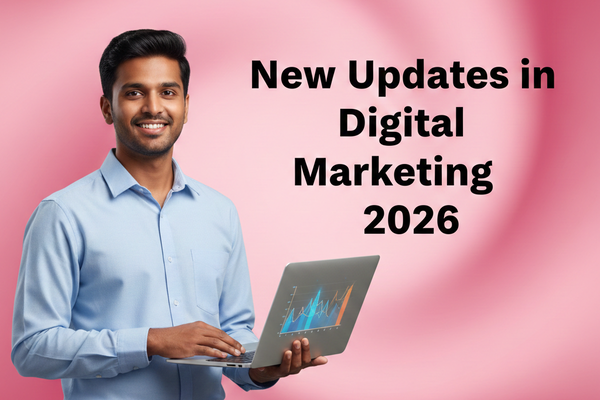
Digital marketing in 2026 feels very different from what it was even two or three years ago. Earlier, posting regularly and adding keywords was enough. Now, that approach rarely works. Users are smarter, platforms are stricter, and search engines expect content to solve real problems, not just fill space.
Let’s talk about what is really changing this year.
AI Is Everywhere, But It Can’t Replace Real Thinking
Almost every marketer today uses AI in some form. It helps with ideas, planning, and data analysis. That said, campaigns that depend fully on AI feel robotic—and users notice it quickly.
In 2026, brands that add personal insight, local examples, and honest opinions perform better. AI can assist, but human judgment still decides what connects with people.
SEO Depends More on How People Use Your Website
SEO is no longer just a technical task. Search engines now look closely at how visitors behave on a website. Do they stay? Do they read? Do they find answers?
If users leave quickly, rankings drop. Simple layouts, clear writing, and useful information matter more than keyword stuffing.
Voice Search Is Slowly Becoming a Habit
Many people now speak their searches instead of typing. This is especially common for local services, quick answers, and mobile users.
Because of this, content in 2026 sounds more like everyday speech. Pages written in a question-and-answer format perform better than formal, textbook-style content.
Social Media Growth Is About Conversation
Having a big follower count looks good, but it doesn’t always bring results. In 2026, platforms reward interaction, not just numbers.
Brands that reply to comments, post relatable content, and share behind-the-scenes moments build stronger connections. People follow brands that feel approachable.
Data Collection Needs Honesty
With tighter privacy rules, users are careful about sharing information. Random pop-ups asking for data often fail.
Businesses now focus on earning trust—through newsletters, useful downloads, and honest communication. First-party data has become one of the most valuable digital assets.
Content Works Best When It Feels Lived-In
Perfectly written content doesn’t always work anymore. In fact, slightly imperfect content that shares real experience performs better.
Blogs, videos, and posts that explain things in a simple, direct way feel more believable. That’s what search engines and users prefer in 2026.
FAQs
Is digital marketing harder in 2026?
It’s different, not harder. Marketers now need to focus more on quality, clarity, and user trust.
Does AI-generated content rank well in 2026?
Only when it is edited and improved by humans. Pure AI content often struggles to perform.
What should beginners focus on in digital marketing now?
Understanding users, writing helpful content, learning SEO basics, and building genuine engagement on social platforms.
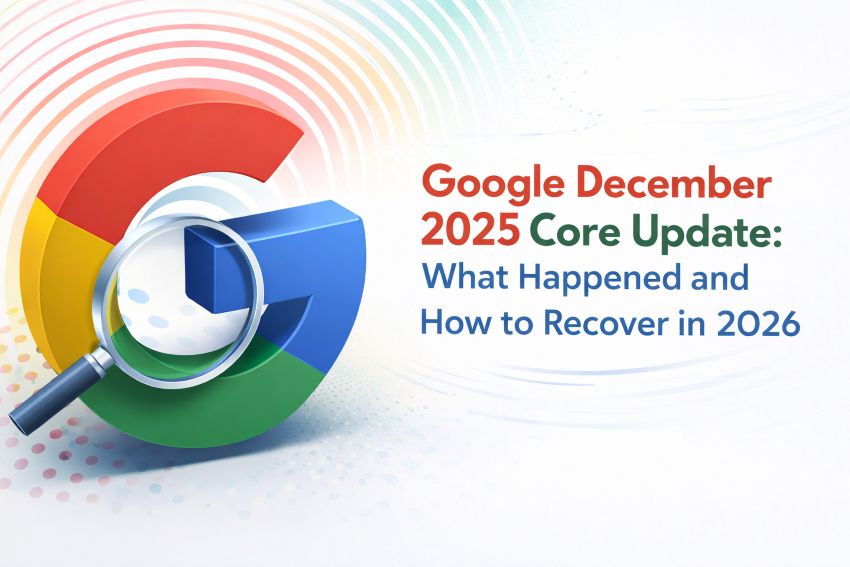
Google rolled out its final major algorithm change of the year—the December 2025 Core Update—and completed the rollout toward the end of December. As we move into 2026, this update has already reshaped how many websites appear in Google search results.
If you noticed a sudden increase or drop in your website traffic during mid or late December, there is no reason to panic. This update was not a penalty. Instead, Google refined how it evaluates content to better identify pages that genuinely help users.
While traffic drops after a core update can feel alarming, the message behind the December 2025 update is actually clear and encouraging: Google is rewarding real, human-focused content and reducing visibility for low-quality pages.
To understand what changed—and how to respond—it helps to look at how this update works.
What Is the Google December 2025 Core Update?
A Google core update is a broad improvement to Google’s ranking systems. It does not target a specific issue, industry, or type of website. Instead, it updates how Google evaluates content quality across the entire web.
The December 2025 Core Update primarily focused on:
Real human experience
Helpful and original content
Trustworthy websites
Strong user satisfaction
In simple terms, Google is continuing its shift away from shortcuts and toward content that genuinely helps people.
When Did the Google December 2025 Core Update Roll Out?
Google confirmed this was the third and final core update of 2025, following:
March 2025 Core Update
June 2025 Core Update
When viewed together, all three updates show a clear pattern: throughout 2025, Google consistently improved how it identifies and rewards human-first, experience-driven content.
Why Did Website Rankings Change After the December 2025 Update?
The December update caused noticeable ranking changes because Google adjusted how it measures content quality and usefulness.
There were two major movement periods:
Around December 13
A larger wave around December 20
1.Websites That Lost Visibility
Sites that relied heavily on:
Copied or rewritten content
Thin pages with little depth
Bulk AI-generated articles created only for keywords
often saw traffic declines.
2. Websites That Gained or Stabilized
Websites that shared:
Real experience
Practical advice
Original insights and depth
generally gained visibility or recovered faster.
After reviewing multiple sites affected by this update, pages with clear first-hand insights and strong topic depth showed quicker stabilization. Google was not punishing sites—it was simply selecting better answers.
Key Focus Areas of the Google December 2025 Core Update
1. Google Wants Proof of Real Experience
Google now strongly favors content written by people who have actually done what they are writing about.
Content performed better when it included:
First-hand experience
Personal examples
Original photos or screenshots
Honest lessons learned
Content performed poorly when it was:
Generic or vague
Written only to target keywords
Copied or lightly rewritten
Pure AI output with no human input
If an article feels like it could exist on any website, Google is less likely to rank it.
2. Low-Quality AI Content Lost Visibility
Google did not ban AI-generated content. However, it clearly reduced visibility for content created in bulk without real value.
Websites that published hundreds of similar articles just to rank for keywords were affected the most.
The rule is simple: AI can assist—but human experience, judgment, and editing are essential.
User Satisfaction Signals Matter More Than Ever
Google is paying closer attention to what users do after clicking a page.
Negative signals include:
Users leaving quickly
Users returning to search results immediately
Pages that delay the main answer
To perform better:
Answer the main question early
Avoid long, unnecessary introductions
Make content easy to read and navigate
When users feel satisfied, Google notices.
Faster Recovery After Core Updates: What Changed in 2025?
One important shift in 2025 that many site owners missed is how recovery now works.
In the past, websites that lost rankings during a core update often had to wait several months—or until the next major update—to see improvement. That is no longer the case.
Google has confirmed that its ranking systems now run continuous refinements, meaning websites can recover faster once meaningful improvements are made.
After reviewing multiple websites impacted by the December 2025 Core Update, pages that were updated with:
Clearer structure
Real-world insights
Stronger user focus
began stabilizing within weeks, not months.
This change especially benefits small businesses, publishers, and content creators who prioritize quality over volume.
How to Recover from the Google December 2025 Core Update in 2026
If your traffic dropped after the December update, the correct response is focused improvement—not panic. The steps below align closely with what Google is rewarding in 2026.
Step 1: Analyze Performance Drops Using Google Search Console
Open the Performance report in Google Search Console and review:
Pages that lost impressions
Pages that still rank but receive fewer clicks
In many cases, rankings did not disappear completely—other pages are simply being seen as more helpful.
Pages that retained impressions but lost clicks often recovered by improving clarity, depth, and user satisfaction, rather than changing keywords.
Step 2: Rewrite Content for Real Human Experience
Before updating any page, ask one question:
“Does this content sound like it was written by someone who has actually done this?”
Content improves significantly when it includes:
First-hand observations
Practical examples from real scenarios
Clear explanations based on experience
Strengthen your content by:
Adding insights such as “After testing this approach…”
Removing filler paragraphs
Rewriting vague sections with concrete explanations
Clarity and authenticity consistently outperform length.
Step 3: Merge Thin Content into One Strong Resource
If your site contains multiple short articles covering similar topics, consolidate them into one comprehensive guide.
For example:
Several short “SEO tips” posts → One in-depth SEO resource
Pages that merged overlapping content into a single authoritative piece showed stronger recovery and better long-term stability.
Google now favors depth, completeness, and usefulness over publishing frequency.
Step 4: Improve Trust Signals (E-E-A-T) on Your Website
Google wants to clearly understand who is behind the content.
Make sure your website includes:
A clear About page
A real Contact page
Author bios showing relevant experience
Links to professional profiles or portfolios
These trust signals reinforce Experience, Expertise, Authority, and Trust, which played a major role in how sites were evaluated during the December update.
Is the December 2025 Core Update a Penalty?
No. Google does not penalize websites during core updates.
A ranking drop simply means other pages are currently viewed as more helpful. The solution is to improve—not to fix imaginary mistakes.
Final Thoughts
The December 2025 Core Update confirmed one thing: Google is no longer rewarding content that only sounds correct. It now rewards content that proves usefulness through real experience.
By improving clarity, demonstrating real-world understanding, and focusing on user satisfaction, websites in 2026 can recover faster and build more stable long-term rankings.
Dollar Shave Club is a U.S based Club Founded in 2011. They Provide Subscription Models Razors & Grooming to the customers. Their Main Idea giving in Cheap & Best Price. There’s main objective is to introduce the brand to a large audience, clearly communicate the value proposition(cheap, convenient to customer), attract customers by advertising without spending a heavy budget.
DSC(Dollar Shave Club) Viral launch Video
The Content Title(Our Blades are Fucking Great) DSC release a 90 sec video. The Club founder Michael Dubin while walking near a warehouse and speaking directly to the camera explaining why DSC was a better alternative to traditional razor brands.
Key points of this video
Humarize words
Simple Language
Founder act as brand Spokesperson
Relatable points over priced razors, unnecessary features.
Major Challenges faced by DSC
Budget amount is less
Low Brand Awareness
Strong Competition and established brands
Successful Marketing Strategies for popular Subscription brand
This Video Uploaded on Youtube(Viral Video Marketing), Made to be very shareable to draw attention to aggressive words and comedy.Personality of the brand honest, humorous and a little rebellious, DSC was positioned as a Competitor. An unambiguous call to action. A quick Explanation of the basic subscription model, Viewers were urged to register right away. According to the report the video cost about $4500 with a low-cost Manufacturing content-focused rather than production-quality.
Execution
Through Social media shared the video online.
Viewers are sharing the video.
No heavy paid advertising was needed initially
Lesson learn from an DSC
Dollar Shave Club launched a simple, low-budget video with no big expectations.
Within 48 hours, more than 12,000 customers placed orders, flooding the website and causing it to crash briefly.
Millions watched and shared the video, turning a small startup into a recognizable D2C brand overnight.
The founder’s humor, honesty, and clear message connected instantly with real customer frustrations about expensive razors.
This viral moment proved that storytelling beats high production, and strong calls to action convert attention into sales—leading to a $1 billion Unilever acquisition in 2016.
The Final Note
The viral video marketing campaign for Dollar Shave Club demonstrates that originality, sincerity, and compelling narrative can surpass substantial advertising expenditures. The brand gained enormous visibility and quick client acquisition at a very cheap cost by using comedy to solve a real customer problem and a compelling value proposition. A modest startup becomes a significant D2C brand thanks to founder-led branding, an effective call to action, and astute use of digital platforms. This case study demonstrates that connection and clarity—rather than excessive production or expenditure—are key components of successful viral marketing.
FAQ
Who Produces viral video ads for subscription razor company
Viral video ads for subscription razor companies are usually created by a mix of in-house brand teams, creative advertising agencies, and production studios. A famous example is Dollar Shave Club, whose first viral ad was created by its founder Michael Dubin along with a creative director, using humor and simple production. Later campaigns were handled by professional creative agencies and video production companies that specialize in storytelling, comedy, and digital-first ads designed for YouTube and social media.
what services help create viral video for subscription-based grooming brands
Creative planning, storytelling, video production, and digital distribution services are all used to create viral videos for subscription-based grooming firms. In order to maximize reach, engagement, and conversions, they include brand positioning, scriptwriting, humor-driven themes, influencer or founder-led content, social media marketing, high-quality but relatable video production, paid ad amplification, and performance analytics.
How did a subscription razor company create viral video marketing
A subscription razor firm used humor-driven storytelling, a straightforward and relevant message, and a direct-to-consumer strategy to create viral video marketing. The company released a low-budget, founder-led video, talked in an informal and straightforward manner, and outlined the value proposition in detail. The video was then shared on YouTube and social media, where it instantly attracted a lot of attention.
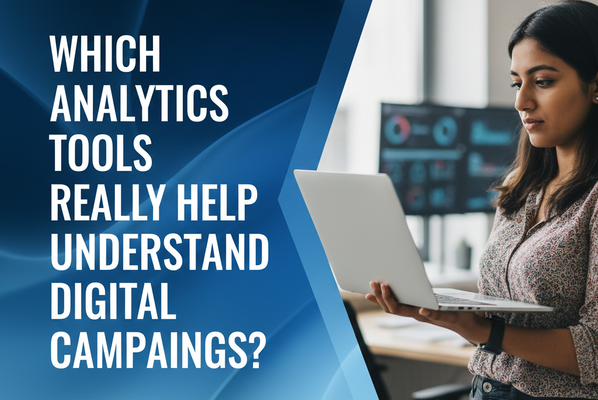
When you run a digital campaign, numbers start coming in from everywhere. Clicks, views, impressions, likes—it can get confusing very fast. Many marketers look at data daily but still feel unsure about what it actually means. That’s where the right analytics tools make a difference. They don’t just show reports; they help you understand what people are doing and why.
Over time, a few tools have proven useful for most digital campaigns, especially when used with clear goals in mind.
Google Analytics and Everyday Campaign Tracking
For many marketers, Google Analytics becomes a habit. You open it to see how many people visited your site, where they came from, and which pages they looked at. If a campaign is meant to drive traffic or leads, this tool quietly tells the full story.
You can see whether visitors leave immediately or spend time exploring. Those small details often reveal whether a campaign is attracting the right audience or just empty clicks.
Search Console and Organic Growth
Google Search Console is less about visitors and more about visibility. It shows how your site appears in search results and which search terms bring attention. For SEO-based campaigns, this data is extremely useful.
Sometimes a page ranks but doesn’t get clicks. Sometimes it gets impressions but needs better content. These insights help marketers fine-tune campaigns without guessing.
Social Media Analytics and User Reactions
Social media campaigns behave differently from website campaigns. Here, engagement matters more than time spent. Tools like Meta Ads Manager show how people react to ads—whether they stop, click, or scroll past.
This kind of data helps marketers understand emotions, not just actions. It’s useful when testing visuals, captions, and audience targeting.
Paid Advertising Platforms and Budget Control
For paid campaigns, analytics inside platforms like Google Ads are essential. They show how money is being spent and what returns you’re getting. Over time, this data helps improve ad copy, keywords, and bidding strategies.
Even small adjustments based on these insights can improve results without increasing budgets.
Heatmaps and Real User Behavior
Sometimes numbers don’t explain everything. Heatmap tools like Hotjar or Microsoft Clarity visually show how users behave on a page. You can see where they stop scrolling or where they click the most.
These tools are especially helpful for landing pages used in digital campaigns.
No Single Tool Is Enough
Every analytics tool answers a different question. Website tools explain behavior, search tools explain visibility, and social tools explain engagement. The best insights usually come from combining two or three tools, not relying on just one.
FAQs
Which analytics tool should beginners use first?
Most beginners start with Google Analytics because it covers basic campaign performance and is easy to access.
Are social media insights enough for campaign analysis?
No. They show engagement on platforms, but website analytics are needed to understand conversions and user actions.
How often should analytics be reviewed?
For active campaigns, checking data once a week is usually enough to spot trends and make improvements.
Final Thought
Analytics tools don’t replace experience—they support it. When marketers focus less on dashboards and more on understanding patterns, digital campaigns become easier to manage and improve.
These days, scrolling through social media means watching videos—lots of them. Some make us stop, smile, or even click, while others disappear in seconds. The difference usually comes down to how the video ad is planned and presented. Creating a good social media video ad isn’t about being perfect; it’s about being clear, relatable, and timely.
Here’s a practical way to approach it.
Start With Who You’re Talking To
Before opening your camera, think about the people who will see your video. A college student on Instagram doesn’t react the same way as a business owner on LinkedIn. When you understand what your audience likes, what they struggle with, and how they use social media, your video naturally feels more relevant. That connection matters more than fancy visuals.
Decide What You Want From the Video
Every video ad needs a purpose. Maybe you want people to visit your website, recognize your brand, or try a new product. When the goal is clear in your mind, the video feels focused instead of confusing. Viewers should quickly understand why the video exists and what they gain from watching it.
Say Less, Show More
Social media users don’t have the patience for long explanations. If your message takes too long to get to the point, it’s already lost. Keep things short. Show the product, highlight the benefit, and move on. A simple idea delivered well often performs better than a detailed story told slowly.
Make It Look Real, Not Perfect
You don’t need studio lighting or expensive equipment. Many high-performing social media video ads are shot on phones. What really matters is that the video feels genuine. Natural lighting, clear visuals, and readable text are enough. Adding captions also helps because many people watch videos without turning on the sound.
Tell People What to Do Next
After watching your video, viewers should know what action to take. Whether it’s “check the link,” “follow the page,” or “learn more,” a clear direction makes a big difference. Without this step, even a good video can fail to bring results.
Learn From What You Post
Not every video will perform well—and that’s okay. Posting different versions and checking how people respond helps you improve over time. Pay attention to views, comments, and clicks. Slowly, you’ll notice patterns that guide your future video ads.
FAQs
Are short videos really better for social media ads?
Yes. Short videos usually fit better into people’s scrolling habits and hold attention longer than lengthy ones.
Can I create video ads without professional editing skills?
Definitely. Basic editing apps and a smartphone are more than enough to create effective and engaging video ads.
Which social media platform is best for video ads?
There’s no single answer. Instagram, Facebook, YouTube, and LinkedIn all work well—it depends on where your audience spends time.
Final Note
Creating effective video ads for social media is more about understanding people than mastering technology. When your videos feel honest and focused, they naturally stand out in crowded feeds.
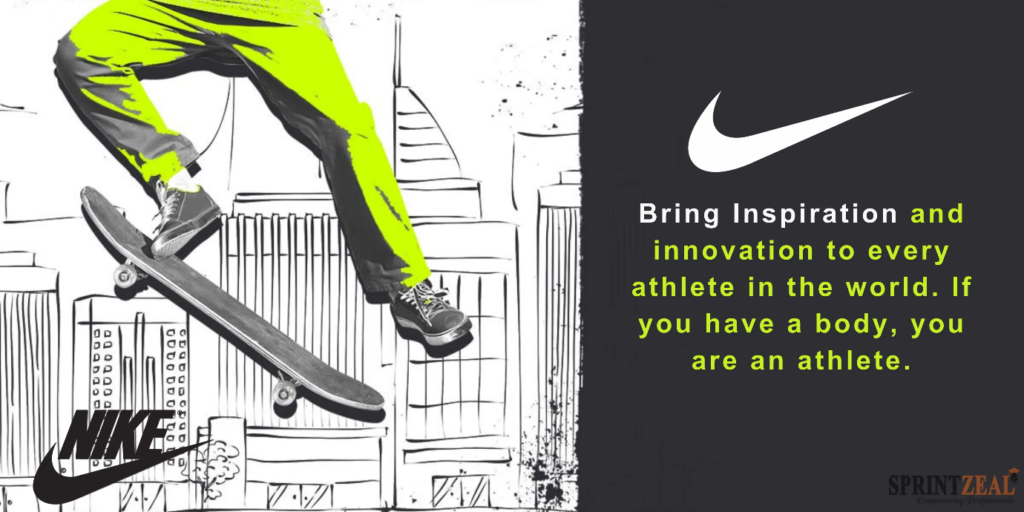
Nike has been part of people’s lives for a long time. You see it on shoes, t-shirts, ads, and even in motivational quotes. But Nike did not become this strong just because of good products. A big reason is how the brand connects with people using digital marketing.
Nike understands one simple thing. People don’t just buy products. They buy feelings.
Nike Focuses More on Feelings Than Products
When Nike runs digital campaigns, it rarely talks only about shoes or prices. Instead, it talks about effort, failure, practice, and growth. Many of these stories are shared online through videos and social posts.
People relate to these messages. They feel like Nike understands their journey. This emotional connection plays a major role in Nike’s brand building through digital marketing.
Social Media Is Used in a Smart Way
Nike does not post too often on social media, but when it does, the message is clear. Sometimes it’s just a short line. Sometimes it’s a powerful image. Sometimes it’s an athlete’s story.
This approach works well because it doesn’t feel like advertising. It feels natural. That is why Nike’s social media marketing feels different from many other brands.
Digital Apps Help Nike Stay Close to Users
Nike also uses digital tools like fitness and running apps. These apps give users workouts, reminders, and progress tracking. There is no pressure to buy anything immediately.
This kind of personalized digital marketing makes users feel supported. Over time, trust grows. And trust is what builds a strong brand.
Content That Is Actually Useful
Nike shares fitness tips, training ideas, and motivational content online. This content is helpful even if someone never buys a product. That honesty matters.
Through simple content marketing, Nike stays connected with people who care about fitness and sports. Slowly, brand awareness grows without forcing sales.
Choosing the Right Influencers
Nike works with athletes and creators who already believe in the brand. These partnerships don’t feel fake. People can tell when someone truly uses a product.
This makes Nike’s influencer marketing more believable and effective.
Nike’s digital marketing strategy works because it feels human. It talks about real life. It respects the audience. It doesn’t try to sell all the time.
That balance is what keeps Nike strong, even in a crowded digital world.
Frequently Asked Questions (FAQs)
How does digital marketing help Nike build its brand?
Digital marketing helps Nike share real stories, connect emotionally, and stay visible online.
What platforms does Nike use for digital marketing?
Nike mainly uses social media, mobile apps, online content, and influencer partnerships.
Can small brands learn from Nike’s strategy?
Yes. Small brands can focus on honest content, simple storytelling, and user trust.
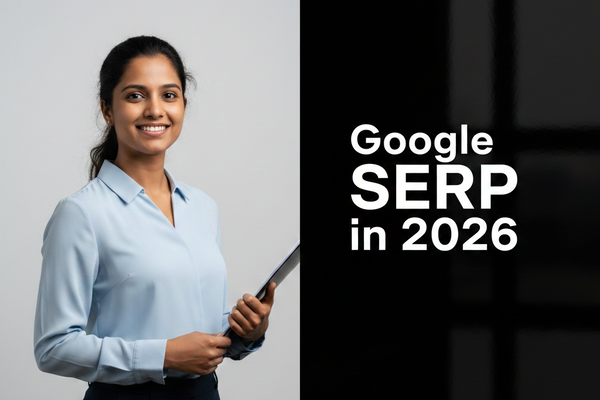
If you’ve been using Google for many years, you’ve probably noticed one thing—search never stays the same. Earlier, ranking on Google felt simple. Add keywords, get backlinks, and wait. That time is over.
When we talk about Google SERP in 2026, we are really talking about how people search today and how Google reacts to it. Users want quick answers, trusted sources, and content that actually helps them, not pages written just to rank.
What Makes Google SERP Different in 2026?
In 2026, Google SERP is no longer just ten blue links. It has become a mix of answers, videos, images, and suggestions. When someone searches, Google tries to understand why they are searching, not just what they typed.
That’s why you now see:
Featured snippets
“People Also Ask” questions
Video results
AI-based summaries
Websites that explain topics clearly and honestly have a better chance to appear on the first page.
AI in Google Search: Help or Problem?
Many people worry that AI will replace websites. In reality, AI needs websites to work. Google still collects information from blogs, business pages, and news sites.
In AI-powered SERP, Google highlights content that is easy to understand and written from real knowledge. Pages filled with copied or rewritten content usually don’t perform well.
So instead of trying to sound “smart,” it’s better to sound real.
Why Zero-Click Searches Are Common Now
You may have noticed that sometimes Google gives the answer directly. This is called a zero-click search. It happens a lot for simple questions.
But this is not always bad.
When your content appears in snippets or answer boxes, people start trusting your brand. Later, they may search your name directly or visit your website when they need more details.
To adapt:
Answer common questions clearly
Keep paragraphs short
Use proper headings
Voice Search and Visual Results Are Growing
Typing is slowly reducing, especially on mobile. Many users now speak their queries. That’s why voice search SEO matters more than before.
Content that sounds natural when read aloud performs better. Also, Google is showing more videos and images, especially for “how-to” and product-based searches.
If your website includes:
Simple explanations
Relevant images
Short videos
It becomes easier to stay visible on Google SERP.
Trust Is the Biggest Ranking Factor
In 2026, Google SERP favors websites people can trust. This includes showing who wrote the content, sharing real experiences, and updating information regularly.
Websites created only for traffic usually lose rankings over time. Websites built to help users grow steadily.
This is where experience and honesty matter more than tricks.
How to Prepare for Google SERP in 2026
If you want long-term results:
Write like you speak
Use keywords only where they fit naturally
Update old posts instead of publishing copied content
Improve mobile speed and readability
Focus on helping one user at a time
SEO is no longer about beating Google. It’s about earning user trust.
Frequently Asked Questions (FAQs)
What is Google SERP in 2026?
Google SERP in 2026 refers to search results that include AI summaries, videos, voice search answers, and content based on user intent rather than keywords alone.
Are keywords still important for SEO in 2026?
Yes, but they must be used naturally. Google now understands context better than repetition
Can small websites still rank on Google SERP?
Yes. Helpful content, real experience, and consistent updates can help small websites rank well.
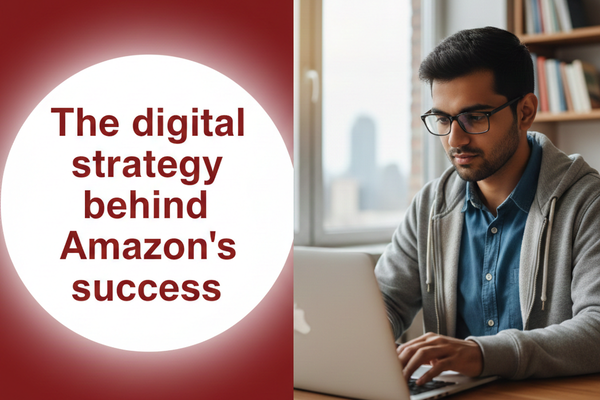
The reason for Amazon’s huge success in digital marketing is:
its data-driven approach and customer-centric thinking.
This is not a single marketing idea. It’s a complete system that integrates all digital channels, creating a habit of easy, fast, and repeated purchases for customers.
Customer Obsession
Amazon’s first rule:
“What does the customer need?”
Product selection, pricing, delivery speed, offers – all of these are designed to enhance the customer experience.
They share product links, They receive a commission if a sale is made through their link.
For Amazon:
Additional advertising reach
No upfront cost
Sales-based revenue
Content & Social Media Marketing
Social Media Campaigns
The popular “Aur Dikhao” campaign in India. On platforms like YouTube, Facebook, and Instagram:
Product categories
Offers
Festival sales advertisements
Brand promotion by a celebrity
During Big Billion Days and Great Indian Festival periods:
Film stars are used
Trust and attention increase
Amazon Ecosystem Power
Prime Membership Program
Free and fast delivery
Prime Video
Prime Music
Once a Prime user:
They will repeatedly buy from Amazon, Brand trust strengthens.
Alexa Voice Shopping
“Alexa, order soap”
“Alexa, track my order”
Shopping becomes even easier.
Pricing & Offer Strategy
Automatic Price Adjustment
If competitors change prices, Amazon’s price is also automatically adjusted.
Loss Leader Strategy
Popular products:
Sold at a low price
Once the customer is engaged:
Additional products
Related products
Overall profit increases.
Conclusion
Amazon Digital Marketing is:
Not a single idea, A large data-driven system, SEO, advertisements, personalization, email, partnerships, social media, Prime ecosystem –
Combining all of these to make the customer:
Aware
Compare
Buy
Buy again
Amazon’s true success –is making buying a habit.
FAQs
What is the key digital strategy behind Amazon’s success?
Amazon’s core digital strategy focuses on customer obsession, data-driven decision-making, and advanced technology. By using AI, big data, and automation, Amazon personalizes user experiences, improves supply chain efficiency, and delivers faster services.
How does Amazon use data and AI to improve customer experience?
Amazon collects and analyzes customer data to provide personalized product recommendations, accurate search results, and dynamic pricing. AI also helps Amazon predict demand, manage inventory, and enhance voice services like Alexa.
How does Amazon’s digital ecosystem contribute to its growth?
Amazon’s digital ecosystem—including Amazon Prime, AWS, Alexa, and marketplace sellers—creates multiple touchpoints that keep customers engaged. This integrated approach increases customer loyalty, expands revenue streams, and strengthens Amazon’s market dominance.
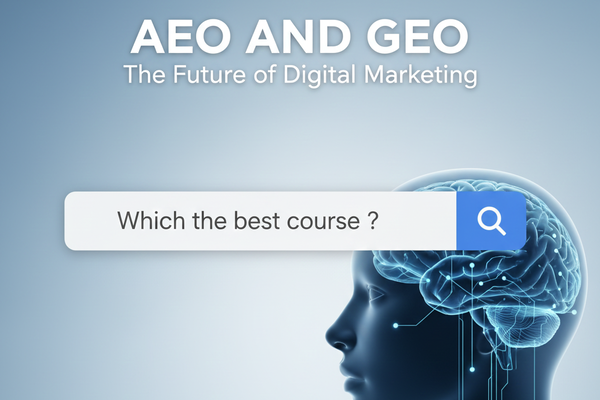
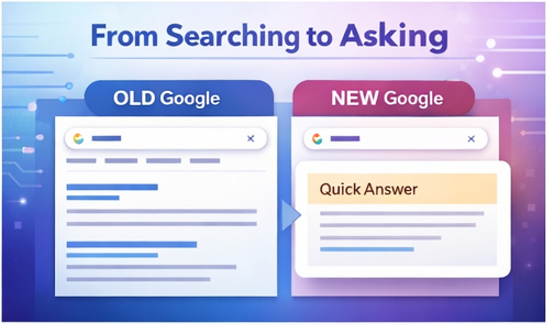
Earlier, people used Google to search. Now, people use Google to ask questions.
Instead of typing short keywords, users ask full questions like: “Which is the best digital marketing course?” “How can I grow my business online?”
Because of this change, Google search is also changing. Traditional SEO alone is not enough anymore.
This is where AEO (Answer Engine Optimization) and GEO (Generative Engine Optimization) come in. These two concepts are shaping the future of digital marketing. Let us understand AEO and GEO in a very simple way.
What is AEO (Answer Engine Optimization)?
AEO means optimizing your content to give direct answers to user questions.
Today, when someone searches a question on Google, Google tries to show the answer immediately. Sometimes, users get the answer without even clicking a website.
This is called zero-click search.
Example:
If a user searches: “What is digital marketing?”
Google may show a short answer at the top of the page. That answer comes from a website that is optimized for AEO.
Simply said, AEO helps your content become the answer.
Why AEO is Important Today
User behaviour has changed.
People want:
Fast answers
Simple explanations
Voice search results
Google also prefers content that is:
Helpful
Clear
Easy to understand
If your content answers questions directly, Google trusts it more. That is why AEO is becoming very important.
What is GEO (Generative Engine Optimization)?
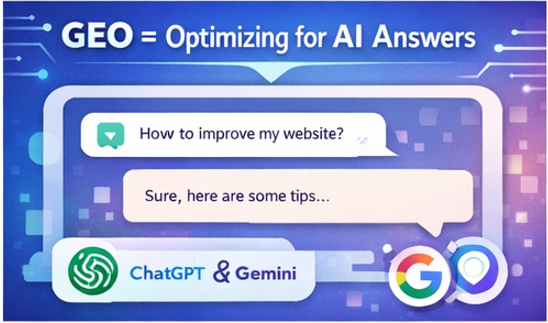
GEO means optimizing content for AI-based search engines.
Today, users don’t search only on Google. They also use:
ChatGPT
Google Gemini
AI search tools
These tools generate answers, not just show links.
GEO helps your content appear inside AI-generated answers.
Simple meaning:
If AI tools trust your content, they may use your content to answer user questions.
That is GEO.
Why GEO is a Big Trend in 2025?
AI is changing how people find information.
Instead of opening many websites, users ask AI directly. AI gives one combined answer.
So, the big question is: Will AI use your content or someone else’s content?
GEO helps make your content:
Structured
Reliable
Easy for AI to understand
That is why GEO is the next big thing in digital marketing.
SEO vs AEO vs GEO (Simple Comparison)
Let us make it very clear:
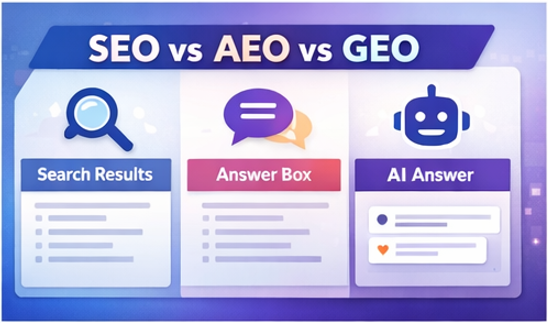
SEO helps your website rank in search results
AEO helps your content appear as direct answers
GEO helps your content get used by AI tools
SEO brings traffic. AEO brings visibility. GEO brings authority. In the future, all three must work together.
In the future, all three must work together.
Why AEO & GEO Are the Future of Digital Marketing
Here are the main reasons:
1. Voice Search is Growing
People speak to their phones and smart devices. Voice searches need clear answers, not long paragraphs.
2. AI Search is Increasing
AI tools are becoming the first-place people ask questions.
3. Users Want Instant Solutions
Nobody wants to scroll for long. They want quick and correct answers.
4. Trust Matters More Than Ranking
Google and AI trust helBecause of all this, AEO and GEO are not optional anymore.
How to Optimize Content for AEO & GEO
Need complex techniques. Just follow these simple steps:
1. Write Question-Based Headings
Use headings You like: don’t
What is AEO?
How does GEO work?
2. Give Clear Answers
Answer the question in 2–4 lines first. Then explain in detail.
3. Use Simple Language
Avoid complex words. Write like you are explaining to a friend.
4. Add FAQ Section
FAQ helps Google and AI understand your content better.