Digital Marketing

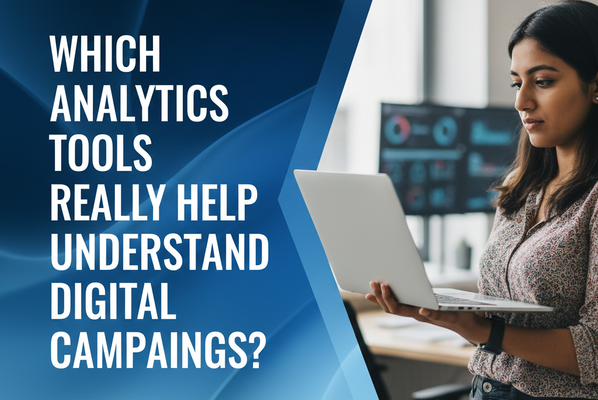
A digital marketer reviewing analytics data on a laptop, with text asking which analytics tools help understand digital campaigns.

Which Analytics Tools Really Help Understand Digital Campaigns?

Gemini Generated Image p0hblip0hblip0hb 1 cropped

When you run a digital campaign, numbers start coming in from everywhere. Clicks, views, impressions, likes—it can get confusing very fast. Many marketers look at data daily but still feel unsure about what it actually means. That’s where the right analytics tools make a difference. They don’t just show reports; they help you understand what people are doing and why.

Over time, a few tools have proven useful for most digital campaigns, especially when used with clear goals in mind.

Google Analytics and Everyday Campaign Tracking

For many marketers, Google Analytics becomes a habit. You open it to see how many people visited your site, where they came from, and which pages they looked at. If a campaign is meant to drive traffic or leads, this tool quietly tells the full story.

You can see whether visitors leave immediately or spend time exploring. Those small details often reveal whether a campaign is attracting the right audience or just empty clicks.

Search Console and Organic Growth

Google Search Console is less about visitors and more about visibility. It shows how your site appears in search results and which search terms bring attention. For SEO-based campaigns, this data is extremely useful.

Sometimes a page ranks but doesn’t get clicks. Sometimes it gets impressions but needs better content. These insights help marketers fine-tune campaigns without guessing.

Social Media Analytics and User Reactions

Social media campaigns behave differently from website campaigns. Here, engagement matters more than time spent. Tools like Meta Ads Manager show how people react to ads—whether they stop, click, or scroll past.

This kind of data helps marketers understand emotions, not just actions. It’s useful when testing visuals, captions, and audience targeting.

Paid Advertising Platforms and Budget Control

For paid campaigns, analytics inside platforms like Google Ads are essential. They show how money is being spent and what returns you’re getting. Over time, this data helps improve ad copy, keywords, and bidding strategies.

Even small adjustments based on these insights can improve results without increasing budgets.

Heatmaps and Real User Behavior

Sometimes numbers don’t explain everything. Heatmap tools like Hotjar or Microsoft Clarity visually show how users behave on a page. You can see where they stop scrolling or where they click the most.

These tools are especially helpful for landing pages used in digital campaigns.

No Single Tool Is Enough

Every analytics tool answers a different question. Website tools explain behavior, search tools explain visibility, and social tools explain engagement. The best insights usually come from combining two or three tools, not relying on just one.

FAQs

Final Thought

Analytics tools don’t replace experience—they support it. When marketers focus less on dashboards and more on understanding patterns, digital campaigns become easier to manage and improve.

Which Analytics Tools Really Help Understand Digital Campaigns? Read More »

A woman working on a laptop creating social media video ads, with text reading “Simple steps to create video ads that work on social media.

Simple Steps to Create Video Ads That Work on Social Media

Gemini Generated Image f9bhhf9bhhf9bhhf cropped

These days, scrolling through social media means watching videos—lots of them. Some make us stop, smile, or even click, while others disappear in seconds. The difference usually comes down to how the video ad is planned and presented. Creating a good social media video ad isn’t about being perfect; it’s about being clear, relatable, and timely.

Here’s a practical way to approach it.

Start With Who You’re Talking To

Before opening your camera, think about the people who will see your video. A college student on Instagram doesn’t react the same way as a business owner on LinkedIn. When you understand what your audience likes, what they struggle with, and how they use social media, your video naturally feels more relevant. That connection matters more than fancy visuals.

Decide What You Want From the Video

Every video ad needs a purpose. Maybe you want people to visit your website, recognize your brand, or try a new product. When the goal is clear in your mind, the video feels focused instead of confusing. Viewers should quickly understand why the video exists and what they gain from watching it.

Say Less, Show More

Social media users don’t have the patience for long explanations. If your message takes too long to get to the point, it’s already lost. Keep things short. Show the product, highlight the benefit, and move on. A simple idea delivered well often performs better than a detailed story told slowly.

Make It Look Real, Not Perfect

You don’t need studio lighting or expensive equipment. Many high-performing social media video ads are shot on phones. What really matters is that the video feels genuine. Natural lighting, clear visuals, and readable text are enough. Adding captions also helps because many people watch videos without turning on the sound.

Tell People What to Do Next

After watching your video, viewers should know what action to take. Whether it’s “check the link,” “follow the page,” or “learn more,” a clear direction makes a big difference. Without this step, even a good video can fail to bring results.

Learn From What You Post

Not every video will perform well—and that’s okay. Posting different versions and checking how people respond helps you improve over time. Pay attention to views, comments, and clicks. Slowly, you’ll notice patterns that guide your future video ads.

FAQs

Final Note

Creating effective video ads for social media is more about understanding people than mastering technology. When your videos feel honest and focused, they naturally stand out in crowded feeds.

Simple Steps to Create Video Ads That Work on Social Media Read More »

A man holding a tablet with the headline “How Nike Uses Digital Marketing to Build a Powerful Brand.”

How Nike Uses Digital Marketing to Build a Powerful Brand

Gemini Generated Image ulr8afulr8afulr8 cropped

Nike has been part of people’s lives for a long time. You see it on shoes, t-shirts, ads, and even in motivational quotes. But Nike did not become this strong just because of good products. A big reason is how the brand connects with people using digital marketing.

Nike understands one simple thing. People don’t just buy products. They buy feelings.

Nike Focuses More on Feelings Than Products

When Nike runs digital campaigns, it rarely talks only about shoes or prices. Instead, it talks about effort, failure, practice, and growth. Many of these stories are shared online through videos and social posts.

People relate to these messages. They feel like Nike understands their journey. This emotional connection plays a major role in Nike’s brand building through digital marketing.

Social Media Is Used in a Smart Way

Nike does not post too often on social media, but when it does, the message is clear. Sometimes it’s just a short line. Sometimes it’s a powerful image. Sometimes it’s an athlete’s story.

nike

This approach works well because it doesn’t feel like advertising. It feels natural. That is why Nike’s social media marketing feels different from many other brands.

Digital Apps Help Nike Stay Close to Users

Nike also uses digital tools like fitness and running apps. These apps give users workouts, reminders, and progress tracking. There is no pressure to buy anything immediately.

This kind of personalized digital marketing makes users feel supported. Over time, trust grows. And trust is what builds a strong brand.

Content That Is Actually Useful

Nike shares fitness tips, training ideas, and motivational content online. This content is helpful even if someone never buys a product. That honesty matters.

Through simple content marketing, Nike stays connected with people who care about fitness and sports. Slowly, brand awareness grows without forcing sales.

Choosing the Right Influencers

Nike works with athletes and creators who already believe in the brand. These partnerships don’t feel fake. People can tell when someone truly uses a product.

This makes Nike’s influencer marketing more believable and effective.

Why Digital Marketing Works for Nike

Nike’s digital marketing strategy works because it feels human. It talks about real life. It respects the audience. It doesn’t try to sell all the time.

That balance is what keeps Nike strong, even in a crowded digital world.

Frequently Asked Questions (FAQs)

How Nike Uses Digital Marketing to Build a Powerful Brand Read More »

A professional woman holding a tablet with text reading “Google SERP in 2026,” representing future trends in Google search results and SEO.

Google SERP in 2026: A Real Look at How Search Is Changing

Gemini Generated Image o83ihfo83ihfo83i cropped

If you’ve been using Google for many years, you’ve probably noticed one thing—search never stays the same. Earlier, ranking on Google felt simple. Add keywords, get backlinks, and wait. That time is over.

When we talk about Google SERP in 2026, we are really talking about how people search today and how Google reacts to it. Users want quick answers, trusted sources, and content that actually helps them, not pages written just to rank.

What Makes Google SERP Different in 2026?

In 2026, Google SERP is no longer just ten blue links. It has become a mix of answers, videos, images, and suggestions. When someone searches, Google tries to understand why they are searching, not just what they typed.

That’s why you now see:

  • Featured snippets
  • “People Also Ask” questions
  • Video results
  • AI-based summaries

Websites that explain topics clearly and honestly have a better chance to appear on the first page.

AI in Google Search: Help or Problem?

Many people worry that AI will replace websites. In reality, AI needs websites to work. Google still collects information from blogs, business pages, and news sites.

In AI-powered SERP, Google highlights content that is easy to understand and written from real knowledge. Pages filled with copied or rewritten content usually don’t perform well.

So instead of trying to sound “smart,” it’s better to sound real.

Why Zero-Click Searches Are Common Now

You may have noticed that sometimes Google gives the answer directly. This is called a zero-click search. It happens a lot for simple questions.

But this is not always bad.

When your content appears in snippets or answer boxes, people start trusting your brand. Later, they may search your name directly or visit your website when they need more details.

To adapt:

  • Answer common questions clearly
  • Keep paragraphs short
  • Use proper headings

Voice Search and Visual Results Are Growing

Typing is slowly reducing, especially on mobile. Many users now speak their queries. That’s why voice search SEO matters more than before.

Content that sounds natural when read aloud performs better. Also, Google is showing more videos and images, especially for “how-to” and product-based searches.

If your website includes:

  • Simple explanations
  • Relevant images
  • Short videos

It becomes easier to stay visible on Google SERP.

Trust Is the Biggest Ranking Factor

In 2026, Google SERP favors websites people can trust. This includes showing who wrote the content, sharing real experiences, and updating information regularly.

Websites created only for traffic usually lose rankings over time. Websites built to help users grow steadily.

This is where experience and honesty matter more than tricks.

How to Prepare for Google SERP in 2026

If you want long-term results:

  • Write like you speak
  • Use keywords only where they fit naturally
  • Update old posts instead of publishing copied content
  • Improve mobile speed and readability
  • Focus on helping one user at a time

SEO is no longer about beating Google. It’s about earning user trust.

Frequently Asked Questions (FAQs)

Google SERP in 2026: A Real Look at How Search Is Changing Read More »

The digital strategy behind Amazon's success

The digital strategy behind Amazon’s success

Gemini Generated Image 7aawth7aawth7aaw cropped

Introduction

The reason for Amazon’s huge success in digital marketing is:

its data-driven approach and customer-centric thinking.

This is not a single marketing idea. It’s a complete system that integrates all digital channels, creating a habit of easy, fast, and repeated purchases for customers.

Customer Obsession

Amazon’s first rule:

  • “What does the customer need?”

Product selection, pricing, delivery speed, offers – all of these are designed to enhance the customer experience.

Search Engine Optimization & Paid Advertising (SEO & SEM)

Google SEO and Amazon SEO

When users search for terms like:

  • “buy mobile online”
  • “running shoe price”

Amazon pages appear at the top of the search results.

In the Amazon product listing:

  • Correct title
  • Relevant keywords
  • Clear description
  • Customer ratings and reviews

 All of these are crucial for Amazon SEO.

  • Amazon Sponsored Ads
  • Sponsored product ads
  • Appear in natural search

When these ads generate good sales:

  • Sales increase
  • Organic search ranking also improves

Thus, advertising and SEO reinforce each other.

Personalization & Data Analytics

Artificial Intelligence Recommendations

  • “Customers who bought this item also bought this”
  • “Recommended products for you”
  • “Based on your search”

This results in:

  • Additional products being added to the cart
  • An increase in the total value of an order

User Behaviour Tracking

User:

  • What they searched for
  • Which products they viewed
  • What they added to the cart

 Based on this, advertisements and emails are sent.

Email & Mobile App Marketing

 Email Marketing

Emails sent by Amazon:

  • Abandoned cart reminders
  • Price drop notifications
  • New arrivals
  • Festival offers

 This brings users back to the website.

App Notifications

  • “The offer has started now”
  • “The item is back in stock”
  • “Offer ending soon”

 Immediate attention and quick purchases.

Affiliate Marketing & Influencers

Amazon has a huge affiliate program.

  • Bloggers
  • YouTubers
  • Instagram influencers

They share product links, They receive a commission if a sale is made through their link.

 For Amazon:

  • Additional advertising reach
  • No upfront cost
  • Sales-based revenue

Content & Social Media Marketing

Social Media Campaigns

The popular “Aur Dikhao” campaign in India. On platforms like YouTube, Facebook, and Instagram:

  • Product categories
  • Offers
  • Festival sales advertisements

Brand promotion by a celebrity

During Big Billion Days and Great Indian Festival periods:

  • Film stars are used
  • Trust and attention increase

Amazon Ecosystem Power

Prime Membership Program

  • Free and fast delivery
  • Prime Video
  • Prime Music

 Once a Prime user:

They will repeatedly buy from Amazon, Brand trust strengthens.

 Alexa Voice Shopping

  • “Alexa, order soap”
  • “Alexa, track my order”

 Shopping becomes even easier.

Pricing & Offer Strategy

Automatic Price Adjustment

If competitors change prices, Amazon’s price is also automatically adjusted.

 Loss Leader Strategy

Popular products:

  • Sold at a low price

Once the customer is engaged:

  • Additional products
  • Related products

 Overall profit increases.

Conclusion

Amazon Digital Marketing is:

Not a single idea, A large data-driven system, SEO, advertisements, personalization, email, partnerships, social media, Prime ecosystem –

 Combining all of these to make the customer:

  • Aware
  • Compare
  • Buy
  • Buy again

Amazon’s true success –is making buying a habit.

FAQs

The digital strategy behind Amazon’s success Read More »

AEO and GEO future of digital marketing concept image

Google AEO & GEO Explained: The Future of Digital Marketing

AEO AND GEO FOR FUTURE OF DIGITAL MARKE

Introduction

Earlier, people used Google to search.
Now, people use Google to ask questions.

Instead of typing short keywords, users ask full questions like:
“Which is the best digital marketing course?”
“How can I grow my business online?”

Because of this change, Google search is also changing.
Traditional SEO alone is not enough anymore.

This is where AEO (Answer Engine Optimization) and GEO (Generative Engine Optimization) come in.
These two concepts are shaping the future of digital marketing. Let us understand AEO and GEO in a very simple way.

3

What is AEO (Answer Engine Optimization)?

AEO means optimizing your content to give direct answers to user questions.

Today, when someone searches a question on Google, Google tries to show the answer immediately.
Sometimes, users get the answer without even clicking a website.

This is called zero-click search.

Example:

If a user searches:
 “What is digital marketing?”

Google may show a short answer at the top of the page.
That answer comes from a website that is optimized for AEO.

Simply said, AEO helps your content become the answer.

Why AEO is Important Today

User behaviour has changed.

People want:

  • Fast answers
  • Simple explanations
  • Voice search results

Google also prefers content that is:

  • Helpful
  • Clear
  • Easy to understand

If your content answers questions directly, Google trusts it more.
That is why AEO is becoming very important.

What is GEO (Generative Engine Optimization)?

About GEO

GEO means optimizing content for AI-based search engines.

Today, users don’t search only on Google.
They also use:

  • ChatGPT
  • Google Gemini
  • AI search tools

These tools generate answers, not just show links.

GEO helps your content appear inside AI-generated answers.

Simple meaning:

If AI tools trust your content,
they may use your content to answer user questions.

That is GEO.

Why GEO is a Big Trend in 2025?

AI is changing how people find information.

Instead of opening many websites, users ask AI directly.
AI gives one combined answer.

So, the big question is:
 Will AI use your content or someone else’s content?

GEO helps make your content:

  • Structured
  • Reliable
  • Easy for AI to understand

That is why GEO is the next big thing in digital marketing.

SEO vs AEO vs GEO (Simple Comparison)

Let us make it very clear:

  • SEO helps your website rank in search results
  • AEO helps your content appear as direct answers
  • GEO helps your content get used by AI tools

SEO brings traffic.
AEO brings visibility.
GEO brings authority. In the future, all three must work together.

In the future, all three must work together.

Difference between SEO , AEO and GEO

Why AEO & GEO Are the Future of Digital Marketing

Here are the main reasons:

1. Voice Search is Growing

People speak to their phones and smart devices.
Voice searches need clear answers, not long paragraphs.

2. AI Search is Increasing

AI tools are becoming the first-place people ask questions.

3. Users Want Instant Solutions

Nobody wants to scroll for long.
They want quick and correct answers.

4. Trust Matters More Than Ranking

Google and AI trust helBecause of all this, AEO and GEO are not optional anymore.

How to Optimize Content for AEO & GEO

Need complex techniques.
Just follow these simple steps:

1. Write Question-Based Headings

Use headings You like: don’t

  • What is AEO?
  • How does GEO work?

2. Give Clear Answers

Answer the question in 2–4 lines first.
Then explain in detail.

3. Use Simple Language

Avoid complex words.
Write like you are explaining to a friend.

4. Add FAQ Section

FAQ helps Google and AI understand your content better.

5. Focus on Quality, Not Length

Helpful content always wins

Benefits of AEO & GEO for Different People

For Students

  • Learn future-ready skills
  • Stay ahead in digital marketing careers
  • Higher job opportunities

For Digital Marketers

  • Less competition
  • Higher authority
  • Better visibility

For Businesses

  • More trust
  • Better brand presence
  • Quality leads

How Digital Toppers Prepares You for the Future

At Digital Toppers, we don’t teach only old SEO methods.

We focus on:

  • Modern SEO strategies
  • AEO and GEO concepts
  • AI-based digital marketing
  • Practical and real-time training

Our goal is to make students industry-ready, not just certificate holders.

Conclusion

Digital marketing is changing fast.
Search engines are becoming answer engines.
AI tools are becoming decision makers.

If you want to stay relevant:

  • Learn SEO
  • Understand AEO
  • Prepare for GEO

Those who adapt early will lead the future.
Those who ignore these changes will fall behind.

The future of digital marketing belongs to smart learners

FAQs

Google AEO & GEO Explained: The Future of Digital Marketing Read More »

Beginner Course Blog

Digital Marketing Course for Beginners at Rs12,000

Digital Marketing Course for Beginners

If you are new to digital marketing and want to learn from basics, choosing the right course is important. Digital Toppers offers a beginner-friendly digital marketing course that helps you understand concepts easily and apply them in real life.

This course is suitable for students, job seekers, business owners, and anyone who wants to change their career. You can learn practical digital marketing skills in just 1 month.

Course Details

Here is a quick overview of the course:

  • Course Name: Digital Marketing Course for Beginners
  • Duration: 1 Month
  • Mode: Online and Offline classes available
  • Internship: Separate (Optional)
  • Original Fee: ₹15,000
  • Offer Price: ₹12,000 (Limited-Time Offer)

This course focuses on practical skills that help you get a job, start freelancing, or grow your own business.

What You Will Learn

The course is divided into 5 easy modules. Each module is designed for beginners, so learning becomes simple and stress-free.

1. Content Creation

Content is the base of digital marketing. In this module, you will learn:

  • Canva Basics: How to create posters, social media posts, and short videos
  • Blogging: How to write simple blogs for websites
  • AI Tools: Learn basic AI tools that help you work faster and save time

Social Media Marketing (SMM)

Social media helps businesses reach more people. Local SEO helps businesses appear in nearby searches.

In this module, you will learn:

  • How to manage Facebook and Instagram business pages
  • How to increase likes, comments, and shares
  • How to run Meta Ads using Meta ( Ad Centre )

You will learn both free promotion methods and paid advertising techniques.

Local SEO

Google My Business (GMB) Importance – Why GMB is crucial for local visibility

Local Business Setup – How to set up your business on Google My Business

Google Maps Pointing – Ensuring your business appears accurately on Google Maps

NAP Citation – Managing Name, Address, and Phone consistency across platforms

Google Ads – Smart Campaigns

Google Ads helps businesses advertise online. You will learn:

  • Basics of Google Ads
  • What are Smart Campaigns
  • How Google ads work
  • Simple ad setup knowledge

Website Building

You will learn how to create a website without coding:

  • Build professional websites using CMS Platform
  • Fully practical and easy for beginners

Search Engine Optimization (SEO)

SEO helps websites rank higher on Google. In this module, you will learn:

  • SEO Basics: How Google and search engines work
  • Website Audit: How to check and improve a website
  • On-Page & Technical SEO: Make websites fast and mobile-friendly
  • Link Building: Improve website trust and ranking

Web Analytics

This module helps you understand website performance:

  • Google Analytics: Track visitors and website traffic
  • Google Search Console: Check how your site appears on Google

Conclusion

Digital marketing is growing every day, and skilled professionals are in high demand. Learning digital marketing now can help you build a strong career, earn as a freelancer, or promote your business online.

At Digital Toppers, you will not only learn tools but also learn how to use them in real situations and get results.

Digital Marketing Course for Beginners at Rs12,000 Read More »

How Coca Cola Influenced the Image of Santa Claus Through Marketing Campaigns

How Coca Cola Influenced the Image of Santa Claus Through Marketing Campaigns

Digital Toppers published a case study on how Coca-Cola influenced the image of Santa Claus through marketing campaigns.

Coca-Cola is more than just a soft drink. It is a brand that knows how to connect with people’s emotions. One of its most successful ideas was the Christmas campaign featuring Santa Claus.

In the 1930s, Coca-Cola faced a major challenge: people did not prefer cold drinks during the winter season. To solve this, the brand used smart storytelling and presented Santa Claus as a warm, friendly, and joyful character, making Coca-Cola feel like a natural part of Christmas celebrations.

This post explores how Coca-Cola influenced the modern image of Santa Claus and turned a winter sales problem into a global Christmas tradition.

Who Was Santa Claus Before Coca-Cola?

Before the 1930s, Santa Claus did not have one fixed appearance.

Different Versions of Santa:
  • In Europe, Santa was linked to Saint Nicholas.
  • He appeared in: Green, Brown, Blue, and sometimes Red.
  • Some versions showed him as: Thin, Serious, and more religious than playful.

There was no global standard image of Santa Claus.

The Marketing Challenge Coca-Cola Faced

Problem: Coca-Cola is a cold beverage.

  • Low Sales: Sales dropped when the weather got cold.
  • Competition: People preferred hot drinks like tea or cocoa in December.

How can a cold drink brand stay relevant during the coldest months of the year?

The Big Idea: Using Santa Claus as a Brand Storyteller

Coca-Cola decided to connect its product with Christmas emotions, not weather.

They chose Santa Claus because:

  • Santa already symbolized joy and generosity.
  • Families trusted Santa.
  • Santa was closely linked with Christmas celebrations.

But Coca-Cola needed to make Santa feel: Warm, Friendly, Real, and Relatable.

Why Coca Cola Popularized Red and White for Santa

Instead of saying Coca-Cola changed Santa’s color, the correct explanation is: Coca Cola popularized and standardized the red-and-white Santa.

Reasons:
  • Red Matched Coca-Cola’s Brand Color: While red was a color used for Santa in some previous depictions, Coca-Cola’s use of a specific, vibrant red (matching their branding) and consistent, high-visibility global distribution made their version the one that stuck.
  • White symbolized snow and warmth.
  • Red-and-white created strong visual branding.
  • Consistent use every year made it familiar.

Over time, people began to believe this was the “real” Santa.

Campaign Execution: How Coca-Cola Did It

  • Year: 1931
  • Key Contributor: Illustrator Haddon Sundblom
  • Marketing Channels Used: Magazine ads, Print posters, Store displays, Outdoor billboards
Santa’s New Personality:
  • Smiling and friendly
  • Human-like emotions
  • Enjoying Coca-Cola (often shown pausing to drink one while delivering toys)
  • Interacting with families and children

This Santa felt alive, not imaginary.

How Santa Brought Coca Cola in from the Cold

This is the most powerful part of the strategy.

What Coca-Cola Did:
  • Showed Santa drinking Coca-Cola in winter.
  • Made Coke feel like a Christmas tradition.
  • Associated the drink with: Family time, Happiness, and Celebration.

Result: People stopped thinking:

“Cold drink is not for winter”

And started thinking:

“Coca-Cola is part of Christmas”

How Coca-Cola Began Its Winter Marketing Strategy - Digital Toppers

Results & Long-Term Impact

Cultural Impact:
  • Red-and-white Santa became the global standard.
  • Coca-Cola’s Santa is still used today.
  • Santa and Coca-Cola became emotionally connected.
Brand Impact:
  • Coca-Cola solved a seasonal sales problem.
  • Christmas became a brand-owned moment.
  • The campaign lasted for generations.

What We Can Gain From This Brand’s Marketing Strategy

The success of the Coca-Cola Santa campaign offers valuable, timeless lessons for any brand looking to build long-term power and cultural relevance.

Key Marketing Lessons:

  1. Consistency: Same Santa image every year which built trust and belief.
  2. Emotional Storytelling: Focused on joy, family, and generosity — not product features.
  3. Strong Visual Branding: Santa’s standardized colors matched Coca-Cola’s identity.
  4. Cultural Timing: Used an existing festival and enhanced its imagery.
Key Takeaway:

Brands can become part of culture, not just commerce. Coca-Cola didn’t invent Santa Claus — it made the modern Santa believable through strategic visual standardization and emotional consistency.

Conclusion

Coca-Cola’s Christmas campaign is one of the greatest examples of storytelling marketing in history.

By shaping the image of Santa Claus and linking it with happiness and celebration, Coca-Cola turned a winter sales challenge into a timeless brand tradition. Even today, when people think of Santa Claus, they unknowingly picture Coca-Cola’s Santa.

👉 Explore other successful brand case studies from Digital Toppers

Netflix’s Successful Digital Marketing Strategy – A Case Study

This case study explains how Netflix uses smart marketing, personalized content, and storytelling to attract and retain users all over the world.

Arun Ice Cream: The Sweet Success Story That Won India’s Heart

This case study explains how Arun Ice Cream became popular in India by building a strong emotional bond with people and focusing on local customers.

How Cookd Achieved Success with a Digital Marketing Strategy

This case study shows how Cookd used digital marketing, good content, and social media to reach the right audience and grow fast.

1. Did Coca-Cola invent Santa Claus?

No. Santa Claus is inspired by Saint Nicholas. Coca-Cola popularized the modern red-and-white image through consistent marketing.

2. Was Santa Claus always red and white before Coca-Cola?

No. Before Coca-Cola’s Christmas campaigns in the 1930s, Santa Claus did not have a fixed color or appearance. He was shown in green, brown, blue, and sometimes red, depending on the country and artist. Coca Cola did not invent Santa Claus, but its consistent use of a red-and-white Santa in global advertising helped standardize and popularize the version we recognize today.

3. Why did Coca Cola use Santa Claus in its marketing campaigns?

Coca Cola used Santa Claus to create an emotional connection during Christmas and to promote its product during winter, a season when cold drinks usually sell less.

How Coca Cola Influenced the Image of Santa Claus Through Marketing Campaigns Read More »

How to choose Digital Marketing Course 2026

How to Choose the Right Digital Marketing Course in 2026: 7 Factors That Truly Matter (With Real Training Insights)

Digital marketing has become one of the most essential skills for students, business owners, and freelancers today. With hundreds of institutes offering different types of courses, choosing the right training program is often confusing.

Most people end up selecting a course based only on fees and duration — but that’s where the biggest mistakes happen.

To help you make the right decision, here are 7 important factors you must check before joining any digital marketing course, along with how we follow the same standards at Digital Toppers.

1. Check the Trainer’s Real Industry Experience

The biggest difference between average and high-quality training is the trainer’s real-world exposure.

A trainer who has worked with actual brands can:

  • Share practical strategies
  • Guide you with real case studies
  • Teach you how industry campaigns are executed

At Digital Toppers:

Our trainers come with 17+ years of industry experience, having worked with several big brands across India. This ensures our students learn what truly works in the real world — not just theory.

2. Make Sure the Trainers Are Certified

Digital marketing evolves every single day. So learning from certified professionals is crucial.

At Digital Toppers:

All our trainers are Google-certified, ensuring you receive up-to-date, authentic, and credible training.

3. Choose a Course That Matches Your Goals

Every learner is different — and so their training needs should also be different.

Most institutes teach a common syllabus for everyone.
But the right course should be customized based on who you are and what you want to achieve.

At Digital Toppers, we follow a fully customized training model for:

Students
  • Interview-focused preparation
  • Real project execution
  • Portfolio building
  • Mock interviews & resume guidance
Business Owners
  • Content marketing strategy
  • Lead generation techniques
  • Google Ads & Meta Ads setup
  • Budget planning & tracking
Freelancers
  • How to approach clients
  • Pricing & negotiation
  • Project execution
  • Reporting & client retention

This ensures every learner gets exactly the training they need to reach their goals.

4. Look for Execution-Based Learning (Not Only Theory)

Digital marketing is 80% practical.

A good institute must allow you to:

  • Work on real accounts
  • Create own website
  • Create strategies
  • Build reports
  • Analyse data

At Digital Toppers:

Every module includes hands-on project execution, so you learn by doing, not by watching.Every module includes hands-on project execution, so you learn by doing, not by watching.

5. Check Whether They Teach Latest Industry Tools

The most important part of digital marketing is using the right tools.

So ask:
👉 Will I get practical exposure to tools like Google Ads, Meta Ads, Google Analytics, SEO tools, content tools, AI tools, etc.?

At Digital Toppers, every student practices on real-time tools used in agencies and companies.

6. Look for Classes That Offer Mentorship & Support

Learning digital marketing is not a one-day process.

You need:

  • Doubt clearing
  • Assignment support
  • Project guidance
  • Career help

At Digital Toppers:
Every learner receives continuous mentorship, along with post-training support.

7. Check Placement or Freelance Support

If you are a student, placement matters.
If you are a freelancer, client-acquisition matters.
If you are a business owner, campaign performance matters.

Digital Toppers ensures:

  • Placement-focused training for students
  • Sales & client pitching support for freelancers
  • Marketing & lead-gen support ideas for business owners

Final Thoughts

Choosing a digital marketing course is a big decision. Instead of selecting an institute based only on price or duration, focus on:

  • Experience
  • Practical learning
  • Customised training
  • Tools
  • Real industry exposure
  • Student/business/freelancer outcomes

Digital Toppers follows all the above mentioned standards to ensure every learner gets the right skills, confidence, and practical knowledge to grow along with this blooming digital world.

How to Choose the Right Digital Marketing Course in 2026: 7 Factors That Truly Matter (With Real Training Insights) Read More »

Human brain highlighted, text about uniqueness.

Deloitte AI Failure: The Australia Case Shows Why Human Intervention Still Matters

Can you imagine a top global company paying money BACK to the government… because of AI mistakes? Yes — that just happened with Deloitte in Australia!

We all know that AI is changing the way how we work. From creating marketing strategies to writing a report, AI tools like ChatGPT, Gemini, and Copilot are everywhere.

But what happens when we rely too much on AI — without human verification?

That’s exactly what happened recently with Deloitte Australia, one of the world’s top consulting firms. Their experience is a powerful reminder that even the best AI tools still need a human touch.

The Deloitte–Australia Incident

Deloitte Australia was hired by the Australian Government’s Department of Employment and Workplace Relations (DEWR) to prepare a report on welfare systems — a project worth around AUD 440,000 (₹2.4 crore).

However, after the report was submitted, a researcher discovered several fake citations and fabricated references. Some quotes were even wrongly attributed to court judgments — things that simply didn’t exist!

Soon, Deloitte confirmed that the report was partly generated using AI (GPT-4o) — and the “AI hallucinations” slipped into the final draft.
The fallout?

  • Deloitte had to apologize publicly,
  • Refund a portion of the project fee, and
  • Issue a corrected report removing all AI-generated errors.

AI Went Wrong?

AI models like ChatGPT can generate impressive content — but they don’t “know” facts. They predict words based on patterns, which means they can sound accurate while being completely wrong.

This phenomenon is called AI hallucination — when the system confidently produces false or non-existent information.

Without careful human review, such hallucinations can easily end up in professional documents — leading to reputational and financial damage.

The Human Brain: Still Not Replaceable

AI can make work faster, but humans make it accurate.
Here’s what human intervention ensures:

  • Fact-checking: Verifying whether data, quotes, and references are authentic.
  • Context understanding: Knowing the tone, brand voice, and cultural relevance.
  • Ethical judgment: Understanding when and how AI should (or shouldn’t) be used.
  • Accountability: Taking responsibility for the final output — something AI can’t do.

When humans and AI collaborate correctly, productivity multiplies.
When humans step aside, accuracy collapses.

Key Takeaway for Business Owners and Creators

AI is not your replacement — it’s your assistant.
Use AI to brainstorm ideas, generate drafts, and speed up repetitive work.
But always, always review, refine, and fact-check.

Even global brands like Deloitte learned this the hard way — and it’s a lesson we can all take seriously.

Learn AI the Right Way

At Digital Toppers Academy, we teach how to use AI tools effectively and ethically in digital marketing — from content generation to campaign optimization.
Our training ensures you stay ahead of the curve without compromising accuracy or credibility.

Visit www.digitaltoppers.com to explore our AI-powered Digital Marketing Programs.

FAQs

What is AI hallucination?

AI hallucination happens when an AI tool creates content that seems real but are actually false or nonexistent, due to errors in how it interprets its training data.

Which specific generative AI tool did Deloitte admit to using for the government report?

Deloitte admitted to using the generative-AI tool Azure OpenAI GPT‑4o in drafting parts of the report which causes AI hallucination

Deloitte AI Failure: The Australia Case Shows Why Human Intervention Still Matters Read More »

Scroll to Top