
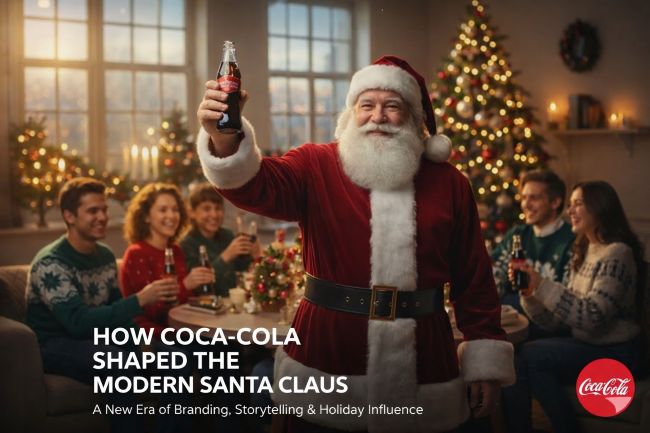
Coca-Cola is more than just a soft drink. It is a brand that knows how to connect with people’s emotions. One of its most successful ideas was the Christmas campaign featuring Santa Claus.
In the 1930s, Coca-Cola faced a major challenge: people did not prefer cold drinks during the winter season. To solve this, the brand used smart storytelling and presented Santa Claus as a warm, friendly, and joyful character, making Coca-Cola feel like a natural part of Christmas celebrations.
This post explores how Coca-Cola influenced the modern image of Santa Claus and turned a winter sales problem into a global Christmas tradition.
Who Was Santa Claus Before Coca-Cola?
Before the 1930s, Santa Claus did not have one fixed appearance.
Different Versions of Santa:
- In Europe, Santa was linked to Saint Nicholas.
- He appeared in: Green, Brown, Blue, and sometimes Red.
- Some versions showed him as: Thin, Serious, and more religious than playful.
There was no global standard image of Santa Claus.
The Marketing Challenge Coca-Cola Faced
Problem: Coca-Cola is a cold beverage.
- Low Sales: Sales dropped when the weather got cold.
- Competition: People preferred hot drinks like tea or cocoa in December.
How can a cold drink brand stay relevant during the coldest months of the year?
The Big Idea: Using Santa Claus as a Brand Storyteller
Coca-Cola decided to connect its product with Christmas emotions, not weather.
They chose Santa Claus because:
- Santa already symbolized joy and generosity.
- Families trusted Santa.
- Santa was closely linked with Christmas celebrations.
But Coca-Cola needed to make Santa feel: Warm, Friendly, Real, and Relatable.
Why Coca Cola Popularized Red and White for Santa
Instead of saying Coca-Cola changed Santa’s color, the correct explanation is: Coca Cola popularized and standardized the red-and-white Santa.
Reasons:
- Red Matched Coca-Cola’s Brand Color: While red was a color used for Santa in some previous depictions, Coca-Cola’s use of a specific, vibrant red (matching their branding) and consistent, high-visibility global distribution made their version the one that stuck.
- White symbolized snow and warmth.
- Red-and-white created strong visual branding.
- Consistent use every year made it familiar.
Over time, people began to believe this was the “real” Santa.
Campaign Execution: How Coca-Cola Did It
- Year: 1931
- Key Contributor: Illustrator Haddon Sundblom
- Marketing Channels Used: Magazine ads, Print posters, Store displays, Outdoor billboards
Santa’s New Personality:
- Smiling and friendly
- Human-like emotions
- Enjoying Coca-Cola (often shown pausing to drink one while delivering toys)
- Interacting with families and children
This Santa felt alive, not imaginary.
How Santa Brought Coca Cola in from the Cold
This is the most powerful part of the strategy.
What Coca-Cola Did:
- Showed Santa drinking Coca-Cola in winter.
- Made Coke feel like a Christmas tradition.
- Associated the drink with: Family time, Happiness, and Celebration.
Result: People stopped thinking:
“Cold drink is not for winter”
And started thinking:
“Coca-Cola is part of Christmas”

Results & Long-Term Impact
Cultural Impact:
- Red-and-white Santa became the global standard.
- Coca-Cola’s Santa is still used today.
- Santa and Coca-Cola became emotionally connected.
Brand Impact:
- Coca-Cola solved a seasonal sales problem.
- Christmas became a brand-owned moment.
- The campaign lasted for generations.
What We Can Gain From This Brand’s Marketing Strategy
The success of the Coca-Cola Santa campaign offers valuable, timeless lessons for any brand looking to build long-term power and cultural relevance.
Key Marketing Lessons:
- Consistency: Same Santa image every year which built trust and belief.
- Emotional Storytelling: Focused on joy, family, and generosity — not product features.
- Strong Visual Branding: Santa’s standardized colors matched Coca-Cola’s identity.
- Cultural Timing: Used an existing festival and enhanced its imagery.
Key Takeaway:
Brands can become part of culture, not just commerce. Coca-Cola didn’t invent Santa Claus — it made the modern Santa believable through strategic visual standardization and emotional consistency.
Conclusion
Coca-Cola’s Christmas campaign is one of the greatest examples of storytelling marketing in history.
By shaping the image of Santa Claus and linking it with happiness and celebration, Coca-Cola turned a winter sales challenge into a timeless brand tradition. Even today, when people think of Santa Claus, they unknowingly picture Coca-Cola’s Santa.
👉 Explore other successful brand case studies from Digital Toppers
Netflix’s Successful Digital Marketing Strategy – A Case Study
This case study explains how Netflix uses smart marketing, personalized content, and storytelling to attract and retain users all over the world.
Arun Ice Cream: The Sweet Success Story That Won India’s Heart
This case study explains how Arun Ice Cream became popular in India by building a strong emotional bond with people and focusing on local customers.
How Cookd Achieved Success with a Digital Marketing Strategy
This case study shows how Cookd used digital marketing, good content, and social media to reach the right audience and grow fast.
1. Did Coca-Cola invent Santa Claus?
No. Santa Claus is inspired by Saint Nicholas. Coca-Cola popularized the modern red-and-white image through consistent marketing.
2. Was Santa Claus always red and white before Coca-Cola?
No. Before Coca-Cola’s Christmas campaigns in the 1930s, Santa Claus did not have a fixed color or appearance. He was shown in green, brown, blue, and sometimes red, depending on the country and artist. Coca Cola did not invent Santa Claus, but its consistent use of a red-and-white Santa in global advertising helped standardize and popularize the version we recognize today.
3. Why did Coca Cola use Santa Claus in its marketing campaigns?
Coca Cola used Santa Claus to create an emotional connection during Christmas and to promote its product during winter, a season when cold drinks usually sell less.
